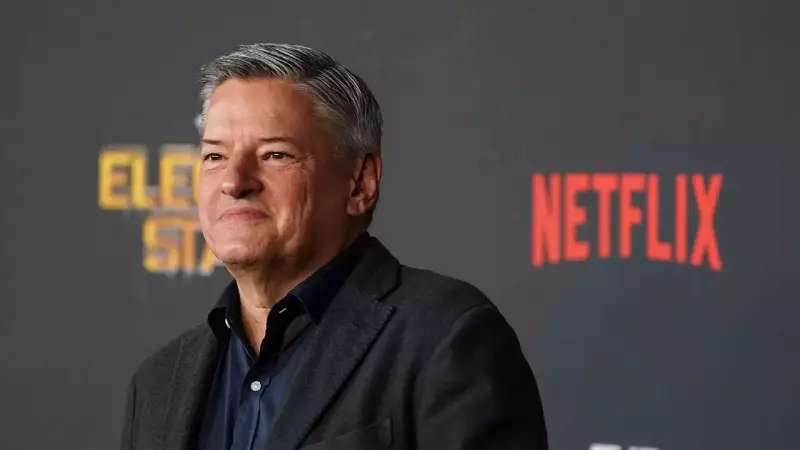
Streaming giant Netflix has completed a significant decade of operations in India. Marking this milestone, the company's top executives have outlined a unique, evolving strategy for the complex market, rejecting a one-size-fits-all global template. The focus remains on widening access without diluting its premium identity, curating a diverse content platter, and placing authentic Indian stories at the core of its worldwide ambitions.
The Dual Focus: Premium Access and Relentless Innovation
Ted Sarandos, Co-CEO of Netflix, emphasized that the platform's expansion in India hinges on strategic flexibility paired with a commitment to quality. He stated that Netflix has broadened its pricing and product options to attract a wider audience while firmly holding onto its premium brand promise. This involves constant innovation across user experience, content recommendations, subscription plans, payment systems, and distribution partnerships.
Sarandos explained that the core strategy is straightforward—focus and continuous improvement—but the execution is challenging. He noted that Netflix embraces competition as it pushes the company to enhance its service faster for its members. Ultimately, he said, business growth is powered by offering a wide variety of quality series, films, and games that drive member engagement, retention, and word-of-mouth acquisition.

India's Content Slate: A Carefully Curated 'Thali'
Monika Shergill, Vice President of Content for Netflix India, vividly described the platform's programming philosophy as a balanced 'thali'. This approach ensures there is something for every viewer's taste. She affirmed that Netflix remains the home for big, bold cinema and prestige projects like Sacred Games and Delhi Crime. Simultaneously, it has aggressively expanded into mass, relatable entertainment such as The Great Indian Kapil Show, Single Papa, and The Ba***ds of Bollywood.
Shergill addressed the need for both quality and volume, highlighting the significant investment required to produce content at high speed and scale. She reflected on Netflix's evolution in India, noting that initially, the service lacked non-fiction, licensed content, and strong regional programming. Early successes with shows like Masaba Masaba, Little Things (acquired from YouTube), Kota Factory, and Mismatched helped shape their understanding of diverse Indian audience preferences.
She also countered the perception that Netflix only works with established creators, asserting a strong commitment to discovering and nurturing new voices, which is essential to surprising and delighting audiences.
Local Stories: India's Central Role in a Global Future
Bela Bajaria, Netflix's Chief Content Officer, placed India at the heart of the company's global entertainment mission. She stressed the indispensable need for deeply local, authentic stories told in multiple Indian languages to entertain a worldwide audience. The platform's strength, she said, lies in giving creators the freedom to tell these specific stories and giving viewers in Mumbai, Madrid, or Mexico City the freedom to explore them.
Bajaria reiterated a long-term, unwavering commitment to investing in India. She pointed to the vast potential in markets like Tamil and Telugu, stating that the company is 'barely scratching the surface' of South Indian languages. The focus is on continuous expansion, driven by the belief that incredible local stories from India are fundamental to Netflix's ambition of entertaining the entire world.
As Netflix steps into its next decade in India, the message from its leadership is clear: the country is not merely another market but a central pillar in the streaming service's global narrative, with a strategy uniquely tailored to its diversity and scale.