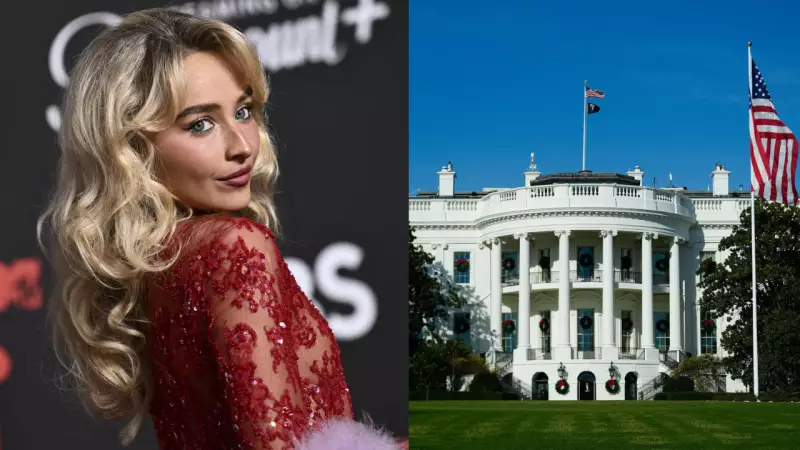
Pop sensation and Grammy award-winner Sabrina Carpenter has launched a fierce public condemnation against the White House. The controversy erupted after the Trump administration used her song without permission in a video promoting its immigration enforcement actions.
Carpenter's Sharp Rebuke on Social Media
The incident took place on Tuesday when the official White House account on X (formerly Twitter) posted a promotional clip. The video was part of a series highlighting nationwide raids conducted by Immigration and Customs Enforcement (ICE). It featured Carpenter's track 'Juno' from her album Short n' Sweet, used without her authorisation or consent.
Responding swiftly on the same platform, Sabrina Carpenter did not mince her words. "This video is evil and disgusting," she wrote. "Do not ever involve me or my music to benefit your inhumane agenda." Her statement directly challenged the administration's narrative surrounding the deportation drive.

White House's Defiant Response
Instead of backing down, the White House issued a sharp and personal rebuttal. In a statement to Entertainment Weekly, an official representative fired back with a pointed message. "Here's a Short n' Sweet message for Sabrina Carpenter, we won't apologize for deporting dangerous criminal illegal murderers, rapists, and pedophiles from our country," the official said.
The response took a further personal jab by referencing another of Carpenter's songs. The official added, "Anyone who would defend these sick monsters must be stupid, or is it slow?" – a clear allusion to her track 'Manchild' from the album Man’s Best Friend. This exchange marks a significant escalation in the ongoing conflict between artists and political entities over music copyright.
A Growing Chorus of Artist Objections
Sabrina Carpenter is not the first musician to clash with the Trump campaign over unauthorised use of copyrighted music. She joins a lengthening list of high-profile artists who have objected to their work being used in political messaging.
Earlier this year, legendary singer Kenny Loggins demanded the removal of his iconic hit 'Danger Zone'. The song was featured in an AI-generated video shared by President Trump on Truth Social, which depicted him as "King Trump" piloting a fighter jet. "Nobody asked me for my permission, which I would have denied… I can’t imagine why anybody would want their music used or associated with something created with the sole purpose of dividing us," Loggins stated.
In November, fellow Grammy winner Olivia Rodrigo also voiced strong criticism. Her song 'All-American B***h' was used in a video promoting the concept of self-deportation. Rodrigo took to Instagram to assert, "Don’t ever use my songs to promote your racist, hateful propaganda."
This pattern highlights a persistent tension between political campaigns seeking evocative soundtracks and artists fiercely protective of their creative work's context and association. The repeated incidents suggest a continuing strategy that prioritises message impact over copyright clearance, guaranteeing further high-profile disputes as the political season intensifies.