Pt Ajoy Chakrabarty: A Seven-Decade Odyssey in Raga Music and Tradition
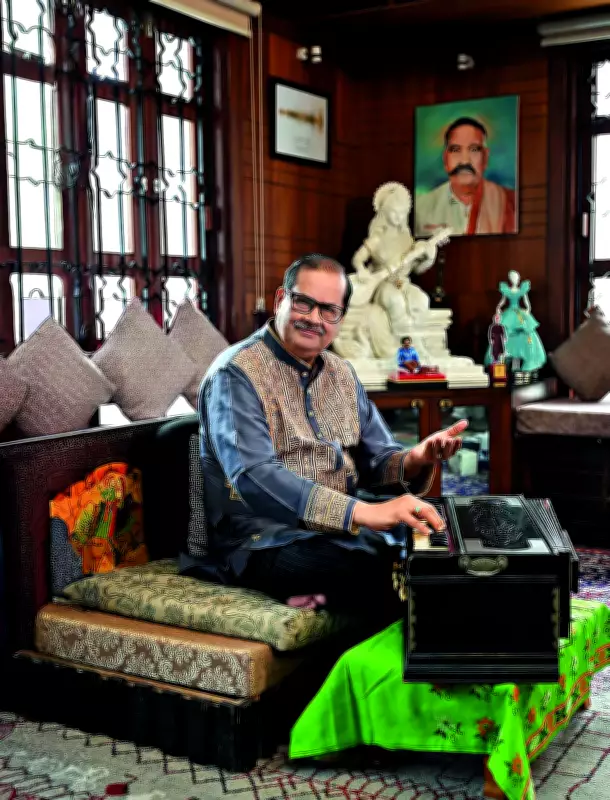
For nearly seventy years, Padma Bhushan awardee Pt Ajoy Chakrabarty has immersed himself in the intricate nuances of Indian music, which he prefers to term raga music. He has served not merely as a performer but as a dedicated custodian of its rich traditions. In an exclusive conversation commemorating a milestone anniversary, the esteemed exponent of the Patiala-Kasur gharana delves into a profound journey molded by deep connections, unwavering discipline, rigorous training under the legendary Jnan Prakash Ghosh, and an enduring commitment to nurturing future musical generations.
The Philosophy of Connection: "Tumi" and the Essence of Art
For Pt Ajoy Chakrabarty, the core of artistic existence is encapsulated in a single Bengali word: Tumi, meaning "you." Drawing inspiration from the poetic wisdom of Rabindranath Tagore, he reflects that just as waves derive their existence from the ocean, the sense of "I" in an artist is fundamentally dependent on the presence of "you." He articulates that without an audience to receive, comprehend, and appreciate artistic creation, the very purpose of the artist becomes meaningless.
"If one continues to create endlessly without any emotional or intellectual exchange, then that creation becomes hollow," states the veteran musician. This belief underscores his philosophy where art is inherently relational, never self-contained, but always rooted in a shared, interactive space between creator and listener. It is this essential need for another consciousness to acknowledge and complete the act of creation that gives art its true significance.

The Uncompromising Discipline of Riyaaz and Self-Criticism
Despite dedicating almost seven decades to mastering music, Chakrabarty remains humbly aware of the vastness of his field. He often remarks, "Music is much bigger than any ocean we know, because the deeper you dig, you realise there is so much left to know. What we know is probably just a fraction and the rest is yet to be explored."
His journey is anchored in an ironclad discipline forged through years of rigorous practice. He adheres to a personal rule: "If I miss my riyaaz (which happens rarely), I do not eat that day." This principle speaks volumes about his devotion and self-regulation. Equally pivotal is his emphasis on self-criticism, a practice he consistently imparts to his disciples. He urges them to engage in honest self-evaluation, asserting, "Learn to criticise yourself; the more you do that, the more you understand how you can better yourself."
The Art of Silence: Where Music Finds Its Depth
Quoting the great Mozart, Pt Ajoy Chakrabarty reminds us that music transcends mere notes; it is equally about the silence interspersed between them. "Music is very much dependent on the silence in between. When there is silence, it creates expectation, but if you keep speaking or creating continuously, that expectation is never formed," he explains.
For him, this is where Indian raga music reveals its profound depth—in its masterful ability to shape, measure, and "colour" silence. This intentional use of pauses allows emotion, meaning, and anticipation to emerge with as much potency as the sound itself, showcasing the genre's unique expressive capacity.
A Personal Journey Forged in Struggle and Legacy
Born into adversity, with his father Ajit Chakrabarty displaced during the Partition, discipline entered Chakrabarty's life at an early age. Music was not a leisurely choice but a necessity shaped by harsh circumstances. This rigor extended to his parenting approach, where emotion often yielded to discipline. His daughter, the acclaimed vocalist Kaushiki Chakraborty, was, in his own words, "more a student than a daughter" during her formative years.

He admits, "I was struggling then, there was no space for indulgence, my interaction with her was only through music." Yet, he recognizes her as a rare and gifted musician, placing her alongside talents like the late Ustad Rashid Khan. He also acknowledges the foundational role played by his wife, Chandana Chakrabarty. His son, Ananjan, despite early vocal challenges, carved his own path in sound engineering under Daman Sood, now contributing to music through technology and extending the family's legacy in a distinct manner.
Music From Within: Improvisation and Inner Truth
Trained under the tutelage of Jnan Prakash Ghosh, Chakrabarty internalized two fundamental lessons: knowledge must be shared freely, and the self must be perpetually questioned. "In music, imagination is far greater than knowledge," he asserts, emphasizing that without imagination, Indian raga music cannot truly exist.
He favors the term raga music over "classical music," describing it as a living, breathing form shaped by improvisation and deep inner exploration. "Improvisation comes from within," he explains, drawing a parallel to Isaac Newton's discovery of gravity—truth, like artistic expression, is realized from within when observed with insight.
Shrutinandan: Sustaining Music as a Lifelong Process
At Shrutinandan, the music academy he founded in 1997, the focus extends beyond mere instruction to fostering a sustained, holistic learning process. He describes the institution as "not just a school, but a process through which one can understand and learn." Drawing from stalwarts across Indian musical genres, he has meticulously distilled a pedagogical system for future generations.
His over four-decade association with the ITC Sangeet Research Academy further reflects a lifelong dedication to preserving and propagating the traditions of Indian music. He encapsulates his ethos in powerful statements: "There is nothing called effortless; everything comes from deep effort. What may seem simple is built on years of discipline and hard work" and "Music is like an ocean, holding both the smallest fish and the largest whale. Looking at the world through music makes it peaceful & beautiful."
The Four Pillars: Love, Belief, Respect, Surrender
At the heart of Pt Ajoy Chakrabarty's philosophy lie four core values, simple in articulation yet increasingly rare in contemporary practice:
- Love
- Belief
- Respect
- Surrender
These principles guide not only his artistic journey but also his mission to ensure that the profound legacy of Indian raga music continues to inspire and resonate for generations to come.