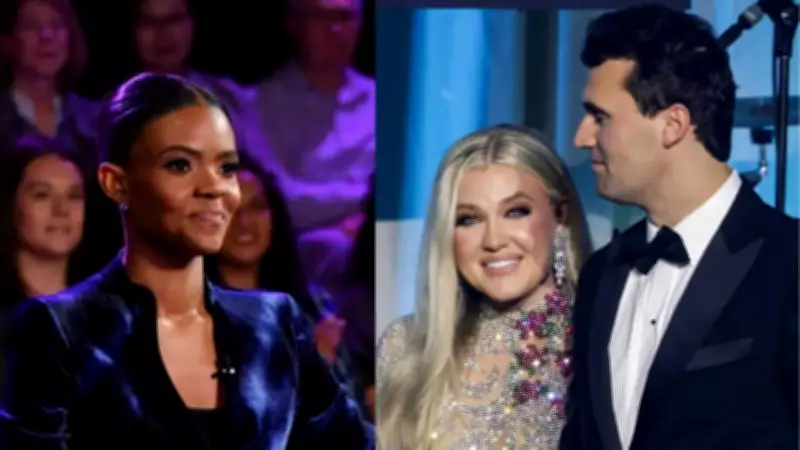
Candace Owens' Viral Claims Reignite Scrutiny Over Charlie Kirk Death Narrative
As new accusations and counterclaims emerge across digital platforms, intense questions are once again swirling around the circumstances of Charlie Kirk's death. A viral social media post featuring comments from conservative commentator Candace Owens has ignited a fresh wave of debate, thrusting Erika and the timeline of her mother's health back into the public spotlight.
Social Media Activity Fuels Widespread Disagreement and Speculation
The claims, which are largely based on interpretations of social media activity and perceived intentions, have triggered significant disagreement across various online platforms. At the heart of this storm is a clip from Owens' YouTube discussion, where she presents a forceful argument suggesting that Erika's actions in the days leading up to the tragedy may not have been genuine.
Despite the lack of concrete proof, these assertions have prompted heightened scrutiny and sparked broader conversations about public perception, the nature of grief, and how digital storytelling can powerfully shape and influence public narratives.

Owens' Detailed Analysis Questions Timing and Intent
Candace Owens did not hold back as she meticulously dissected what she believes are inconsistencies in Erika's account. In her own words, she stated:
"Erica was in the hospital with her mom. That's a lie. Erica's mother was not in the hospital on September 10th."
She elaborated further, explaining, "Erica's mother was at an opt-in treatment center, similar to IV places with many chairs. The idea was to double inflict the public with this concept of the widow doing the right thing at the right time while already in a hospital. And then with her mother, who's dying, you're supposed to think her mother was dying. That was the purpose, I believe, of her posting on September 8th. She hadn't posted her mother in years, and suddenly she posts a video of her mother looking frail and sick. That is intentional. I'm tired of pretending that Erica was not using her Instagram to manipulate us. You don't go from not posting your mom for two years to posting her in a frail condition two days before Charlie gets assassinated. That feels manipulative to me."
Mixed Reactions and Broader Implications
Owens' strong and unequivocal words have garnered both support and sharp criticism from various quarters. Some individuals view her analysis as a necessary and critical challenge to widely accepted narratives, arguing that it encourages deeper examination of public stories. Conversely, others contend that her approach goes too far, relying on speculation without solid evidence and potentially overlooking the complexities of human behavior.
Critics emphasize that grief and personal decisions often do not follow predictable or linear patterns, especially under the immense pressure of public scrutiny and media attention. This debate highlights the delicate balance between investigative questioning and respect for personal privacy during times of tragedy.
The ongoing discussion continues to evolve, reflecting broader societal concerns about truth, manipulation, and the role of social media in shaping contemporary events and public opinion.