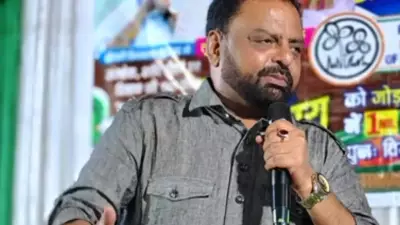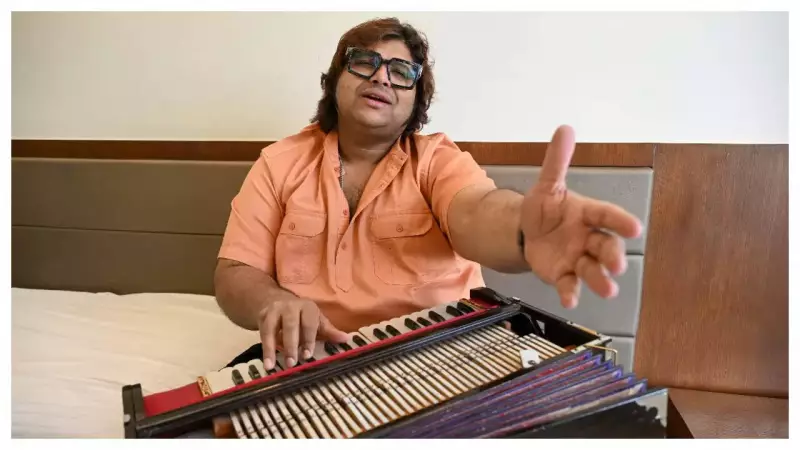
Mujtaba Aziz Naza, the son of legendary Qawwali vocalist Aziz Naza and a noted composer for Bollywood hits like 'Aayat' and 'Deewani Mastani', recently visited Ahmedabad, sharing his deep affection for the city and his visionary plans for the future of Sufi music.
A Deep-Rooted Bond with Ahmedabad
The artist revealed a long-standing and emotional connection with Ahmedabad, stating he has been visiting since he was just 12 years old. He emphasized the inseparable cultural bonds between Maharashtra and Gujarat and expressed his fondness for the city's vibrant street food scene at Manek Chowk. For Naza, Ahmedabad stands as a shining example of a truly developed city, and he cherishes the many memories associated with it.
Connecting with GenZ and Pushing Musical Boundaries
Naza is particularly enthusiastic about the younger generation's appreciation for his music. He believes that GenZ is remarkably perceptive and can genuinely grasp the essence of Sufi music. The overwhelming response from young audiences at his live performances and the immense popularity of his recent Qawwali-rap fusion track, 'Masoom', with Farhan Khan, validate this belief.

Not one to rest on his laurels, Naza is now focused on ambitious experiments to blend Qawwali with regional folk sounds. He is looking forward to collaborating with Pinky Maidasani to fuse Qawwali with Gujarati and Rajasthani folk music. He already incorporates the rhythmic patterns of garba into his devotional Qawwalis and described his experience performing 'dayro' with Sairam Dave as mesmerising.
The Spiritual Power of Music and a Personal Journey
For Naza, music is a profoundly spiritual and healing force. He shared that his performances of his father's Qawwali, 'Chadhta Sooraj Dheere Dheere', often move audiences to tears, bringing them a sense of 'sukoon' or peace. He himself becomes completely immersed in the performance, experiencing a deep spiritual energy.
His own musical journey began under poignant circumstances. Surrounded by music but not actively engaged with it, everything changed after his father's passing when Naza was only five. He found himself drawn intensely towards music, instruments, and singing, teaching himself from a remarkably young age, which he attributes to divine grace.
Bollywood Collaborations and a Vision for Sufi Music
Naza has an impressive portfolio of work in Bollywood, having collaborated with master composers like Sanjay Leela Bhansali, Anu Malik, and the late Ravindra Jain. He fondly recalled creating the Qawwali section for 'Aayat' in 'Bajirao Mastani' and the award-winning experience of working on 'Padmaavat'. He also had the opportunity to recreate his father's 'Chadhta Sooraj' for 'Indu Sarkar' with Anu Malik, even offering to sing it on screen.
Beyond Qawwali, his compositional range is diverse, including a bhajan, 'Jai Jai Ganaraj', sung by Shankar Mahadevan for the film 'Sniff'. He takes immense pride in representing Indian music on international stages and aims to inspire a new generation of musicians.
Speaking candidly about the future of Sufi music, Naza expressed a strong opinion. While revering Nusrat Fateh Ali Khan as an extraordinary artist, he believes the genre has become overly dependent on his legacy. He argues that it is time to progress and create something fresh and distinctly their own. While inspiration from the greats is valuable, audiences now deserve new and original content.
On AI and Future Projects
When asked about the role of Artificial Intelligence in music, Naza acknowledged it as a remarkable tool but stated its limitations. He firmly believes that AI lacks true creativity and cannot generate original music. Looking ahead, he announced plans to recreate, curate, and release his father's extensive body of work, including ghazals and Qawwalis, with numerous projects already in the pipeline.