Lakkhichhara at 31: The Enduring Legacy of a Bangla Rock Pioneer
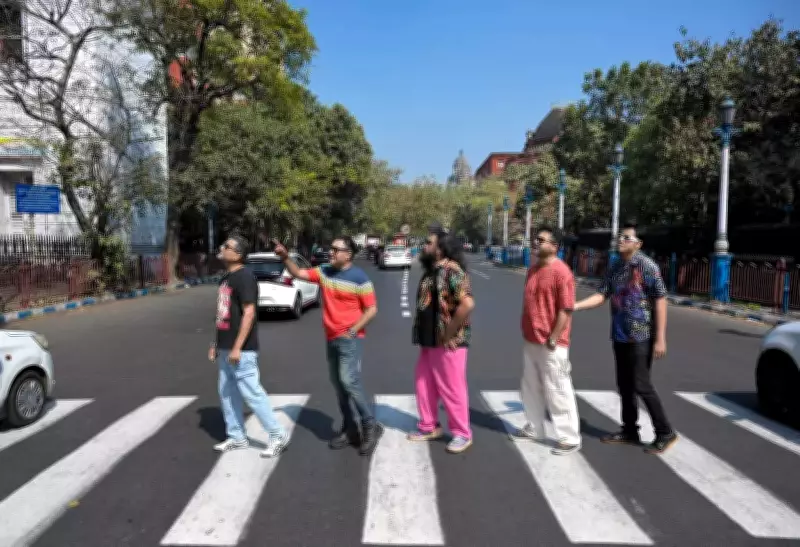
If you have ever swayed to the rhythms of Bangla rock, chances are Lakkhichhara has been a staple on your playlist. For over three decades, this iconic band has transcended mere music, embodying a profound narrative of friendship, discipline, and continuous evolution. From humble beginnings at college festivals to prestigious tours abroad, and from the era of cassettes to the digital age of YouTube, Lakkhichhara has grown in tandem with Kolkata and its devoted audience. As the band proudly steps into its 31st year, members Rajiv Mitra, Gaurab 'Gaboo' Chatterjee, Debaditya Chaudhury, Sanket Bhattacharya, and Bodhisattwa Ghosh share insights into their origins, diverse influences, and how six distinct personalities, including the reclusive songwriter Anirban Mazumder, collectively shape their unmistakable and enduring soundscape.
The Genesis of a Musical Brotherhood
Gaurab 'Gaboo' Chatterjee recounts the band's inception, tracing it back to the mid-1990s. "Our story begins even before our St Xavier's College days," he explains. "Around 1995, when I was in Class 6, my father, Gautam Chatterjee—a founding member of the legendary band Moheener Ghoraguli—released an album of edited Bengali alternative songs. He secured a three-episode deal with Doordarshan Kolkata to produce music videos for non-mainstream tracks, which sparked curiosity in the genre. This led to the cassette Aabaar Bochhor Kuri Pore, released at the Boi Mela. The idea for Lakkhichhara emerged around this time, with my father encouraging us to take music seriously and bestowing the band name upon us."
Gaboo started jamming with neighborhood friends like Sanket Bhattacharya (affectionately called Panku). In 1999, upon joining St Xavier's College, he met Debaditya Chaudhury, who had his own band, Astra. Eventually, the two groups merged, laying the foundation for Lakkhichhara as we know it today.

Evolution Through the Decades
Debaditya Chaudhury reflects on the band's growth: "In college, we were tagged as the college band after former members Subhajit and Sayak joined. Our first album in 2001 marked a milestone, and by the second album—featuring hits like Jibon Chaichhe Aro Beshi—we had significantly expanded our reach. Over the years, life priorities shifted for some, but new talents like Rajiv and Bodhisattwa joined, enriching our sound."
The band's evolution is audible in their discography. Gaboo notes, "If you listen closely, you can hear the shift. Early on, we had many love songs; our latest album has none. Every musician leaves a mark, and Anirban Mazumder's songwriting remains a constant thread. Compare Jibon Chaichhe Aro Beshi from 2003 to a 2023 track like Padabi—they are different, yet unmistakably Lakkhichhara. We create collectively; every element carries everyone's imprint."
Personalities and Discipline: The Glue That Holds Them Together
Beyond music, a strong personal bond and shared values of discipline and punctuality define Lakkhichhara. Debaditya emphasizes, "We take decisions together, and each album reflects the band at that moment. Staying together for 25 to 30 years is no small feat." Bodhisattwa Ghosh, who joined in 2016, describes the relationship as symbiotic: "I adapted to the band's style, and the band shaped me in return. My playing leaves a mark on Lakkhichhara's identity, and I carry its imprint in my music."
Disagreements are inevitable, but as Gaboo points out, "What matters is how you resolve them. Mutual respect is crucial, and it deepens with age." He calls the current lineup the most stress-free they've had, with everyone valuing each other's perspectives. Life decisions often revolve around the band, exemplified by members traveling from cities like Bangalore and Delhi for rehearsals, yet the band never takes a backseat.
Carving an Identity in the Bangla Rock Boom
In the early 2000s, during the Bangla rock boom, Lakkhichhara carved a unique identity. Gaboo recalls, "We were drawn to rock from childhood, influenced by concerts and shared tastes, but we never tried to copy anyone. We focused on creating our own music. Bisesh Bisesh Ansha Birotir Par was a deliberate progressive rock experiment; otherwise, our sound evolved naturally."

The audience has evolved alongside the band. Debaditya notes, "We have seen our music resonate across generations, even within the Bengali diaspora in the US." Sanket adds a heartwarming anecdote: "My son, who is in Class 7, has formed a band with friends. They play Jibon Chaichhe Aro Beshi in competitions and even plan to play Padabi in their next performance."
Adapting to Changing Mediums and Future Plans
The medium of sharing music has transformed dramatically. Gaboo explains, "We have embraced YouTube and social media with a strong team. We aim to balance new releases by revisiting 16 of our old songs in new arrangements soon." Debaditya adds, "Some of our older songs never got exposure on cassettes. We want to repackage and re-release them." Rajiv Mitra highlights the untapped potential: "When our albums first released, platforms were limited, so many songs did not reach a wide audience. We believe those tracks still have immense potential."
The Vision and Legacy of Lakkhichhara
When asked about their initial vision, Debaditya responds, "We could never imagine a life without Lakkhichhara. This isn't about ambition or vision. The band is a habit for us." Gaboo echoes this sentiment: "Even today, despite careers and cities pulling us in different directions, the band remains our common thread. Whatever our other roles, we first identify as members of Lakkhichhara. There were moments of uncertainty, but we kept pushing each other forward."
Recalling formative experiences, Debaditya shares, "Our first album was released by Nachiketa Chakraborty at Music World on Park Street, which played a key role in shaping us." The band's musical influences are diverse, ranging from The Beatles and Iron Maiden to Santana and Pink Floyd, contributing to their rich sound.
Connecting with Audiences and Looking Ahead
Gaboo recalls a surreal moment that affirmed their impact: "In Gariahat, I once saw a bunch of kids singing Jibon Chaichhe Aro Beshi while waiting for an auto. That's when I realised we have made an impact." Bodhisattwa, who grew up listening to the band, adds, "I had a band called Insomnia and attended every Lakkhichhara concert. When I learnt they were adding a lineup, I reached out to join." Debaditya credits radio as a major medium that helped audiences connect, saying, "Back then, if 20 songs played, 15 would be by Bengali bands. It played a major role in turning rock into mainstream."
As Lakkhichhara looks to the future, the members remain hopeful. Bodhisattwa notes, "Acceptance from the new generation gives us hope. If and when they compose their own music inspired by ours, that will be our legacy." Rajiv summarizes their collaborative spirit: "We have different personalities outside the band. At rehearsal, we leave them behind and make music together." Sanket concludes, "No matter how our sound evolves, if you listen to our music closely, you'll know it's Lakkhichhara."