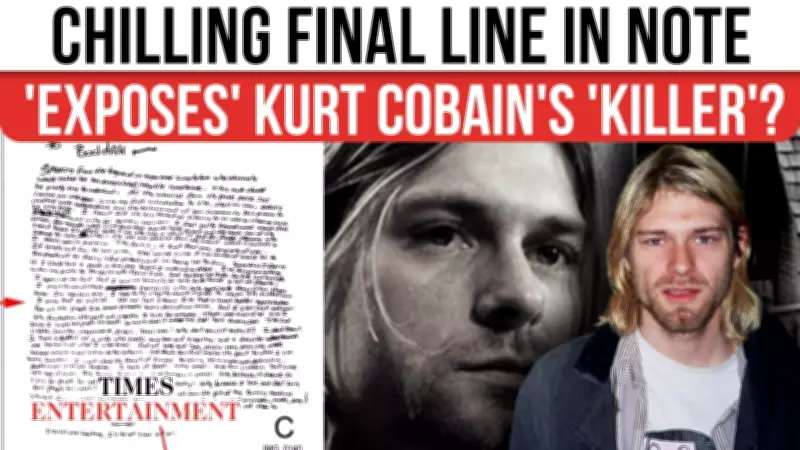
Kurt Cobain Death Mystery Reignites As New Forensic Report Questions Suicide Note & Autopsy Findings
More than three decades after the tragic passing of Nirvana frontman Kurt Cobain, a groundbreaking independent forensic review has reignited the long-standing mystery surrounding his death. A peer-reviewed paper published in the International Journal of Forensic Science has cast fresh doubt on the official ruling of suicide, presenting ten critical points of concern that challenge established conclusions.
Forensic Analysis Highlights Key Inconsistencies
The new report meticulously examines various aspects of the case, including alleged discrepancies in Cobain's autopsy findings and toxicology report. Forensic experts involved in the review point to potential oversights in the original investigation, suggesting that certain details may have been misinterpreted or overlooked entirely.
Most controversially, the paper questions the authenticity and interpretation of Cobain's final suicide note. Researchers argue that handwriting analysis and contextual factors raise legitimate doubts about whether the note was entirely written by Cobain or if it contains elements that might indicate external influence.

Crime Scene Details Under Scrutiny
The forensic review also brings renewed attention to the crime scene details from that fateful day in April 1994. Investigators have identified several anomalies in the official reports that they believe warrant further examination. These include:
- Unusual positioning of evidence at the scene
- Questions about the timeline of events
- Potential contamination of forensic samples
- Inconsistencies in witness statements
Toxicology Report Raises Additional Questions
The paper's authors have expressed particular concern about the toxicology findings from Cobain's autopsy. They suggest that the levels of certain substances detected in his system may not align perfectly with the official narrative of a self-administered overdose. This has led to speculation about whether all factors were properly considered in the original investigation.
The publication of this peer-reviewed analysis represents the most significant scientific challenge to the official suicide ruling in years. While the original investigation concluded that Cobain died by suicide, this new forensic examination suggests that several aspects of the case remain unresolved and merit serious reconsideration.
Impact on Cobain's Legacy and Ongoing Investigations
The release of this forensic report has sparked renewed debate among music historians, forensic experts, and fans worldwide. Many are calling for a re-examination of the case in light of these new findings, while others maintain that the original conclusions remain valid.
This development comes at a time when forensic science has advanced significantly since 1994, allowing for more sophisticated analysis of historical cases. The researchers emphasize that their goal is not to definitively prove alternative theories, but rather to highlight areas where the official investigation may have been incomplete or flawed.
As the music world continues to grapple with Cobain's enduring legacy, this new forensic examination ensures that questions about his tragic death will remain part of the conversation for years to come. The report's authors have called for transparency and further investigation to address the concerns they've raised, hoping to bring greater clarity to one of rock music's most enduring mysteries.