Kolkata Sarod Artist's Harrowing Escape from Dhaka Unrest
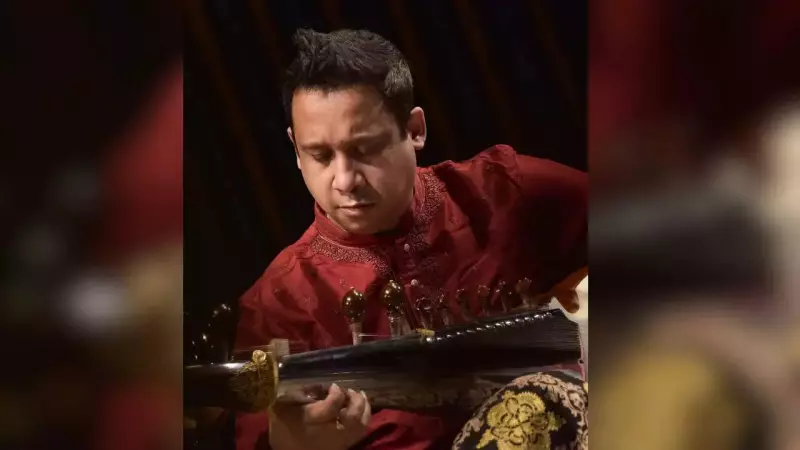
Shiraz Ali Khan, a renowned sarod player based in Kolkata, was forced into a desperate escape from Dhaka, concealing his Indian identity for safety. His planned performance at the prestigious Chhayanaut cultural centre on December 19 was cancelled after the institution was vandalised amidst nationwide unrest. The violence followed the death of radical activist Sharif Osman Hadi.
Shiraz managed to return to Kolkata on Saturday evening, but the experience left him deeply shaken. He made a decision he never imagined: to suppress his Indian identity during his journey out of Bangladesh. His tabla player remains stranded in Dhaka, hoping to return on Monday.
A Legacy Attacked: From Allauddin Khan to Chhayanaut
Shiraz Ali Khan comes from a legendary musical lineage. He is the son of Ustad Dhyanesh Khan, grandson of Ustad Ali Akbar Khan, and great-grandson of Ustad Allauddin Khan, who hailed from Brahmanbaria in present-day Bangladesh. This connection made the attack on Chhayanaut particularly painful.

"Some years ago, a college in Ustad Allauddin Khan’s name in Brahmanbaria was attacked. The attack on Chhayanaut is an unimaginable assault on our culture and shared values," Shiraz stated, highlighting a pattern of violence against cultural institutions.
He had arrived in Dhaka on December 16 for a jazz concert in Banani the following day. The major classical recital at Chhayanaut was his primary engagement.
"Images Beyond Belief": The Shock of Vandalism
"Despite the small gathering of 17-18 people, the experience in Banani was heartfelt," Shiraz recalled. However, on the morning of December 19, he learned about the attack on Chhayanaut. "I couldn’t believe the building where I was to perform was destroyed. Seeing the disturbing images was beyond belief, especially as someone who holds music and its sacredness in the highest regard."
Photographs of broken instruments left him profoundly shocked. He explained his deep reverence: "If I accidentally touch a musical instrument with my feet, I immediately apologise to Maa Saraswati. The damage to the music community and the nation is immense."
The Desperate Flight: Hiding Identity at Checkpoints
While attempting to leave Dhaka, Shiraz was stopped at a checkpoint. "I was asked if I had foreign currency. Fortunately, I didn’t," he said. It was at this moment he chose not to reveal his Indian nationality, aware of simmering anti-India sentiments.
Instead, he spoke in the Brahmanbaria dialect he learned from his mother, who moved to India after her marriage in 1968. His surname, Khan, also helped convince people he was from Bangladesh. "I never thought I’d have to hide my Indian identity," he admitted.
In a move born of sheer desperation, he handed his Indian passport and phone to his driver, who hid them in the car's dashboard. He retrieved them only at the airport. "I don’t know what would have happened if I hadn’t concealed my identity," he reflected.
His worries continue, as his mother is still in Bangladesh. He also expressed concern for his Hindu accompanists stranded in Dhaka, choosing not to reveal their names for their safety.
A Vow Not to Return Until Culture is Respected
Deeply affected by the events, Shiraz Ali Khan has declared he "won’t return" to Bangladesh until artists, music, and cultural institutions are respected and protected.
He clarified, "I have nothing against the educated and art-loving people of Bangladesh... My issue is with the mob mentality that attacks cultural institutions." His statement underscores the fragile state of cultural exchange and the safety of artists in the region.