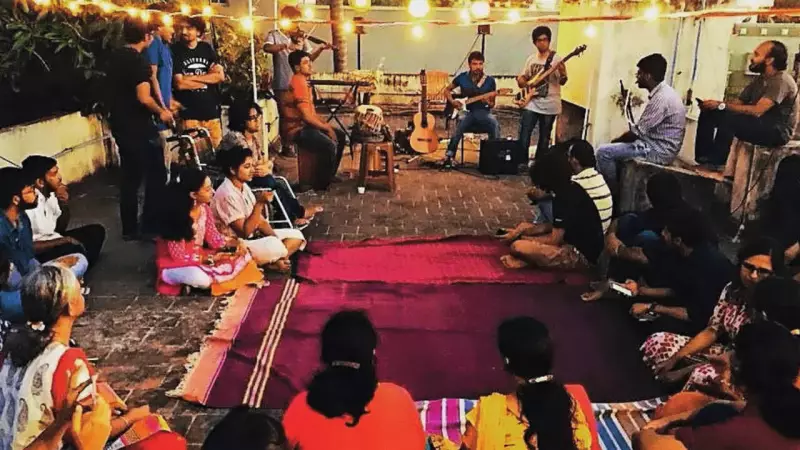
In Chennai, the evening air is increasingly filled with the sound of spontaneous music. No longer confined to concert halls or rigid schedules, melodies now flow from rooftops, street corners, parks, and terraces. This movement is creating unplanned yet deeply familiar gatherings, turning everyday locations into vibrant stages and passersby into an engaged audience.
The Architects of Chennai's Informal Music Scene
This cultural shift is largely driven by passionate grassroots collectives. Groups like Motta Maadi Music and On The Streets Of Chennai have been instrumental. They organize impromptu jam sessions on rooftops and collective singalongs on pavements, seamlessly mixing popular Kollywood and Bollywood hits with easy public interaction. These events transform casual meet-ups into shared cultural experiences.
Visiting artists, such as the duo Backstage Siblings — Prachi and Raghav, further enrich the scene by adding contemporary flair to traditional bhajans. This blend continuously expands the definition of live music, both in its sound and its permissible venues.

From Jam Sessions to Sustained Community Spaces
Aditya Kamakshinadha of Motta Maadi Music encapsulates the spirit, stating, "There is immense joy in connecting through music." He notes that this trend of jamming and singalongs gained real momentum in Chennai around 2018. After organizing more than 200 shows, his group has fostered a space where people of all ages sing freely without inhibition.
For him, the location is as crucial as the performance. "Chennai’s beaches, parks, cafés and rooftops offer warm, open spaces that strengthen community and deepen connection," he explains. "The acoustic space brings a performance alive, sets the vibe, and adds to its beauty." This philosophy drives a preference for unconventional spots across the city.
The initiative On The Streets Of Chennai has evolved into a sustained community endeavor. Its founder, Raj, reveals the project began seven years ago and has since completed a staggering over 2,200 performances throughout the city.
"The project is inspired to create smiles and make the world a happier place through music," Raj says. He emphasizes the unique, immediate connection street performance fosters: "If you can make someone in a rush stop and listen, it creates value. Performing on the streets makes a normal performer a better performer." Today, he observes that street music is woven into Chennai’s cultural fabric, with residents now anticipating live performances in public spaces.
How Audiences Are Embracing the Change
For listeners, these informal sessions offer a radically different bond with live music. College student Saranya P highlights the accessibility: "There’s no stage pressure or ticket barrier — you can sing, clap or just listen. It shows how Chennai’s music scene is becoming more open and community-driven."
Many recall magnetic moments that captivated them. Photographer Tamaira shares, "I planned to leave, but when they played 'Nenjukkul Peidhidum' and everyone hummed along, I stayed." Eesha R adds to this sentiment, noting, "When music happens this close, it feels less like a performance and more like a shared moment." This palpable sense of closeness and participation is what consistently draws people back.
Finding a Voice, One Song at a Time
The movement also serves as a vital incubator for emerging talent. On a quiet Besant Nagar evening, 24-year-old Nandhini S sets up with just a loop pedal and a microphone. Without banners, stage lights, or announcements, she begins softly, testing the street's acoustics, and gains confidence as a small crowd gathers.
"When I play alone like this, it feels less like performing and more like listening to myself," she reflects. Nandhini, who started live jamming after college, credits these informal settings for building her confidence before entering curated gigs. "On the street, you can tell immediately what works. People stop if they feel something," she adds, highlighting the raw, instant feedback loop that public spaces provide.

This growing culture in Chennai proves that music's true power often lies not in grand spectacles, but in spontaneous, inclusive, and community-rooted connections made on a motta maadi or a bustling street corner.