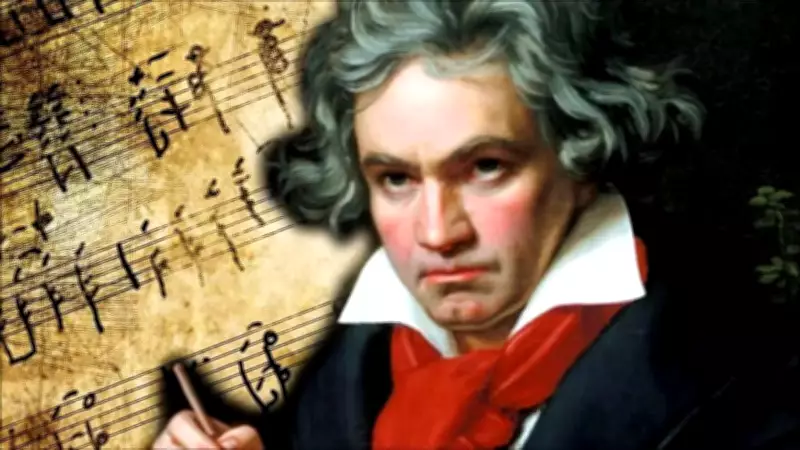
How Beethoven Composed Masterpieces While Deaf: The Truth Behind the Legend
One of music history's most haunting images is also one of its most revealing: Ludwig van Beethoven, nearly deaf, still bent over a score, filling page after page with ideas that would outlive him by centuries. The drama is real, but the truth is even more fascinating than the legend. Beethoven did not wait for silence to finish him; he learned to compose through it.
The Slow Arrival of Silence
Beethoven was not born deaf. The first signs of hearing loss appeared before 1800, and by 1802, he knew the problem was serious and progressive. In the famous Heiligenstadt Testament, written during a devastating summer in the country village of Heiligenstadt, he described the emotional toll of the condition and his fear that he might never recover.
Later sources confirm that his hearing continued to decline, and by around 1819, he is believed to have been effectively deaf. Along the way, he also dealt with tinnitus and hyperacusis, which made sounds ring, buzz, or become painfully loud. This timeline matters because it shows Beethoven was not suddenly "deaf and then brilliant." He spent years adapting while the world around him slowly grew dimmer and farther away.

He was still performing in public in the early years of the decline, but he was already struggling to hear high notes, conversations at a distance, and even the details of orchestral sound.
Learning to Hear Music Inside His Head
What saved Beethoven's creative life was not some mystical sixth sense but a fierce inner model of sound. The Beethoven-Haus in Bonn describes how he had "music in his head and in his inner ear" from early on and how he could follow music in that inner space even when he could no longer hear it clearly in the room.
This meant composition could continue as an act of imagination, memory, and control rather than live audition. In other words, Beethoven was hearing the whole architecture of a piece before he ever wrote it down. Britannica makes the same point from another angle: Beethoven's hearing loss did not stop him from composing, and many of his most famous works were written while he was partially or totally deaf.
His late period was not a period of silence in the creative sense. It was a period in which he was building large, daring structures in his mind and then transferring them onto the page.
Working with Sketches, Notes, and Memory
Beethoven's surviving sketches show a composer who did not simply wait for inspiration and transcribe it. He worked things out gradually, testing, revising, and returning to material again and again. Britannica also notes that in his sketches, familiar melodies can be seen emerging from rough beginnings into finished form, which suggests a working method based on patience and repeated refinement.
That method mattered even more once hearing was unreliable because it shifted the center of gravity from live listening to internal planning. He also used practical tools to stay connected to the world. Around 1812 to 1816, he tried ear trumpets made for him by Johann Nepomuk Maelzel, a German inventor, engineer, and showman best known for manufacturing a metronome and several music-playing automatons.
From 1818 onwards, he relied on conversation books, in which visitors wrote down what they wanted to say and Beethoven usually answered aloud. Those same booklets were sometimes used for musical sketches or notes, giving him a written workspace that doubled as a social lifeline.
Late Works Were Not Accidental Triumphs
This is the part that still astonishes listeners: some of Beethoven's most important music came from the years when he could no longer hear at all. Britannica says his most significant works were composed during the last 10 years of his life, when he was "quite unable to hear." That group includes the Missa Solemnis, the Ninth Symphony, and the late string quartets, works that expanded musical form rather than retreating from it.

Far from shrinking his art, deafness seemed to push him toward bolder structures and a more inward kind of expression. The Ninth Symphony is the clearest example. Britannica notes that Beethoven likely never heard a single note of it played and that applause at the premiere went unnoticed by him, proof that the music existed first in imagination, not in the ear of the performer standing on the podium.
That does not make the work less human. It makes it more so. It was written by a man building sound from memory, discipline, and sheer will.
What Beethoven Still Teaches Us
Beethoven's deafness did not make him a miracle. It made him methodical. He sketched more, revised more, leaned on notation, and trusted the music he could carry in his mind when the outside world stopped cooperating. That is the lasting lesson in his story: creative work is not always born in perfect conditions.
Sometimes it is born when the conditions are stripped away, and the artist has to rebuild the music from the inside out. Beethoven did exactly that, and the result still sounds like freedom.