Bad Bunny's Super Bowl Surge Outshines Taylor Swift on Music Charts
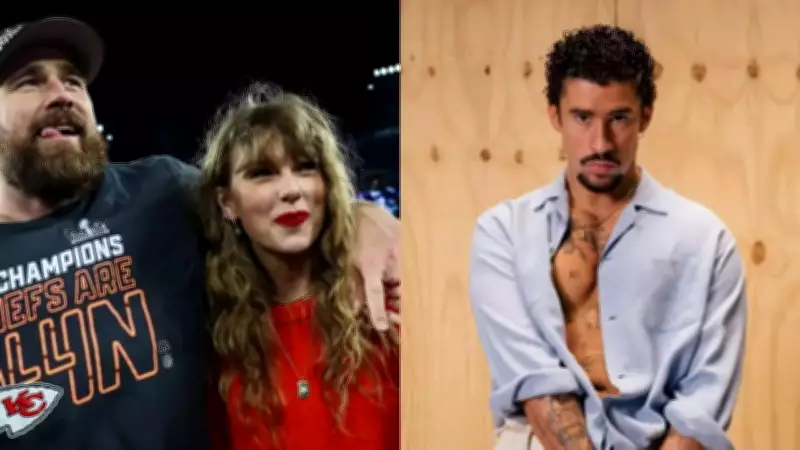
In a significant shift in the music industry landscape, Bad Bunny has eclipsed Taylor Swift on both the Billboard Hot 100 and Spotify monthly listeners, fueled by the momentum from his recent Super Bowl halftime performance. According to reports from Marca and Heavy, this development marks a pivotal moment as the Puerto Rican star capitalizes on nationwide exposure while Swift opts to wait for personal reasons tied to her partner's career.
Chart Dominance and Streaming Numbers Tell a Competing Story
This week, Taylor Swift's single "Opalite" remains stagnant at No. 8 on the Billboard Hot 100, overshadowed by four tracks from Bad Bunny that occupy higher positions. Notably, Bad Bunny achieved his first career No. 1 on the chart, also securing spots at Nos. 2, 5, and 7. This surge is directly attributed to his Super Bowl appearance in early February, which captivated one of the largest television audiences of the year and revitalized interest in both his new releases and back catalog.
On the streaming front, recent data reveals that Bad Bunny has edged past Swift in monthly listeners on Spotify, with approximately 116.8 million compared to her 116.2 million. This milestone places him among the elite artists, having surpassed 100 million monthly listeners, 100 billion total streams, and 100 million followers, positioning him just behind Bruno Mars and The Weeknd in current listener counts.

Swift's Strategic Efforts Fall Short Against Super Bowl Impact
In an attempt to maintain competitiveness, Taylor Swift released remixes and alternate versions of "Opalite," resulting in a 300% sales increase as reported by Forbes figures cited by Heavy. Despite these efforts, the gap widened without the massive exposure that a Super Bowl halftime show provides in a single night. This highlights the unparalleled promotional power of such events in today's music industry.
Travis Kelce's Career Decisions Influence Swift's Super Bowl Stance
A unique twist in this narrative involves Taylor Swift's own stance on performing at the Super Bowl. She has publicly stated her intention to wait until Travis Kelce, her partner and Kansas City Chiefs tight end, retires from the NFL before considering a halftime show. On "The Tonight Show with Jimmy Fallon," Swift explained her reasoning, describing the scenario as "violent chess" and expressing her intense focus on Kelce's on-field performance during the season.
Kelce's future remains uncertain, with his decision expected around early March as the new NFL year begins. Kansas City Chiefs head coach Andy Reid has expressed optimism about Kelce's return, emphasizing ongoing communication as a positive sign. Kelce, who started all 17 games last season and led his team in key receiving categories, remains a central figure in the Chiefs' offensive strategy, providing strong incentives for him to continue playing.
Implications for the Music Industry and Artist Strategies
This situation places Taylor Swift in a challenging position. While Bad Bunny has successfully leveraged his Super Bowl opportunity to gain chart and streaming advantages in February 2026, Swift's choice to delay her own performance until Kelce's career concludes means missing out on similar benefits. The halftime show and chart opportunities await her potential future move, but for now, momentum firmly rests with Bad Bunny.
The contrast between these two global icons underscores broader trends in music promotion, where live events like the Super Bowl can dramatically alter artist visibility and success. As the industry watches, this episode serves as a case study in how personal decisions and strategic timing intersect with commercial opportunities in the competitive world of pop music.