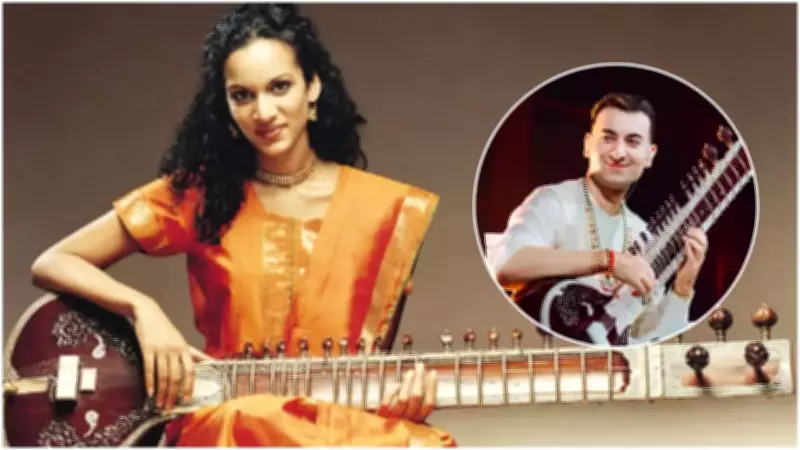
Anoushka Shankar Addresses Discipleship Claims Regarding Sitarist Rishab Rikhiram Sharma
In the world of Indian classical music, the lineage and authenticity of discipleship hold profound significance. A recent clarification from Anoushka Shankar, daughter of the legendary sitar maestro Pandit Ravi Shankar, has brought attention to claims made by sitarist Rishab Rikhiram Sharma. Sharma has frequently introduced himself in interviews as the "last and youngest disciple" of Pandit Ravi Shankar, a statement that has now been addressed directly by the Shankar family.
Anoushka Shankar's Detailed Clarification
During an interaction with the popular storytelling platform Humans of Bombay, Anoushka Shankar praised Rishab Rikhiram Sharma's musical abilities while setting the record straight on his guruship. "Rishab is really talented, and he is clearly speaking to people in a really wonderful way," she stated. However, she emphasized that there appears to be a misunderstanding regarding his relationship with her father.
Anoushka elaborated that Sharma learned intensively with Parimal Sadaphal, one of Pandit Ravi Shankar's senior disciples, and had only a couple of informal lessons with her father, with Sadaphal present. "We knew him from childhood because he was the son of our instrument maker Sanjay Rikiram Sharma," she explained. "So somehow that has gone blown up into some story of him being his last disciple or the youngest disciple, which isn't true. But he is super talented and deserves all success with or without that story."

Rishab Rikhiram Sharma's Perspective
In his own interview with WION, Rishab Rikhiram Sharma expressed deep reverence for Pandit Ravi Shankar, attributing his musical knowledge to the late maestro. "I have to say it's my guru, Pandit Ravi Shankar. Whatever I know is because of him and his disciples, who taught me after his demise," he said. Sharma highlighted that these disciples not only taught him compositions but also imparted the maestro's way of thinking, which he considers foundational to his artistry.
This discrepancy highlights the nuanced nature of musical mentorship in Indian classical traditions, where informal guidance and formal discipleship can sometimes be conflated in public narratives.
The Significance of Guru-Shishya Parampara
The guru-shishya parampara, or teacher-disciple tradition, is a cornerstone of Indian classical music, emphasizing direct transmission of knowledge, technique, and philosophy. Claims of discipleship to iconic figures like Pandit Ravi Shankar carry substantial weight in the music community, influencing an artist's credibility and reception.
- Anoushka Shankar's clarification underscores the importance of accuracy in representing musical lineages.
- Rishab Rikhiram Sharma's talent is acknowledged separately from the discipleship narrative.
- The episode reflects broader discussions about authenticity and legacy in classical arts.
While the clarification may adjust public perception, it does not diminish Sharma's musical contributions, which Anoushka Shankar explicitly praised. The situation serves as a reminder of how personal connections and informal learning experiences can evolve into public stories, sometimes requiring clarification from those closest to the legacy.