The journey of a classic 1960 qawwali back into the public consciousness in 2025 offers a fascinating case study in how culture circulates today. It challenges the notion that the present generation, obsessed with short-form content and remixes, has abandoned depth and history. Instead, the story reveals a more complex, functional relationship with the past, where the remix acts not as an eraser but as a compelling invitation.
The Unlikely Path: From Viral Reel to Timeless Poetry
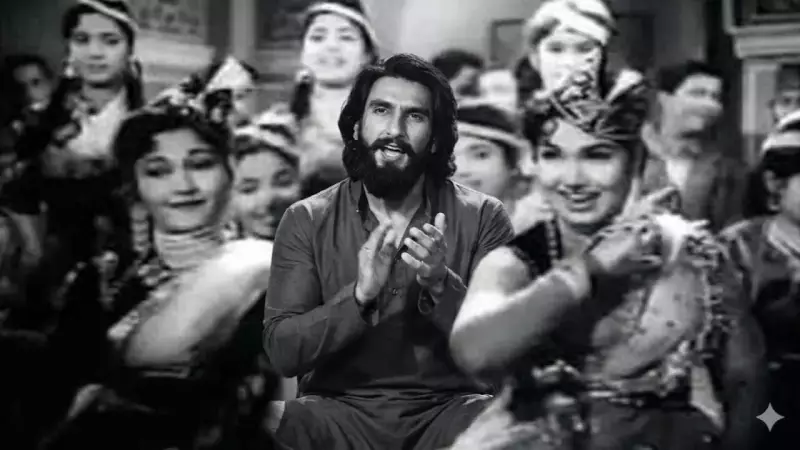
The road to rediscovering "Barsaat Ki Raat" in 2025 did not start with archival research or curated radio shows. It began, improbably, with a burst of high-energy noise and motion in a place called Dhurandhar. A sharp, familiar line from the old qawwali, repackaged within a new and frantic arrangement, found itself set against speed, spectacle, and the dynamic presence of Bollywood star Ranveer Singh. This was not a museum-piece presentation; it was a cultural impact event.
This method of rediscovery works precisely because modern audiences often engage with culture functionally, not chronologically. When a lyric speaks with clarity and a defiant spirit—about walking away from caravans, crowds, and the performance of togetherness—it resonates as deeply contemporary, even if penned decades ago by the legendary poet Sahir Ludhianvi.

The Remix as a Stress Test, Not a Replacement
The common critique that young listeners prefer versions over originals misses a crucial point. The contemporary remix is rarely the final destination. It is the gateway. It does not seek to replace the old work; it subjects it to a rigorous, modern stress test. It asks a vital question: can the core essence of this art survive acceleration, compression, repetition, and algorithmic exposure?
Sahir Ludhianvi's words pass this test with flying colours, not merely on the crutch of nostalgia, but because their foundation was always substantive. His lyrics were never mere decoration; they were arguments—quiet yet stubborn rebuttals against the tyranny of the majority and the seductive pressure to conform. When these words reappear in a compressed, high-energy loop, they do not feel diminished. Instead, their meaning is amplified, proving their combustible nature.
The Organic Journey from Hook to Depth
Once the repackaged line begins circulating on reels and shorts, a predictable and beautiful chain reaction occurs. Curious viewers search longer. They dig deeper. They discover that the powerful voice they heard in a 30-second clip originally took thirteen unhurried minutes to unfold its full philosophical depth. They learn that the original artistry was patient, never in a rush to convince. The remix effectively opens the door to the room; the original composition then teaches the listener how to sit still and absorb everything within it.
This behaviour is not novel to the digital age. Every generation has found its way to profound meaning through side doors—be it via cinema adaptations of books, cover versions of songs, or quoted excerpts before reading complete texts. What might look like cultural dilution from a distance often reveals itself to be a potent mechanism for transmission and wider distribution.
The mistake lies in assuming that reverence must be the first step. History shows it rarely is. Attachment and emotional connection almost always precede deep respect and scholarly understanding. This is why the persistence of old art is never solely about its age. It is about whether the idea remains inherently combustible—capable of catching fire even when struck in the most unfamiliar, modern ways.
Ultimately, this 1960 qawwali does not survive in 2025 because it was kept under glass, protected. It survives precisely because it travels. It allows itself to be remixed, reinterpreted, and propelled by contemporary velocity. In an era obsessed with speed, that adaptability and resilience might be its most contemporary quality of all.