In the vast and celebrated filmography of Martin Scorsese, a director revered across generations, one film stands out for its unapologetic audacity and savage hilarity: The Wolf of Wall Street. Released in 2013, this wild ride through the cesspool of financial greed has cemented itself as Scorsese's crown jewel for the 21st century. It is a film that is brutal, brash, and downright hilarious—a combination that secures its place among the maestro's very best works.
Scorsese's Evolution and the Genesis of a Modern Classic
As the prolific director stepped into the new millennium, the cinematic landscape was shifting. The audience that once resonated with the gritty mobsters of Mean Streets or Goodfellas had matured. Scorsese, ever the adaptive storyteller, navigated this change on his own terms. After delivering critically acclaimed films like The Aviator (2004), The Departed (2006), and Shutter Island (2010) with his frequent collaborator Leonardo DiCaprio, their partnership was poised for a seismic shift.
Then came The Wolf of Wall Street. The film represented the culmination of every delinquent character arc Scorsese had ever conceived, presented with the masterful finesse of a crime drama. Boasting a stellar cast capable of captivating both mass audiences and harsh critics, the movie felt like a electric fusion of Goodfellas and Wall Street. It told the story of ruthless criminals, but this time, their battlefield was the stock market floor instead of the city's back alleys.

Characters, Chaos, and the Goodfellas Parallel
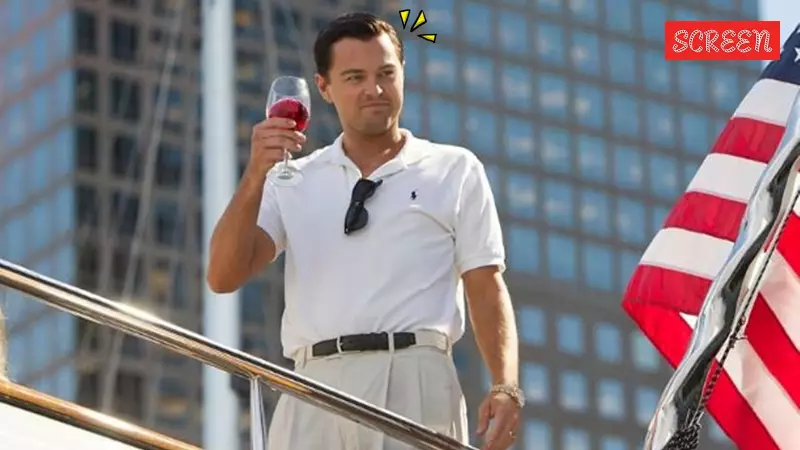
Loosely based on the real-life exploits of stockbroker Jordan Belfort, the film follows his meteoric and morally bankrupt rise. Leonardo DiCaprio, no stranger to portraying real-life con artists, slipped into Belfort's skin with unnerving perfection, making the actual financier's image feel almost secondary. The narrative structure invites direct comparison to Goodfellas.
We have the ambitious, problematic protagonist in Jordan, mirroring Henry Hill (Ray Liotta). The crazy best friend role, embodied by Joe Pesci in the earlier film, is brilliantly played by Jonah Hill. Both stories feature their respective 'Rat Packs'—ensembles of morally bankrupt individuals. The female leads also share striking similarities: Margot Robbie's Naomi Lapaglia and Lorraine Bracco's Karen Hill are strong-willed women drawn to their partner's dangerous allure and influence, yet unafraid to confront them when lines are crossed.
However, a crucial difference lies in the protagonists' self-awareness. Henry Hill always knew he wanted to be a gangster, embracing his life outside the law. Jordan Belfort's corruption is a learned behavior. A pivotal early scene with Matthew McConaughey's character, Mark Hanna, seeds this transformation. Hanna dismisses Jordan's naive belief in mutual client-broker benefit, cynically stating the real goal is to transfer wealth from the client's pocket to their own. This moment ignites Jordan's relentless, consequence-free pursuit of wealth.
The Master's Touch: Making Audiences Complicit in the Decadence
Scorsese's genius is most evident in how he manipulates the audience's allegiance. Through dynamic cinematography by Rodrigo Prieto and sharp editing by Thelma Schoonmaker, we are pulled into Jordan's vortex of excess. The famous poolside speech—"There is no nobility in poverty"—filmed with Jordan moving through a crowd and elevated on a stage, fundamentally changes our relationship with him.
We find ourselves cheering for this perverse man, celebrating his escapes from authority, and becoming complicit in his world of drugs, booze, and stolen money. Just as audiences once rooted for Henry Hill's crimes, we applaud Jordan's audacity. This empathy makes the eventual fall, dictated by the constraints of the true story, all the more impactful. Scorsese ensures that, like Icarus, these characters must fall, offering a lesson in narrative consequence.

Despite its dark themes, the film's tone is masterfully balanced by impeccable comedic timing. From Jon Bernthal's punch to the chaotic antics of Jordan's 'gang of baboons'—including stellar performances by P.J. Byrne, Kenneth Choi, and Henry Zebrowski—the movie never becomes overwhelmingly grim. It is playful, boastful, and unapologetically itself.
The Wolf of Wall Street might not be Scorsese's most traditionally profound work, but it is arguably his wildest. It is a college-dorm fever dream filtered through the lens of a seasoned master, a film that captures the insane spirit of unbridled capitalism with terrifying, hilarious clarity. For a filmmaker renowned for gritty crime dramas, this film stands as a triumphant statement: a wildly entertaining, deeply critical, and unforgettable exploration of the American dream gone horrifically, hilariously wrong.