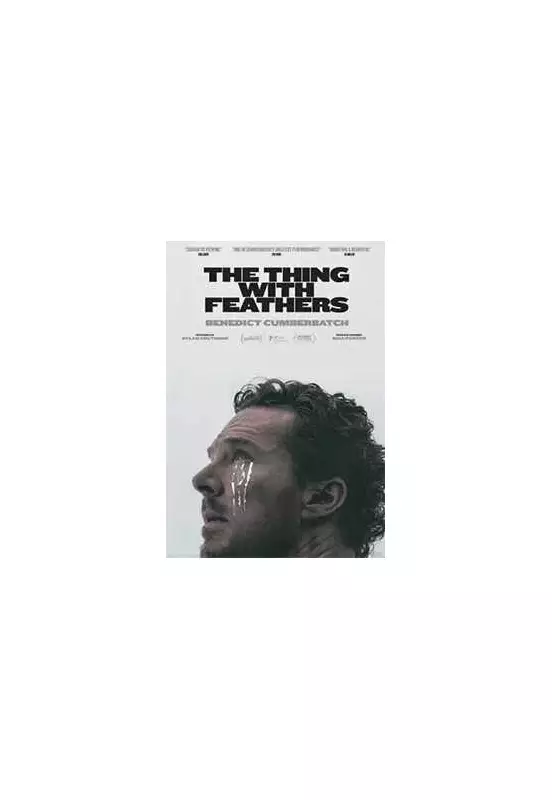
The Thing With Feathers, a new English drama film that premiered on January 9, 2026, is now streaming exclusively on Lionsgate Play. Directed by Dylan Southern, this cinematic adaptation of the experimental literary work Grief Is the Thing With Feathers has garnered a mixed critical and audience reception, with both groups awarding it a 3.0 rating.
A Heavy Metaphor Takes Flight
The film's narrative centers on a fractured family grappling with sudden, profound loss. Following the unexpected death of their mother, a grieving father, portrayed by Benedict Cumberbatch, and his two young sons find themselves unable to resume normal life. Their unspoken and suppressed sorrow materializes in a literal, menacing form: a large, intrusive crow. This anthropomorphic bird, voiced by David Thewlis and physically embodied by Eric Lampaert, forces the family to confront their pain, communicate honestly, and start the difficult journey toward healing together.
While the core concept is bold and arresting, the film's execution has divided opinion. The central metaphor of the crow, intended to represent the cruel yet necessary nature of grief, becomes the film's primary focus. Critics argue that director Dylan Southern leans so heavily on this device that its initial provocative power is diluted through repetition, making the symbolic weight feel oppressive rather than enlightening.

Cumberbatch's Unflinching Performance Anchors the Film
Despite the film's tonal struggles, Benedict Cumberbatch's performance is universally praised as its standout element. He portrays the widowed father with a feral, volatile intensity, completely stripping away any sentimentality. His grief is not quiet or poetic; it is chaotic, destabilizing, and at times frightening. Cumberbatch masterfully embodies a man whose internal world has collapsed, leaving him barely able to maintain a facade of routine or identity. His raw and emotionally naked performance provides the film's most authentic and human anchor, especially when other formal choices feel strained.
The supporting cast, including Sam Spruell and Jessie Cave, contribute to the ensemble, though the film's structure limits their development. The story is divided into four distinct chapters—Dad, Boys, Crow, and Demon—each offering a shift in perspective. While this fragmentation mirrors the disjointed experience of mourning, it also leads to an uneven narrative rhythm. The section focused on the children offers poignant glimpses into their confusion and fear, but the sons remain somewhat underwritten, functioning more as symbols of shared loss than as fully realized characters.
Ambition Versus Emotional Impact
The Thing With Feathers wavers tonally, attempting to blend psychological family drama with elements of horror. It employs jarring jump scares, harsh sound design, and looming imagery to create a sense of dread. However, these techniques often feel heavy-handed and fail to cohere into a sustained emotional or terrifying experience. Ironically, the film is often more effective in its quieter, less stylized moments—when grim humor or physical release punctures the solemn atmosphere, allowing genuine emotion to surface.
In conclusion, The Thing With Feathers is a film that commands respect for its intellectual ambition, conceptual daring, and a powerhouse central performance by Benedict Cumberbatch. However, its overdetermined execution, repetitive central metaphor, and tonal uncertainty ultimately limit its emotional reach. It is a striking and thoughtful meditation on grief—powerful in fleeting moments, exhausting in others—but one that leaves viewers admiring its craft more than feeling its intended heartache. The film is available to stream now on Lionsgate Play.