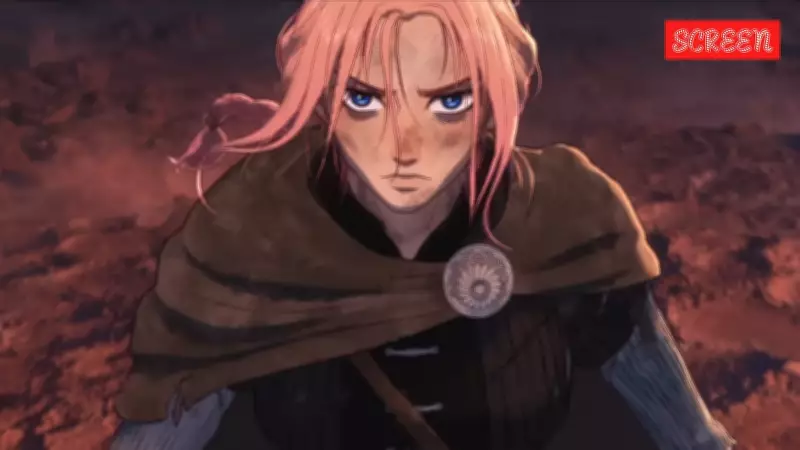
Scarlet Movie Review: An Ambitious Animated Reimagining of Hamlet
Oscar-nominated director Mamoru Hosoda ventures into time-bending fantasy territory with his latest animated feature Scarlet, a visually stunning reimagining of Shakespeare's Hamlet that explores profound themes of grief, rage, and the possibility of forgiveness. The film represents an ambitious attempt to create an epic cinematic experience while giving the classic tragic story an even darker, more complex twist.
A Medieval Princess Warrior's Quest for Vengeance
The narrative centers on Princess Scarlet, a medieval-era expert sword-fighter driven by a singular mission: to avenge her father's death. This furious princess grappling with overwhelming grief and rage provides the film with a strong, edgy emotional core that propels the story forward across timelines and dimensions.
In a deliberate nod to the original Shakespearean play, the initial scenes unfold in 16th century Denmark. King Amleth, Scarlet's father and a vocal opponent of wars, is branded a "traitor" by his brother Claudius (voiced by Koji Yakusho) and executed. Scarlet vows vengeance but is poisoned by Claudius, awakening in the mysterious Otherworld.

Journey Through the Otherworld and Beyond
The Otherworld presents a haunting landscape populated by deceased individuals seeking their path to eternity. Here, Scarlet encounters Hijiri, an idealistic young medic from the present day who helps her heal physically and emotionally. Hijiri shows Scarlet the possibility of a future free from bitterness, presenting a crucial alternative to her single-minded pursuit of revenge.
When Scarlet eventually encounters her father's killer again, she faces a monumental choice: continue her quest for vengeance or break the destructive cycle of hatred that has consumed her family for generations.
Visual Brilliance and Narrative Complexity
The screenplay, written by Hosoda himself, reinterprets the Shakespearean tragedy within an aesthetically impressive setting that blends traditional hand-drawn animation with sophisticated 3D computer graphics. This visual approach creates several striking dramatic moments:
- Amleth's public denouncement as a traitor and subsequent execution
- A furious Scarlet on horseback, sword in hand, attacking her opponents with relentless determination
- The ethereal beauty of the Otherworld contrasted with medieval Denmark's gritty realism
The film's narrative unfolds on a massive canvas, with Scarlet criss-crossing timelines while exploring weighty themes of guilt, obsession, and rage. This ambitious scope creates both the film's greatest strengths and its most significant challenges.
Strengths and Limitations of an Epic Vision
What seems magnificent about this latest feature from Hosoda—who earned an Oscar nomination for Mirai in 2018—also works against it at times. While the film's detailed aesthetic is brilliant throughout, the intense narrative occasionally feels crowded with too many elements competing for attention.
Yet what remains most memorable about Scarlet—which premiered as an official selection at the Toronto International Film Festival—is its depiction of a strong, complex female protagonist driven by love, grief, trauma, and rage. Despite spending most of its runtime exploring how Scarlet copes with tremendous loss and treachery, the film ultimately offers her a genuine opportunity for healing and transformation.
While retribution remains a dominant theme, Scarlet gradually veers its story toward forgiveness, suggesting that breaking cycles of violence requires more courage than perpetuating them. The film's 2.5-star rating reflects both its visual achievements and narrative challenges, positioning it as an ambitious if imperfect addition to Hosoda's distinguished filmography.
Technical Details and Cast
Director: Mamoru Hosoda
Cast: Mana Ashida, Masaki Okada, Kazuhiro Yamaji, Tokio Emoto, Munetaka Aoki, Shota Sometani
Rating: 2.5 out of 5 stars