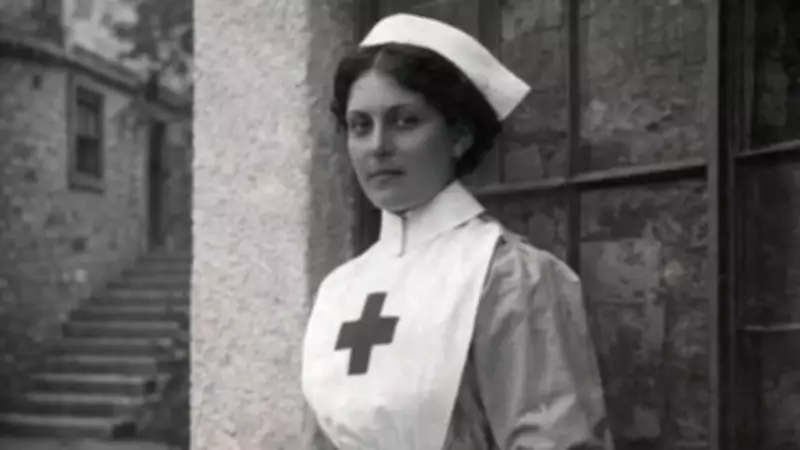
The sea is a friend to none, they say. The harshest of waves and moodiest of tides can turn a journey into a matter of life and death, claiming many lives. Yet, some individuals have miraculously lived to tell their tales. One such anomaly is Violet Jessop, a ship stewardess who survived not one, but three major shipwrecks during the early 20th century, earning the nickname "Miss Unsinkable."
Who Was Violet Jessop?
Violet Jessop was born on October 2, 1887, in Bahia Blanca, Argentina, to Irish immigrant parents William and Katherine Jessop. After her father's death, she moved to Britain at age 16. Initially enrolled in a convent school, she left to support her family when her mother fell ill. She began working as a stewardess aboard luxury ocean liners like the RMS Orinoco, traveling between England and the Caribbean. In an era when transatlantic sea travel was booming, the job offered rare independence and income for women. However, it was also a risky profession.
RMS Olympic
The first disaster came in 1911 when Jessop joined the White Star Line and worked aboard the brand-new flagship ocean liner RMS Olympic. Olympic was the first of three "Olympic-class" transatlantic liners built in Belfast, setting a new gold standard for luxury travel. Her sister ships were the Titanic and the Britannic. The Olympic collided with the British warship HMS Hawke near the Isle of Wight. While heavily damaged, the ship avoided sinking and returned safely to port. Jessop survived without serious injuries.

RMS Titanic
One of the most famous shipwrecks in history is that of the Titanic. Jessop was reluctant to leave the Olympic for the new opportunity on the Titanic, but a friend persuaded her it would be fantastic. On April 10, 1912, she boarded the Titanic as part of the crew during its maiden voyage from Southampton to New York. Four days later, at 11:40 pm, she was preparing to go to bed when she heard a loud bang followed by a screeching noise. Dressing quickly, she investigated and found the liner had struck an iceberg in the North Atlantic and was sinking. Jessop was ordered onto the deck to calm non-English-speaking passengers. As chaos unfolded, she was placed into Lifeboat 16, and a baby was thrust into her arms by an officer. More than 1,500 people died, but Jessop survived.
HMHS Britannic
During World War I, Jessop enrolled with the British Red Cross and worked as a nurse aboard the HMHS Britannic, Titanic's sister ship. The youngest of the Olympic-class liners, Britannic was requisitioned in 1915 as a hospital ship carrying wounded troops from the Gallipoli campaign. On November 16, 1916, Britannic hit a mine in the Aegean Sea, causing the ship to flood rapidly. Jessop escaped in a lifeboat, but later said she had to jump into the water to avoid being pulled into the ship's propellers. She suffered a head injury but survived once again.
Despite surviving three of the major shipwrecks in history, Jessop continued working at sea for decades. She returned to White Star Line and also worked for Red Star Line and Royal Mail Line. Later, she retired to a cottage in Suffolk and wrote a memoir about her experiences. Jessop passed away in 1971 at age 83, but her story remains one of the most captivating tales of survival.