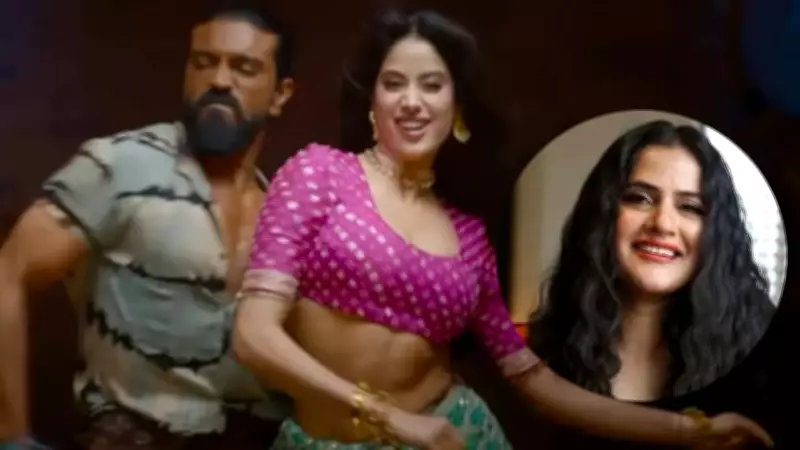
Renowned singer Sona Mohapatra has shared her perspective on the ongoing controversy surrounding the Telugu film 'Peddi', particularly the portrayal of Janhvi Kapoor's character. She argues that mainstream cinema often reduces women to mere decorative elements while romanticizing toxic masculinity. Mohapatra, known for her candid opinions, posted a video on social media addressing the criticism faced by 'Peddi' and its director, Buchi Babu Sana. She expressed optimism about the public backlash, seeing it as a sign that audiences are questioning long-standing cinematic tropes.
Public Reaction Gives Hope
In her video, Mohapatra stated, "In the last few days, one thing has given me a strange relief. In our heavily promoted mainstream film, the backlash against the portrayal of the heroine has given me some hope and optimism. It seems to have impacted some filmmakers, who are now giving interviews claiming the character is very innocent and that certain sections will be removed." She clarified that she has not watched 'Peddi' or its predecessor 'Pushpa', but is familiar with the storytelling formula used in such films.
Critique of Cinematic Tropes
Mohapatra elaborated on the typical template: "The hero always lives a dignified life, while the heroine is just an extension of that story – decoration to be sexualized and objectified. Toxic masculinity is called romance in such films." She criticized the use of slow-motion shots, strategic camera angles, revealing costumes, and loud background music to package disrespect as swagger. "In most cases, misogyny wins at the box office, but this time something different has happened," she noted.

Audiences Speak Up
The singer emphasized that the most significant aspect of the controversy is that audiences are no longer silent. "India's people have expressed their dissatisfaction. They are holding filmmakers responsible. Are we really tired of these lazy, shortcut, pathetic ideas of filmmaking? I hope so." She drew connections between such films and real-world crimes against women, including stalking, teasing, child rape, and domestic violence. "People are connecting how such films influence attitudes and behaviors in society," she added.
Lack of Female Agency
Mohapatra argued that many filmmakers rely on patriarchal narratives instead of creating nuanced female characters. "In most of our films, it's not a story. The writers don't have to pay. No problem. Put in patriarchy. Delete the heroine's agency from the screenplay. It will be a massacre." She contrasted mainstream commercial cinema with the Kashish Pride Film Festival, whose closing ceremony she was attending in Mumbai. "Kashish is still continuing year after year, despite not having the budgets, star power, or machinery that this kind of bullshit mainstream cinema enjoys. I'm proud and thankful because courage and authenticity matter. Stories about real human beings matter."
A Call for Better Stories
Concluding her remarks, Mohapatra expressed hope that audiences would gravitate toward honest narratives over propaganda and superficial hero worship. "I'd like to hope that audiences – whether queer, straight, young, old, male, female, or anything in between – will eventually connect to the truth, not propaganda, not fantasy, not insecurity dressed up as macho heroism. That Kashish survives gives me hope, as does this backlash on Peddi forcing filmmakers to apologize. Kudos, India." She added, "As someone who has spent a lifetime telling stories through music and songs, I find this incredibly hopeful. Maybe we will demand better stories, better women characters. Is it possible? Maybe all this is a sign that we are becoming a better society. I would like to think so. Sending you a lot of love."