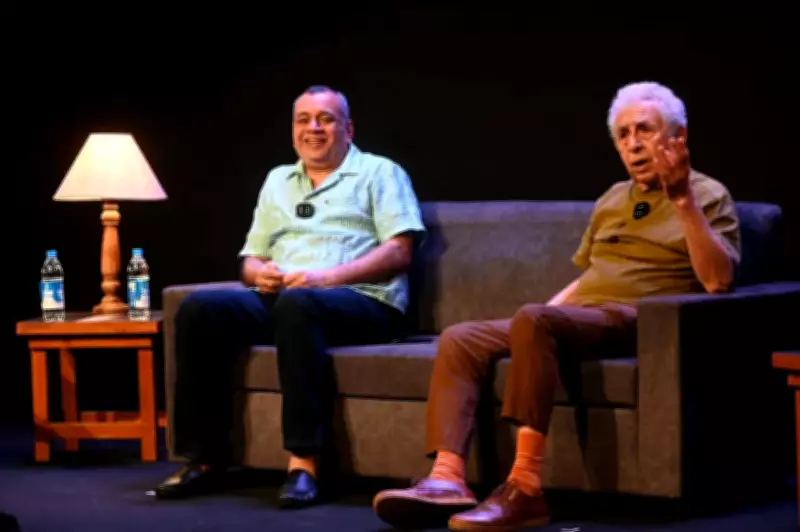
The inaugural session of the Shreeram Lagoo National Theatre Festival in Pune transformed into an engaging masterclass as veteran actors Naseeruddin Shah and Paresh Rawal shared personal stories, professional advice, and hearty laughter. The evening blended theatrical craft with lighthearted mischief, leaving the audience enthralled.
Rawal's Humble Beginnings
Paresh Rawal opened the session with self-deprecating humor at the Shreeram Lagoo Rangavkash. "I always wanted to be the center of attention. I made people laugh and disturbed the class. Teachers loved my mischief too," he said. Reflecting on his unconventional training, Rawal noted, "I never really learned acting in the conventional way. There were no books for it back in the early 1960s." He described Gujarati theatre of his youth as narrow in ambition. "There was nothing to explore. I only found myself when I began to work with great actors and simply learned on the job. I don't overthink while acting. I've tried to overprepare, sit in the corner and look lost in thought, but it doesn't work for me. I take in what I can, let it assimilate, and I won't let thought ruin my sleep."
Shah's Theatrical Awakening
Naseeruddin Shah responded with equal warmth, recalling the small impulses that led him to the stage. "I began acting because I loved making faces. A college friend took me to see Aadhe Adhure. I was struck by the acting of Amol, Deepa, and Bhakti Barwe. But it was Dr. Lagoo's performance that left me in awe. Sitting in the back of the Kamani auditorium balcony, I could hear every word. His diction and emotional control were mesmerizing."

The Evolving Landscape of Theatre
Both actors discussed the changing horizons of theatre. Shah charted his early days performing compact character pieces like Waiting for Godot, The Typist, and Chekhov's short comedies before moving to large-scale English productions such as Julius Caesar and The Caine Mutiny Court Martial. "People called us English-theatre wallahs, but English here is Hindustani too. I didn't want that tag; I wanted to work in my language. Since I could not find any Urdu plays and all the great Hindi plays were done over and over again, I found myself in a fix," Shah said. Discovering Ismat Chughtai's stories in Devanagari "was a revelation," he added.
Core Principles of Acting
On the essentials of acting, both were emphatic. "An actor must never mistake himself for the character. You don't act to show off your skill; you act to communicate the text. Performance has existed from the time of cavemen; its purpose is to convey, not merely entertain. If the impact is cerebral, it lasts. People are entertained very easily, even fake tears do the trick," Shah said. He recalled audience reactions to his play Father. "People came backstage in tears asking to hug me and asking if playing the role was difficult. I would tell them, 'It must be difficult for you — I hope you understand your grandfather better now.' That's the effect I seek."
Economics and Early Struggles
Rawal offered anecdotes about the beginnings and economics of theatre. "My father earned Rs. 150. Producing a play in 1972-73 cost Rs. 300-400. My cut would be 50%. When I asked my father for money one day, he gave it to me to my utter surprise. I put up my play in Mumbai. Back then, Gujarati households expected children to take practical jobs." Rawal began his professional acting career in the Mumbai Gujarati theatre scene, making his debut in 1972 with the play Vairee. He criticized misplaced theatrical intensity that simply meant loudness and urged renewed patronage. "More industrialists should fund the arts," he said.

Advice for Aspiring Actors
Shah said he often urged aspiring performers to "give up their addiction to Hindi cinema" and focus instead on understanding the craft of acting. He emphasized he was not interested in training people who simply wanted glamorous screen careers but those genuinely interested in learning performance across mediums. "Don't think being an actor means escaping your education." Shah stated the industry desperately needed more educated actors. Acting does not begin with memorizing lines or performing "ready-made emotions," but with imagination, observation, and understanding why emotions arise in the first place. He lightened the seriousness with humor, recalling that when his memoir And Then One Day was published in 2014, he told his publisher to give a free copy "to anybody who proves he came last in his class."