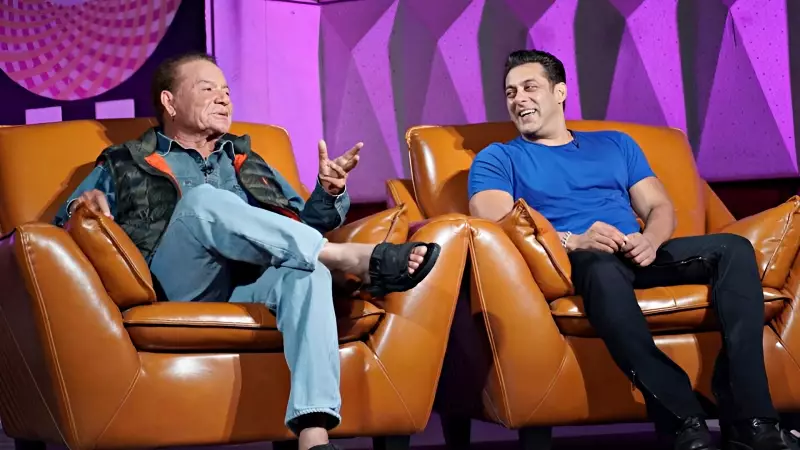
In a candid revelation that has reignited the age-old debate on parenting styles, Bollywood superstar Salman Khan recently spoke about his experiences with physical discipline during his childhood. The actor, known for his tough on-screen persona, shared that receiving an occasional slap from his father was never a big issue for him.
Salman Khan's Candid Confession on 'Thappad'
During an old interview with noted film critic Anupama Chopra, the Dabangg actor reflected on his upbringing. He casually mentioned the minor mischiefs of childhood often resulted in physical discipline from his father, the legendary screenwriter Salim Khan. "Yeh choti-moti naughty cheezein jo bachpan main hua karti hai… ek-aad thappad kha letey hain, ek-aad punch-wunch kha letey hain father se. Iss mein kaunsi badi baat hai?" Salman stated, downplaying the significance of such incidents.
He highlighted a difference in perspective within his own family, noting that his sister firmly believes children should never be slapped. However, Salman reiterated his personal stance, saying, "I never had a problem getting beaten up when I was growing up!" When probed if such interactions continued into his adulthood, the actor laughed and admitted, "Yes… sometimes," suggesting that even now, a playful reprimand might occur if he acts "naughty."

The Psychologist's Perspective on Physical Punishment
To understand the potential ramifications of such experiences, we consulted S Giriprasad, a Psychologist at Aster Whitefield Hospital. He provided a professional analysis of how occasional slaps or punches from a father can affect a son, both immediately and in the long run.
Giriprasad explained that regardless of the intent, any physical punishment from a parent is perceived by the child as a threat from their primary source of security. This creates a complex emotional conflict. "For a growing child, especially a son, it is confusing to receive feelings of both love and fear from the parental figure," the expert noted. This confusion often doesn't vanish but adapts, potentially leading to increased stress responses, trust issues, and difficulty in expressing emotions.
Long-Term Effects and the 'Normalization' of Pain
The psychologist addressed a common defense, like Salman's, where adults claim they "never minded" the physical discipline. Giriprasad suggests this could be a form of protective rationalization. "The child would not be able to afford to think that their caregiver is dangerous; therefore, the brain needs to modify it into the idea that it is a normal occurrence," he explained. This reframing is more a survival mechanism than genuine acceptance.
The long-term impact can manifest in various ways. Some individuals may internalize the idea that force is a valid tool to assert authority. Others may become conflict-averse, developing fears around confrontation or struggling with self-esteem. Common outcomes, as per the expert, include anxiety, irritability, anger issues, and intimacy problems.
Giriprasad was unequivocal about physical punishment extending into adulthood. "No. Physical violence shown by adult relatives is not an example of discipline but is, in fact, abuse," he stated clearly, describing it as an expression of unresolved power struggles.
While Salman Khan's views resonate with a generational mindset familiar to many in Indian households, psychological insight reminds us that practices normalized by culture are not automatically harmless. Understanding these deep-seated patterns is the first crucial step toward evolving healthier parenting norms for future generations.