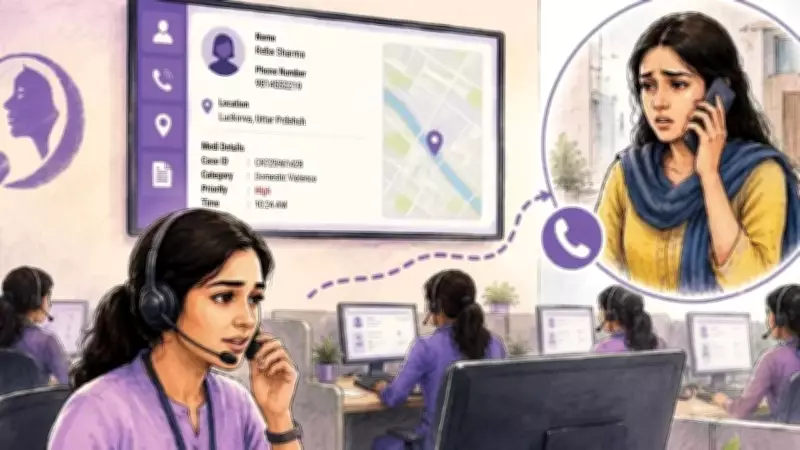
Sakhi One Stop Centres provide a comprehensive support system for survivors of domestic violence, offering medical care, legal aid, counselling, shelter, and police assistance all under one roof. With 11 centres across Delhi's districts, the initiative aims to spare women from moving between offices while dealing with trauma. From abuse to survival, four women share their painful journeys and the fragile steps toward rebuilding their lives.
What Do You Need Right Now?
From a single building, survivors can access police assistance, medical treatment, legal aid, courts, emergency shelter, and psycho-social counselling. There are 11 Sakhi One Stop Centres in Delhi, one in each district, with two more likely to open as new districts are added. The core idea is that a survivor should not have to carry trauma from office to office.
Inside the Centre
Officials sit with thick registers, each entry holding someone's story. In the case workers' room, a live screen flashes incoming helpline cases district-wise, and phones ring constantly as staff coordinate responses in real time. The centre administrator's room is usually the first place where a survivor's story is heard. The kitchen prepares meals for survivors staying temporarily, and the shelter room has 8–10 beds for women, sometimes with children, for short or overnight stays. Survivors receive a dignity kit containing clothes, sanitary napkins, toothbrushes, and toiletries.

Case Studies
Case 1: 'He Started Beating Me with a Stick'
When Suman arrives at the One Stop Centre after calling the women's helpline, her one eye is swollen, and bruises mark her face and arms. Married in 2024, she says the abuse began almost immediately. Her husband was alcoholic, violent, and secretly recorded intimate moments to blackmail her. He isolated her by taking away her phone and repeatedly assaulted her before returning with apologies and promises to change. 'Every time I thought maybe this time he will really change,' she says. But the last assault broke something inside her. 'He beat me so much with a stick... there is nothing left in my body,' she says softly. Alone and exhausted, she finally decided to seek legal action and divorce. 'There is no going back now,' she says. Then after a pause, she asks quietly, 'How do you trust someone again after this?'
Case 2: 'It Was Only Two Slaps'
Sonia says it almost apologetically: 'It was only two slaps.' Before marriage, everyone spoke of moving to America with her husband, who lived abroad. Her passport was ready before the wedding. But soon after she conceived, her husband said a baby would ruin those plans. The abortion happened secretly, she says, and afterwards the marriage changed. There were drunken nights and insults. Her mother-in-law made her repeatedly mop floors, and one Karva Chauth ended with her neck being pressed during a fight. Yet she stayed. During her second pregnancy, things briefly improved. After childbirth, the humiliation returned. One evening, upset over how dinner was served, her husband slapped her. Now living at her parents' house, she still hesitates about legal action. 'If he lives separately from that house, I may go back,' she says. The disturbing part is not only the violence, but how normal she has learned to make it sound.
Case 3: 'It Took One-and-a-Half Years, a Bleeding Hand, and Self-Harm to Finally Make One Phone Call'
By the time 33-year-old Ritu called 181, her hand was already bleeding from a shard of glass she picked up during a family argument. Married for one-and-a-half years, she says daily taunts, constant fights, and tension at home slowly became unbearable. 'I felt very tired,' she says. 'Even another argument felt heavier than my body.' The conflict eventually pushed her toward self-harm. At the One Stop Centre, officials ask her whether she wants legal action or divorce. She immediately refuses. 'Divorce is not an option,' she says quietly. It is her second marriage, and beneath her hesitation sits fear of judgement and starting over. The first counselling session turns chaotic, with husband, wife, and mother-in-law shouting over one another. But when she returns later, she seems calmer. 'I hoped things would improve,' she says. 'For now, they have.'

Case 4: 'I Stopped Drinking Tea Twice a Day Because Biscuits Cost Money'
'I stopped drinking tea because biscuits cost money,' Anjana says with an embarrassed laugh. The 35-year-old earns around Rs 400 a day making rotis. After her mother-in-law's death, the family's finances worsened. Small comforts disappeared first — extra tea, biscuits, daily necessities. Across the room sits her husband during another counselling session. Anjana breaks down while describing the situation. 'He drinks, beats me, and gives no money for the house,' she cries. Their 13-year-old daughter, sitting silently beside her, suddenly speaks up: 'Yes, he beats my mother.' The husband stares down and mutters, 'I only bring one quarter bottle home. I want to quit.' Nobody discusses divorce. Survival itself has consumed the family's energy — rent, food, school fees, alcohol, daily wages. The centre administrator is now trying to address the husband's drinking problem. The daughter spends most of the session holding back tears — like a child who has already learned that some nights are safer spent somewhere else.
All names changed to protect identity.