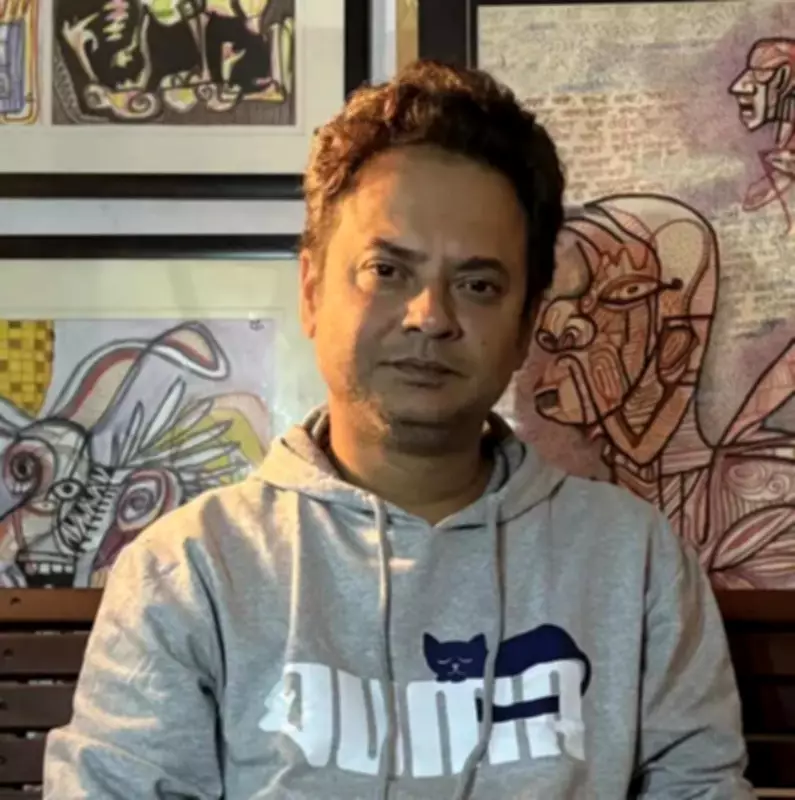
Kolkata: Anirban Banerjee, the brother of actor Rahul Arunoday Banerjee, has compiled a list of 31 questions regarding the circumstances of Rahul's death and sent them to the West Bengal Motion Picture Artists' Forum. These questions are intended to be answered by the production house and the channel involved, and they may supplement inquiries made by the police during the investigation. Before departing for Ireland, where he resides, Anirban told TOI that he refrains from speculation and refers to Rahul's death as an 'incident,' not an 'accident.' The family is demanding that the police clarify exactly what transpired before, during, and after the event.
According to Anirban, several aspects of the actor's death remain unclear. Expressing gratitude to the Forum for its 'wholehearted support in seeking clarity and a fair, transparent and impartial understanding' of the circumstances, he stated to TOI: 'Cops should answer the questions and complete the investigation. Everything should be based on evidence. People responsible for the incident should be identified and their role in the incident should be stated. The truth should be revealed based on evidence and must be brought to the public.'
The family's inquiry is divided into three segments: 10 questions concerning the pre-incident phase, 13 regarding the incident itself, and eight about the post-incident period. Central to the questions is the preparation undertaken at Talsari. The family has questioned the rationale behind the location choice and whether a professional recce, risk assessment, and all necessary legal permissions were obtained. They also seek confirmation that medical facilities and an ambulance were kept on standby. 'Were trained lifeguards or water rescue personnel deployed by the production team? Were local authorities or local residents consulted regarding sea conditions and safety risks? Was there a written safety protocol or emergency response plan for the shoot?' Anirban's email asked.

The 'during the incident' segment focuses on the sequence of events. 'What did the shooting script require Rahul to do during that scene? What was the exact location in the sea where the incident occurred? What were the water depth and sea conditions (including tide and current) at that time? What was the exact time of the incident, and was it during high tide or low tide? Where were the other crew members positioned at the time of the incident, and how far were they from Rahul?' Anirban's email inquired.
The questionnaire also examines the rescue process that was carried out. 'How many rescuers were involved, and what were their qualifications? What factors affected the timeline of the rescue efforts? Is there any authentic video footage or photographic evidence of the incident? How long was Rahul submerged before being brought out of the water? How was Rahul brought out of the sea?' he asked.
Finally, the post-incident questions seek clarity on the medical response and logistical timeline. 'What immediate medical assistance was provided after Rahul was brought out of the water? Was Rahul alive when he was pulled out? If yes, what were his observable symptoms?' he asked. Significant scrutiny is placed on the transportation process. 'To which medical facility was he taken? How far was that hospital or medical facility from the shooting location? How long did it take to transport him there? Were any nearer hospitals or clinics available? What treatment was administered upon arrival? Which doctor or medical personnel examined him?' he asked.