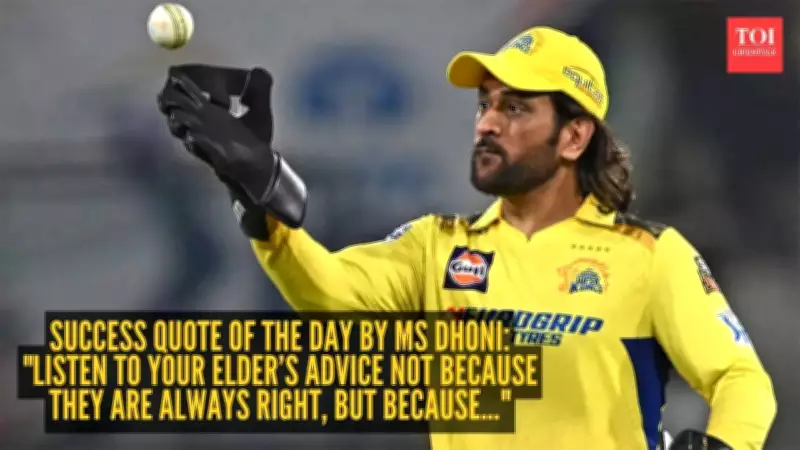
We live in an era of instant experts and 30-second life hacks. However, legendary Indian cricketer MS Dhoni once shared a piece of advice that cuts through the noise. He said, 'Listen to your elder's advice not because they are always right, but because they have more experience of being wrong.' This statement is not just a clever line; it is a masterclass in humility.
Why Old School Advice Is Actually a Cheat Code
Think about the last time you ignored a boring suggestion from a parent or mentor. Perhaps it was about a risky job move or a sketchy investment. We often brush them off because times have changed. But Dhoni's point is that while the context changes, the patterns of failure do not. Our elders are not perfect, but they have already walked through the minefields we are currently standing in. They are not telling us what to do to control us; they are telling us where the holes are so we do not fall in.
The Science of Messing Up
Interestingly, science backs this up. Psychologically, this taps into experiential learning theory, popularized by David Kolb in the 1980s. Research shows we learn best not from successes but from reflecting on failures—something elders have done throughout their lives. Elders have been gathering a massive database of what not to do for decades. When an elder gives advice, they are essentially handing us the cliff notes of their hardest lessons.

Relationships: Avoiding the 'I Told You So'
We have all seen it: a friend or family member warns us about a toxic relationship. At the time, it feels like judgment. But usually, it is just someone who has survived their own heartbreak trying to save us three years of therapy. Data on emotional intelligence shows that people who are open to external perspectives—a fancy way of saying listening to people who care about you—report much higher relationship satisfaction. It turns out that annoying aunt might actually have the secret to a lower divorce risk.
From Ranchi to the World Cup: Dhoni's Roadmap
Dhoni did not become a cricket legend by being a know-it-all. He started as a ticket collector in Ranchi, ignoring the experts who told him his batting technique was too unconventional, but leaning heavily into the feedback of coaches who knew the grit required to survive the long game. 'I have failed more than I have succeeded early on,' Dhoni once admitted. He did not win the 2011 World Cup by being flawless; he won it by being resilient. He turned every wrong move into a tactical advantage. That is why his teams, like the Chennai Super Kings, have such a cult-like culture of mentorship—it is all about passing down the wrongs so the next generation can get it right.
3 Ways to Use This Today
You do not have to agree with everything an elder says, but you should definitely listen. Here is how to do it without losing your own voice:
- Ask for the 'Why,' not just the 'What': Instead of asking for a solution, ask, 'What is the biggest mistake you made when you were my age?' The story is always more valuable than the sermon.
- Filter the noise: Use their experience as data, not a command.
- Share your experience: When you do mess up—and you will—share that lesson with someone younger. This creates what Dhoni calls a wisdom cycle.
Remember, you do not have to make every mistake yourself to learn from them. Sometimes, the fastest way to the top is simply listening to the person who has already fallen down the mountain and lived to tell the tale. As Dhoni shows us, the real MVPs are not the ones who never fail—they are the ones who are smart enough to learn from the failures of those who came before them.
Has there ever been a piece of unsolicited advice from an elder that actually saved your skin? Share in the comments section below.