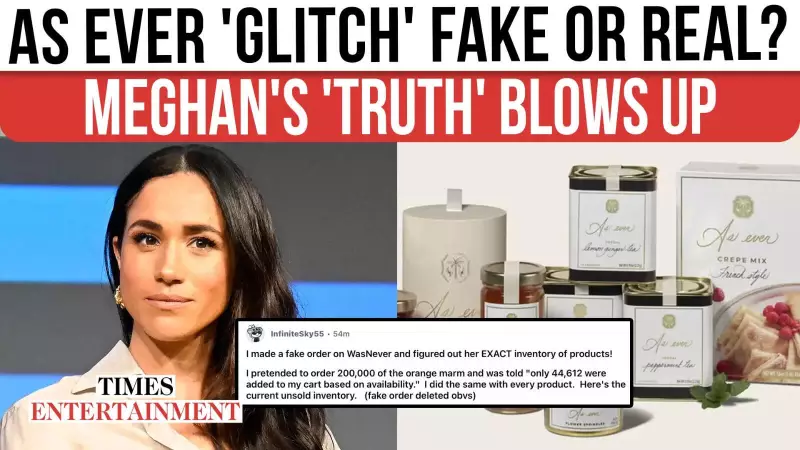
A recent technical malfunction on the official website of Meghan Markle's lifestyle brand, As Ever, has ignited a fresh wave of controversy and online criticism directed at the Duchess of Sussex. The incident, which occurred on January 7, 2026, involved a website glitch that appeared to publicly display internal inventory data.
The Glitch That Fueled the Firestorm
According to reports, the temporary bug on the As Ever site made sensitive inventory figures visible to visitors. Online critics and social media users were quick to capture screenshots of this data before it was corrected. These figures were then interpreted as concrete proof that the products under Meghan Markle's brand were not selling at the rate previously suggested or advertised.
The leaked information spread like wildfire across digital platforms. Reddit forums, viral social media posts, and numerous reaction videos became hubs for the growing debate. The core accusation leveled against the As Ever brand was one of "hype over substance"—claims that the public perception and marketing of the brand did not match the commercial reality hinted at by the inventory numbers.

Online Backlash and Brand Damage
Despite attempts by sources close to the brand to dispute this interpretation of the data, the damage to its online reputation was swift and significant. The narrative that the As Ever products were underperforming had already taken root. The screenshots served as digital evidence for critics, fueling a pre-existing sentiment of skepticism towards celebrity-led ventures.
The backlash highlights the intense scrutiny faced by high-profile figures like Meghan Markle in the digital age, where a single technical error can escalate into a full-blown public relations challenge. The incident underscores how raw data, devoid of context, can be weaponized in online spaces to challenge a brand's authenticity and success.
Broader Implications for Celebrity Brands
This episode involving the As Ever brand goes beyond a simple website error. It touches on the volatile relationship between celebrity, commerce, and online public opinion. For lifestyle brands helmed by famous personalities, transparency and consistent performance are constantly under the microscope.
While the glitch has been fixed, the discussions it sparked about product demand, marketing strategies, and the viability of the brand are likely to linger. It serves as a cautionary tale for all consumer-facing digital platforms about the importance of robust technical infrastructure and crisis management in an era where information—and misinformation—travels at the speed of a click.