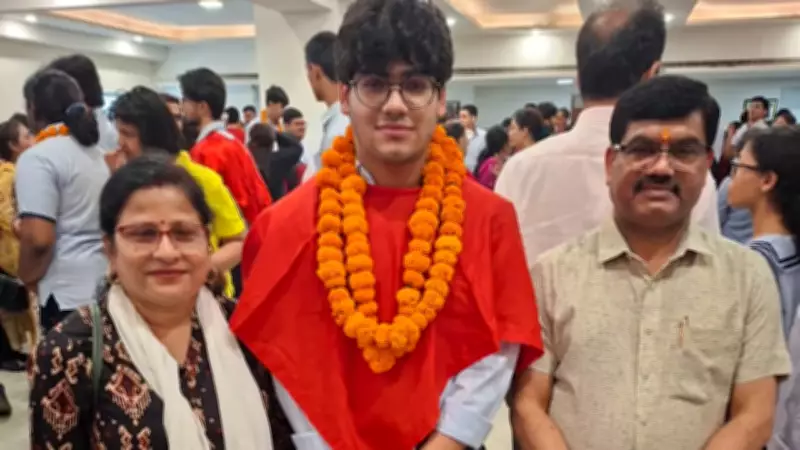
When we hear about toppers, we often imagine them spending long hours at their study desk with little room for any other activity. But a topper from Lucknow has changed this narrative with his refreshing approach. Siddhart, a student of the CISCE board, scored an impressive 99.25% in his 12th standard examinations. What truly sets Siddhart apart is how he made his studies stress-free and enjoyable.
Topper's Refreshing Approach
While speaking to AajTak, Siddhart revealed that he studied no more than three to four hours a day. Instead of stretching himself with long, draining schedules, he followed a simple and consistent routine. He even made room for breaks without any guilt. Siddhart shared that he used to spend one to two hours watching his favorite shows on Netflix to unwind. Beyond academics, he stayed actively involved in sports and served as the vice-captain of his school’s cricket team. For him, the balance between studies, relaxation, and physical activity was not a distraction but the reason he could stay focused and stress-free. Stepping away from social media platforms, such as Instagram, was another of Siddhart’s strategies for maintaining good mental health.
Undoubtedly, Siddhart’s scores are exceptionally high, but the story behind his success makes him a true winner. His routine was nothing fancy, yet it offers valuable lessons for parents to create a similar stress-free environment for their children.


Key Lessons from Siddhart's Journey
- Focus on consistency, not long hours. Learning does not have to be exhausting, and long hours of study do not always translate to effective learning. Encouraging children to study with attention rather than forcing them to sit for hours can lead to better results and less fatigue.
- Breaks are essential. Siddhart took time to watch shows, which helped him relax and stay refreshed. Parents need to understand that a well-rested mind absorbs and retains information more effectively.
- Hobbies are not distractions. Siddhart enjoyed cricket and remained active in sports while preparing for his boards. Parents must acknowledge hobbies as complementary rather than distractions.
- Guide digital habits. Siddhart did not completely ban social media; instead, he made a conscious choice to avoid it when he felt the need. Thus, rather than strict restrictions, helping children develop self-control and awareness around screen time is more effective in the long run.
- Stress-free environment at home. Siddhart shared that whenever he felt even the slightest bit of stress, he turned to his parents and teachers. When children do not feel pressured or judged about their vulnerabilities, they are more likely to stay motivated and confident. Parents must ensure a supportive environment at home.
- The right peer group. Siddhart’s journey also highlights the importance of the company children keep. One of his close friends scored 99.75%, and both boys are now preparing for the CLAT exam. For parents, this is a reminder to encourage healthy friendships where children can grow and learn while enjoying companionship.