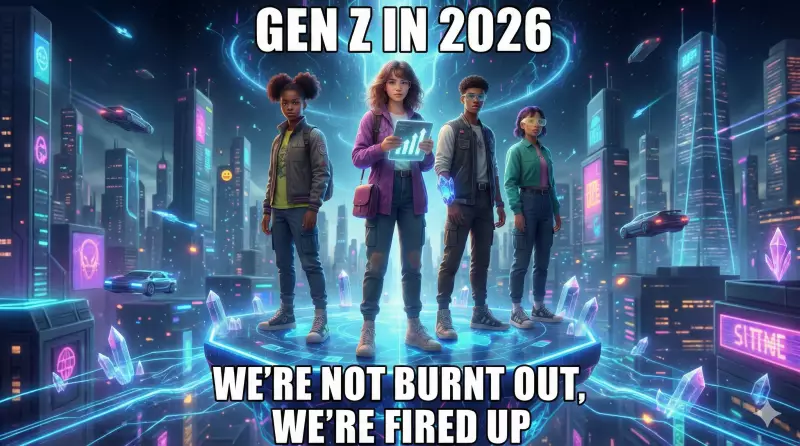
As 2026 unfolds, a generation is stepping firmly into the driver's seat of societal change. Generation Z, those born between the late 1990s and early 2010s, is not just waiting for the future; they are actively dismantling outdated norms and building a new framework for work, life, and social responsibility. Backed by compelling data and led by influential voices, this cohort is prioritising authenticity, equity, and well-being, making vulnerability a strategic strength and difficult conversations a necessity.
Redefining Work: Transparency, Balance, and Values
The traditional workplace is undergoing a seismic shift thanks to Gen Z's demands. Financial transparency is no longer a preference but a prerequisite. A striking 85% of Gen Z individuals state they are less likely to apply for a job if the salary range is not disclosed upfront. This push for openness extends internally, with 40% of Gen Z employees openly discussing their salaries with coworkers, challenging long-held taboos.
Beyond pay, their definition of professional success is holistic. A significant 42% report feeling burnt out, often due to the conflict between personal values and professional performance. In response, they are championing work-life balance, with roughly 82% considering mental health support essential in the workplace. As tennis champion Coco Gauff powerfully stated, "I am a human first before I'm a tennis player... Your results, or your job, or how much money you make doesn't define you as a person." This sentiment fuels a collective pushback against unsustainable hustle culture.

The Rise of the Vocal Citizen: Politics and Purpose
For Gen Z, silence is complicity. They expect public figures and leaders to take clear stands, with 60-70% of Gen Z employees anticipating this from their leaders. Nearly 70% are actively involved in social or political causes themselves.
Rama Duwaji, an illustrator and the First Lady of New York City, embodies this ethos. Defying traditional political spouse roles, she integrates her art with activism. "Speaking out about Palestine, Syria, Sudan; all these things are really important to me... Everything is political," Duwaji explained in an interview. She uses her platform and even her wardrobe to spotlight global humanitarian crises, refusing to soften her image for political convenience.
This demand for accountability extends to economic justice. Actor Millie Bobby Brown has consistently highlighted that 'progress is not the same as equality.' Gen Z amplifies this, with research showing 81% believe sharing pay information is crucial for workplace equality. Their activism is reshaping corporate and social landscapes.
Embracing Authenticity in Relationships and Mental Health
Gen Z is transforming personal spheres with equal vigour. They are redefining relationships, moving away from obligatory timelines and towards alignment and emotional well-being. A Tinder study found that 38% of Gen Z respondents believe love comes in different shapes and sizes and are willing to date outside their "type." Actor Ananya Panday countered stereotypes, noting, "People think that Gen Z only wants situationships... That is really not true. Gen Zs also want love and relationships."
Perhaps most profound is their approach to mental health. They treat conversations about anxiety, burnout, and therapy as necessary, not taboo. Indian cricketer Jemimah Rodrigues showcased this by publicly sharing her struggles with anxiety during the 2025 Women's World Cup semifinals. "I’ll be very vulnerable here because if someone watching this is going through the same thing, that’s my whole purpose," she said. This openness exists despite Deloitte data showing 59% of Indian Gen Z feel anxious or stressed most of the time.
Their relationship with money is also candid and strategic. The CFA Institute reports that 56% of Gen Zs aged 18-24 invest. They discuss debt, savings, and investing pressures openly on social media. Actor Noah Schnapp reflected this mindset, saying, "I don't want to just accumulate money. I want to circulate money wisely to create a legacy." For them, finance is a tool for responsibility, not just a measure of success.

In 2026, Generation Z is writing a new playbook. By demanding transparency, championing mental health, engaging politically, and pursuing authentic connections, they are turning vulnerability into their most powerful strategy for change. The data and their voices make it clear: this is not a passing trend but a fundamental recalibration of societal values.