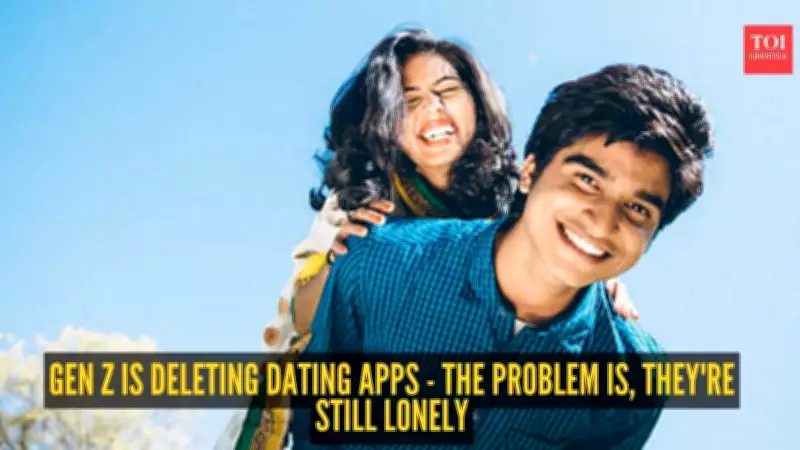
For years, dating apps were supposed to make finding love easier. A few swipes, a few matches, and maybe you'd meet 'the one.' At least that was the promise.
But speak to enough people in their twenties today, and you'll hear a very different story. Many are deleting dating apps altogether. Not because they've stopped believing in relationships, but because they're tired. Tired of conversations that go nowhere. Tired of being ghosted. Tired of feeling like they're constantly being judged through a handful of photos and a short bio. And most of all, tired of treating human connection like an endless shopping catalogue.
This shift has become increasingly visible among Gen Z. A generation that grew up online is now questioning whether being constantly connected is actually helping them feel connected at all. Ironically, many young people today have hundreds, sometimes thousands, of followers on social media. Yet plenty admit to feeling lonely. They're chatting all day but rarely having conversations that feel meaningful. They're surrounded by people online but often struggle to find someone they can genuinely talk to when life gets messy.

Because life does get messy. There's career pressure. The constant feeling of needing to achieve more. Family expectations. Financial stress. Questions about relationships, identity and the future. For many young adults, these worries are running in the background every single day.
And that's where companionship is starting to look different from what it did even a few years ago. People aren't always looking for romance first. Sometimes they're simply looking for someone who will listen. Someone they don't need to impress. Someone who won't immediately judge them.
Shradha Chaturvedi, CEO of GetCompanion, believes that's exactly why platforms focused on companionship are beginning to resonate with younger users. 'Unlike dating apps that are driven by attraction and expectation, GetCompanion is built around non-judgmental companionship,' she says. The idea is surprisingly simple. Not every conversation has to lead somewhere. Not every interaction needs romantic potential attached to it. Sometimes people just want to talk about a bad day at work. Or a fight with their parents. Or the anxiety that keeps them awake at night. Sometimes they simply want to feel heard.
The growing popularity of AI companions and emotional chatbots also says something interesting about where society is heading. People are clearly craving conversation. They're looking for spaces where they can open up without fear of being criticised or misunderstood. But while technology can provide responses, many young people are also discovering that empathy feels different when it comes from another human being. An AI can offer advice. A real person can understand what heartbreak feels like because they've lived through it. An AI can reply instantly. A human can share a story that makes you feel less alone. That difference still matters.
In fact, decades of research point to the same conclusion. The Harvard Study of Adult Development, one of the longest-running studies on happiness ever conducted, found that strong human relationships remain one of the biggest contributors to long-term wellbeing. Not wealth. Not career success. Not status. Relationships.
Which is why the idea that Gen Z has given up on connection isn't really true. If anything, they're becoming more selective about the kind of connection they want. Less performance. Less pressure. Less pretending. More honesty. More emotional safety. More conversations where they can simply be themselves.
Perhaps that's the real story behind the dating app fatigue we're seeing today. Gen Z isn't walking away from people. They're walking away from interactions that feel superficial. And in a world that constantly pushes people to present a perfect version of themselves, maybe the most attractive thing isn't romance at all. Maybe it's finding someone with whom you don't have to pretend.