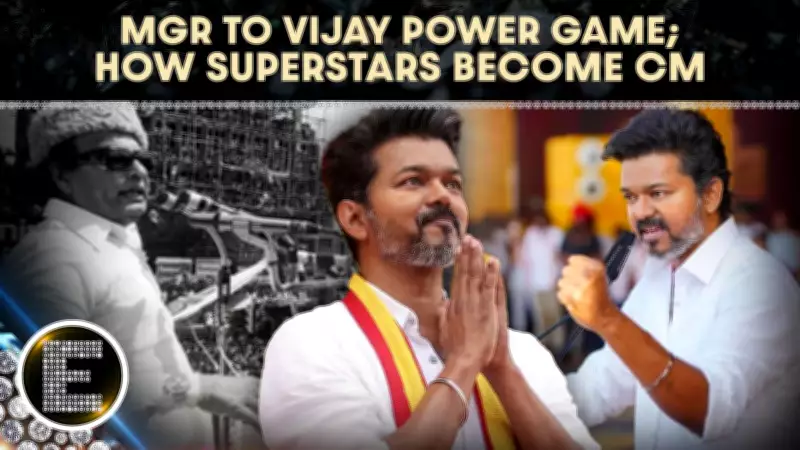
From M. G. Ramachandran to J. Jayalalithaa and N. T. Rama Rao, South India has a long history of film superstars transforming into powerful political leaders. Now, Vijay is stepping into politics with his party Tamilaga Vettri Kazhagam, sparking fresh conversations about whether cinema-driven mass appeal can once again translate into votes. This story explores how fandom turns into political influence and why the big screen often leads straight to power in India.
The Legacy of MGR
M. G. Ramachandran, popularly known as MGR, was a legendary Tamil actor who leveraged his on-screen persona to become the Chief Minister of Tamil Nadu in 1977. His film roles often portrayed him as a savior of the poor and oppressed, which resonated deeply with the masses. MGR's political career was built on this foundation, using his star power to connect with voters and implement populist policies.
Jayalalithaa: From Actress to Iron Lady
J. Jayalalithaa, who acted alongside MGR in several films, later emerged as a formidable political leader. She became Chief Minister of Tamil Nadu multiple times, known for her strong leadership and welfare schemes. Her transition from cinema to politics was facilitated by her association with MGR and her own mass appeal, which she cultivated through carefully crafted public appearances and speeches.

N. T. Rama Rao: The Telugu Phenomenon
In Andhra Pradesh, N. T. Rama Rao (NTR) used his iconic roles as mythological and heroic characters to launch the Telugu Desam Party in 1982. His overnight transformation from actor to Chief Minister was unprecedented, proving that film stardom could be a direct ticket to political power. NTR's populist measures, such as subsidized rice, solidified his connection with the rural masses.
Vijay's Entry into Politics
Vijay, a leading Tamil actor with a massive fan following, has now formed the Tamilaga Vettri Kazhagam. His move has reignited the debate on whether cinema-driven mass appeal can still translate into electoral success in contemporary India. Vijay's film career has been marked by roles that emphasize social justice and anti-corruption themes, mirroring the political narratives of his predecessors.
The Superstar Formula
The formula that turns actors into chief ministers involves several key elements. First, a strong on-screen persona that aligns with public aspirations. Second, a dedicated fan base that can be mobilized for political campaigns. Third, a narrative of being an outsider fighting against corruption and injustice. Fourth, effective use of media and public appearances to project leadership qualities. Finally, a political strategy that leverages regional pride and identity.
Challenges and Opportunities
While the path from cinema to politics has been successful for many, it is not without challenges. Critics argue that film stars often lack political experience and governance skills. However, supporters contend that their ability to connect with the masses and communicate effectively compensates for these shortcomings. Vijay's party will need to navigate complex political landscapes, build alliances, and address real-world issues to convert his popularity into votes.
As Tamil Nadu gears up for the next elections, all eyes are on Vijay. Will he follow in the footsteps of MGR and Jayalalithaa, or will the changing political dynamics pose new hurdles? The answer will shape the future of Tamil politics and the enduring link between cinema and power in India.