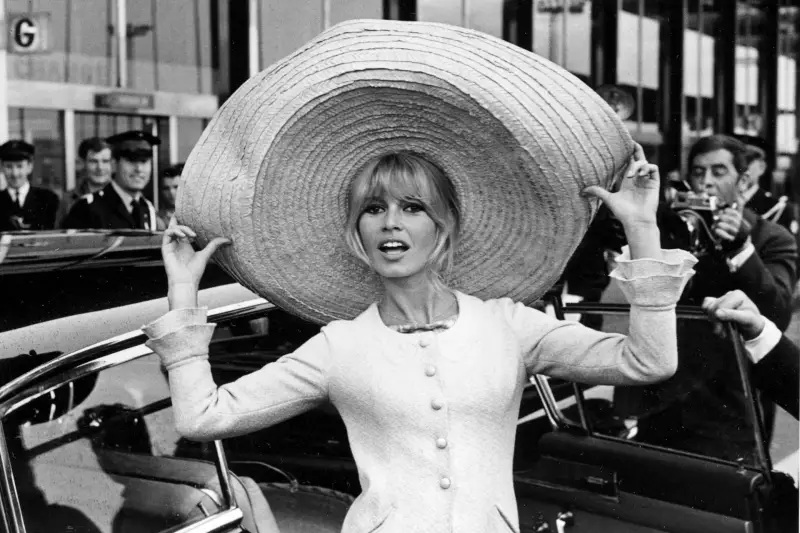
The world of cinema and animal rights activism has lost an iconic figure. Brigitte Bardot, the French screen legend of the 1960s who later became a militant animal rights campaigner, died on Sunday at her home in southern France. She was 91 years old. The news was confirmed by Bruno Jacquelin of the Brigitte Bardot Foundation for the protection of animals. No cause of death was provided, and details regarding funeral services remain private. Bardot had been briefly hospitalized last month.
From Teen Bride to National Symbol: The Birth of a Star
Brigitte Anne-Marie Bardot was born on September 28, 1934, into a wealthy industrialist family. A shy child trained in classical ballet, her life changed when a family friend featured her on the cover of Elle magazine at just 14. Discovered by French movie producer Roger Vadim, whom she married in 1952, her career was catapulted to international fame with the 1956 film "And God Created Woman."
Directed by Vadim, the film scandalized audiences with its portrayal of Bardot's provocative sensuality, blending childlike innocence with raw sexuality. It became a box-office hit and established her as a global superstar. Her tousled blonde hair, pouty lips, and voluptuous figure came to symbolize France's break from bourgeois conservatism in the post-war era. At the height of her fame in 1969, her features were chosen as the model for "Marianne," the national emblem of France, immortalizing her face on statues and stamps.

A Life in the Spotlight: Personal Struggles and Activism
Despite her glamorous image, Bardot's personal life was marked by turmoil. She described a "difficult" childhood under a strict father and struggled with chronic depression throughout her life. Her fame made her a constant target for paparazzi, which she blamed for a suicide attempt after the birth of her only child, Nicolas, with actor Jacques Charrier. She was married three times—to Roger Vadim, Jacques Charrier, and German millionaire Gunther Sachs—and later expressed regret over being an unprepared mother.
In a dramatic mid-life reinvention, Bardot retired from acting at age 39 in 1973 after her final film, "The Woman Grabber." She retreated to her villa in St. Tropez and emerged a decade later as a dedicated animal rights activist. She sold her jewelry and memorabilia to fund the Brigitte Bardot Foundation, campaigning against seal hunts, laboratory testing on animals, and traditional slaughter rituals.
"Man is an insatiable predator," she told The Associated Press in 2007. "I don't care about my past glory. That means nothing in the face of an animal that suffers." Her relentless activism earned her France's Legion of Honor in 1985, though her outspoken views, including anti-immigrant sentiments and criticism of the #MeToo movement, also sparked controversy.
A Complex Legacy: Mourning an Icon
News of her passing prompted tributes from across the globe. French President Emmanuel Macron posted on X, "We are mourning a legend." In India, Bollywood actress Priyanka Chopra shared a photo on her Instagram stories with a prayer hands emoticon, joining countless fans in paying respects.
Bardot's filmography, spanning over four dozen films including "Contempt" (1963), "The Truth" (1960), and "Shalako" (1968), cemented her status as a cinematic siren. Yet, she often dismissed her own acting talent. Her legacy is a complex tapestry of breathtaking beauty, profound vulnerability, and uncompromising, often divisive, conviction. As environmental campaigner Paul Watson, a fellow activist, noted, "The animals of this world lost a wonderful friend today." Brigitte Bardot remains an unforgettable symbol of an era and a voice for the voiceless.