In a revealing and humorous moment on national television, the stark contrast between a public icon's on-screen persona and his private family life was laid bare. The latest episode of the popular quiz show Kaun Banega Crorepati 17 featured a special segment with megastar Amitabh Bachchan, his grandson Agastya Nanda, and the team of their upcoming film 'Ikkis'. The conversation took a personal turn, offering a rare glimpse into the Bachchan family's home environment.
The KBC Revelation: 'Nanu is Very Serious at Home'
When an audience member posed a question about how Amitabh Bachchan behaves off-camera, his grandson Agastya Nanda did not hold back. "Nanu is very different when he comes here; at home, he is very serious. I am seeing this excitement and his fun side for the first time. I am actually enjoying this," Agastya confessed. The candid admission was met with laughter from the studio audience and gentle teasing from the host, Amitabh Bachchan himself.
The playful interrogation deepened when Agastya was asked to name his favourite grandparent. As he hesitated, visibly flustered, Amitabh Bachchan joked, "Phas gaye bhaisaab (you are in trouble)." He insisted on an answer, refusing to move to another question. Agastya's co-star, actor Jaideep Ahlawat, added to the lighthearted tension with a witty remark. "If you want to get beaten in the vanity, take Jayaji's name, but if you want to get beaten at home, then take Big B sir's name," he said. Ultimately, Agastya named his grandmother, Jaya Bachchan, as the stricter one, to which Amitabh responded with mock approval, "Continue, bilkul sahi hai yeh (This is absolutely correct)."

Why Elders Often Display Contrasting Personalas
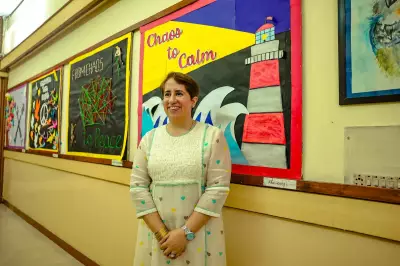
This family moment highlights a common dynamic experienced in many households: the elder who is reserved or stern at home but appears jovial and expressive in public or professional settings. To understand this behavioural contrast, we spoke with Gurleen Baruah, an existential analyst at That Culture Thing.
Baruah explains that in public or professional spheres, especially in entertainment, a degree of playfulness is often part of the role. "Joking, entertaining, and being expressive are often expected and rewarded. At home, that performance drops. Home is usually where people are most themselves, with their fatigue, worries, and need for control or quiet," she states. She adds that authority figures within a family may also feel a deep-seated responsibility to maintain structure and discipline at home, which can naturally manifest as a more serious demeanour.
"What looks like a contrast is often just context; different spaces bring out different parts of the same person," Baruah notes, emphasising the multifaceted nature of human personality.
The Impact on Younger Family Members
The conversation naturally leads to an important question: how do such 'strict' or reserved home environments influence younger generations? Baruah clarifies that "strict" is a broad term, and some structure and clear boundaries are essential for a child's sense of security. However, problems may arise when strictness crosses into emotional distance, unpredictability, or excessive control.
In such scenarios, children and grandchildren may learn to constantly monitor the moods of elders, often 'walking on eggshells'. They might also hold back their own feelings and opinions to maintain peace. "Over time, this can affect emotional openness and self-expression. Children may become compliant, anxious, or overly self-reliant," the expert points out. True emotional comfort, she asserts, develops in an environment where there is space to make mistakes, ask questions, and be oneself without fear of judgment.
However, Baruah also offers a positive perspective. Seeing the different sides of a family member over time is a healthy and human experience. "People evolve across roles, ages, and life stages. Seeing different sides of someone can soften the rigid narratives we hold about them. It allows relationships to move from fixed roles to more equal, adult-to-adult connections," she says. This shift can significantly improve family communication if it is approached with openness and curiosity rather than judgment.

The episode, aired on January 2, 2026, provided more than just entertainment. It sparked a relatable conversation about family roles, generational dynamics, and the complex personas we all navigate between our public and private lives. The Bachchan family's moment of levity on KBC serves as a reminder that behind every public figure is a private individual, and within every 'serious' elder at home, there might be a playful side waiting for the right context to emerge.