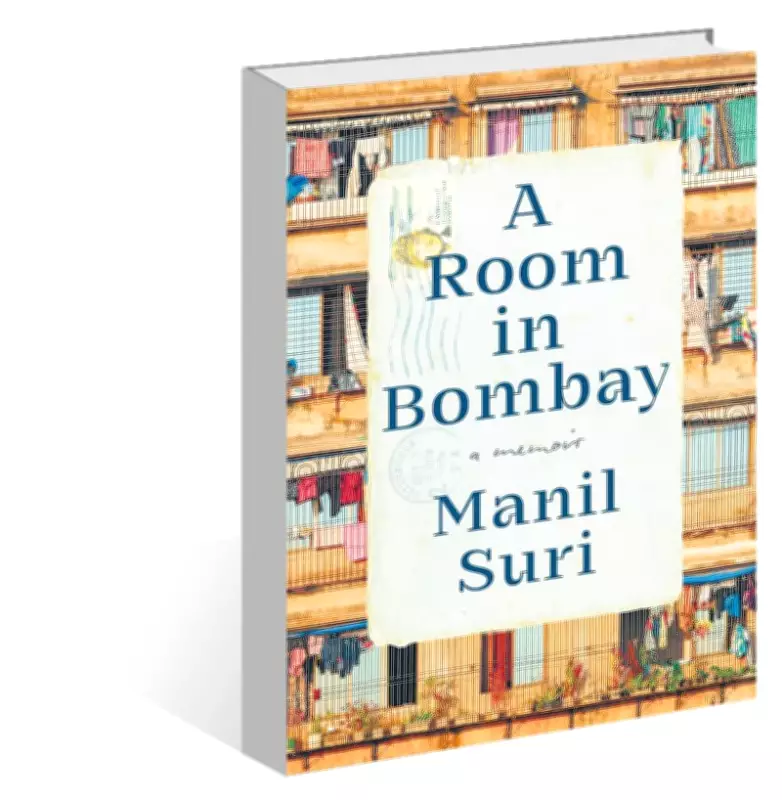
Memoir as an Act of Return
In 'A Room in Bombay', Manil Suri undertakes the difficult work of reconstructing his past with intimacy and distance. The memoir is more than an account of events; it is an attempt to make sense of the spaces, relationships, and inheritances that shaped his life. At its heart lies a room in Razia Mansion, a decaying four-storey building in Bombay, rented and shared with three Muslim families. This room becomes both setting and central metaphor for a life shaped by constant negotiation.
The Room as Crucible
The shared kitchen and toilets are sites of daily battles, triggering a bunker mentality among residents. Suri recounts these skirmishes with mirth and colour, noting that the space was no 'idealised tableau of religious harmony' but one of constant negotiation. Religion would be periodically invoked but did not define every conflict. Frictions increased when every inch of real estate became a bone of contention in a space-starved metropolis. The room witnesses aspirations, crumbling dreams, and questions of sexual identity.
Parents and Partition
Suri's parents attempt to rebuild their lives in Bombay, carrying memories of the home they lost in Rawalpindi during the Partition. His father Ram, an assistant music director, is a gentle dreamer whose fortunes in Bollywood keep fluctuating. When his ambition of becoming a playback singer recedes, he turns increasingly to drink. His mother Prem is the powerhouse: after her family moved to Delhi post-Partition and her father died, she wrote to Indira Gandhi seeking a job and briefly worked as the future prime minister's personal secretary. Marriage narrowed her possibilities, yet she widened those of her son, refusing a larger suburban home so he could attend a better school and later pursuing a degree in her forties to become a teacher.

Two Strands of the Narrative
Two strands run through the memoir. One traces Suri's coming of age as he discovers and negotiates his sexuality within the restraining confines of the room and the city. The other, more powerful, follows Prem, whose presence gives the memoir emotional coherence. She is, as he says, the defining connection in his life that he needed to sustain. Their bond survives distance and migration, reflected in the nearly 2,700 letters Suri preserved over the years after leaving home. Even as illness and dementia unsettle memory itself, the memoir becomes an act of return—an effort to hold on to a mother, a room, and a city that continue to inhabit him long after he has left them behind.
Photographs and Memorabilia
What makes the memoir even more animated is the generous array of photos, a memorabilia in motion that captures the happy moments of a family. Suri wonders how much this room—the crucible that has 'controlled, tormented and driven him'—has shaped his history and self. Ultimately, 'A Room in Bombay' shows that home, with its spaces, memories, and unfinished stories, never fully leaves us. As Suri reflects, 'One can never come back home, but one can also never truly get away.'