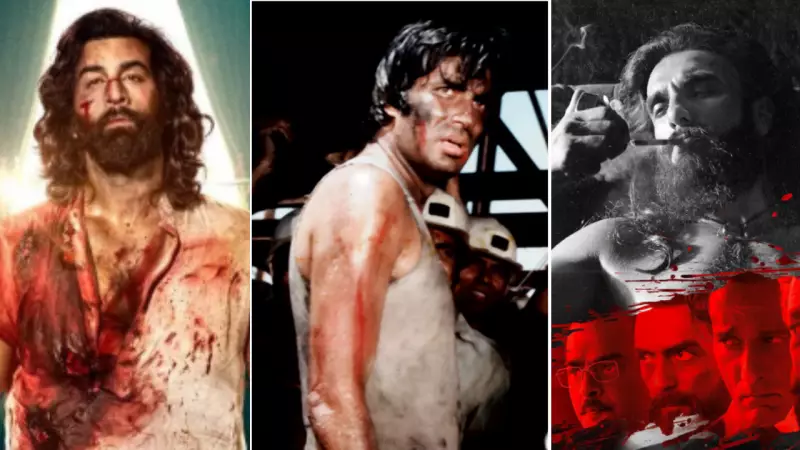
The iconic line, "Yeh police station hai, tumhare baap ka ghar nahi," once echoed the frustration of a generation. Half a century after Zanjeer, the angry young man has stormed back onto Indian screens, but the nature of his fury has undergone a profound transformation. The record-shattering success of films like Dhurandhar signals not just a nostalgic revival, but a pivotal cultural moment where cinematic anger aligns with new social and political currents.
The Record-Breaking Resurgence of Cinematic Rage
Released on December 5, the Ranveer Singh-starrer Dhurandhar has become a box office juggernaut. Featuring a powerhouse cast including Arjun Rampal, R Madhavan, Sanjay Dutt, and Akshaye Khanna, the film maintained a dominant run for over a month. It has surpassed the lifetime collections of major hits like Stree 2, Jawan, and Pushpa 2, holding strong against Hollywood's Avatar: Fire And Ash and Hindi releases such as Tu Meri Main Tera and Ikkis. This commercial triumph underscores how deeply the archetype of the angry male protagonist has re-embedded itself into the mainstream imagination, making it a phenomenon impossible to ignore.
From System's Critic to System's Aspirant: The Evolution of Anger
The original angry young man of the 1970s, epitomized by Amitabh Bachchan in classics like Deewar and Kaala Patthar, was a product of his time. Shaped by the Emergency, inflation, unemployment, and institutional corruption, his rage was directed against a failing establishment. His famous retort, "Mere paas maa hai," was a moral stance against a system that promised justice but delivered indifference. This was counter-hegemonic cinema, giving voice to collective working-class disillusionment.

Contrast this with the new avatars of anger. In Kabir Singh, the protagonist's rage targets a woman's autonomy ("Jo mera nahi ho sakta..."). In Animal, Ranbir Kapoor's character justifies violence through familial obsession ("Papa ke liye main kuch bhi kar sakta hoon"). Allu Arjun's Pushpa doesn't fight corruption; he aims to master it. Similarly, KGF's Rocky seeks domination, not reform. The crucial shift is clear: yesterday's heroes fought corrupt power; today's heroes aspire to wield it. Their anger stems from entitlement and exclusion from power, not from injustice perpetrated by it.
A New Cinematic Ecosystem: Nationalism, Violence, and Industry Response
This shift dovetails with the rise of hyper-nationalistic, pro-state narratives in films like Uri, Article 370, and The Kerala Story. Here, the state is portrayed as morally upright and decisive. The popular catchphrase "How's the josh?" symbolizes affirmation, not protest. Cinema that was once suspicious of authority now often works in sync with it, directing rage outward at designated enemies rather than upward at power structures.
The film fraternity's response is mixed. While Hrithik Roshan praised Dhurandhar's filmmaking while acknowledging political disagreements, actors like Radhika Apte have voiced deep concern. Apte criticized the normalization of violence as entertainment and specifically called out films that demean women, urging for collective responsibility from actors and filmmakers.
The Final Reel: Rebellion Repackaged?
The angry men are undoubtedly back, dominating charts and culture. However, the fundamental question their return poses has changed. The 1970s hero emerged from social fracture to question power. Today's hero, thriving on certainty and a right to dominate, often reinforces the very system his predecessor challenged. As Dhurandhar continues its run, it forces us to ask: Is this a genuine revival of rebellion, or has authority simply been cleverly repackaged in the compelling, profitable language of rage? In the words of Naseeruddin Shah's character in A Wednesday, the time for asking questions may have long passed, but the need to analyze the answers cinema provides has never been more urgent.