Zubeidaa Completes 25 Years: A Film That Exposed Patriarchy Before We Named It
Zubeidaa is not just a biopic. It serves as a mirror that exposed patriarchal structures long before the term became mainstream. Directed by Shyam Benegal and written by Khalid Mohamed, this film tells the deeply personal story of Zubeida Begum, Khalid Mohamed's mother, who lived only twenty-six years. On its twenty-fifth anniversary, many viewers are rediscovering this cinematic masterpiece and its enduring relevance.
A Life Cut Short, A Story That Endures
Zubeidaa chronicles the brief but intense life of Zubeida Begum. Her story reaches audiences nearly five decades after her death through this powerful film. It reconstructs her experiences while holding up a stark reflection of a society that systematically denies women their agency. The film moves beyond mere tragedy to offer a cautionary tale. It functions almost as a handbook on navigating a world dominated by men.
The narrative clearly illustrates where women learn silence. It shows moments when resistance is discouraged. It reveals how control often masquerades as love. Ironically, the film also defines true gentlemanly behavior by portraying its exact opposite through the male characters.

Women as Enforcers of the System
One of the film's most compelling characters is Zubeida's mother, Fayazzi. Surekha Sikri portrays her with heartbreaking restraint. Despite coming from an affluent and educated family, Fayazzi's life remains under male direction. This control inevitably extends to her daughter's life as well.
Simple decisions about sitting, behaving, dancing, or marrying transform from personal choices into strict instructions. When Zubeida faces suffering, her mother's helpless reply—"Sahab ko achcha nahi lagega"—encapsulates generations of internalized submission. This phrase echoes the weight of societal expectation.
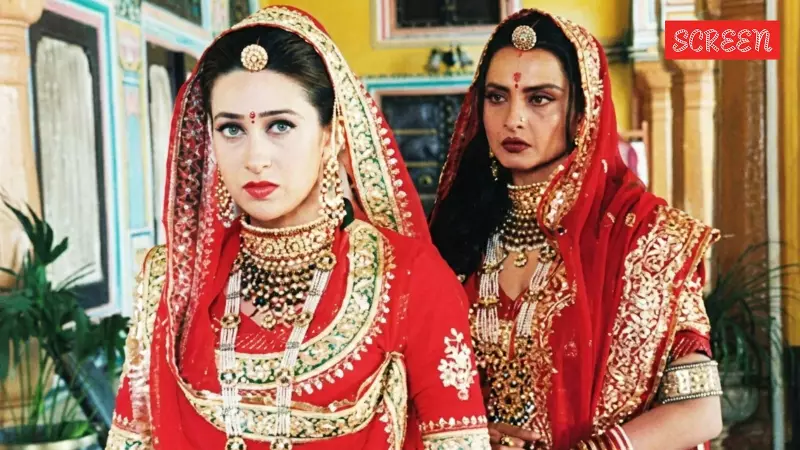
A similar dynamic appears through Maharani Mandira, played by Rekha. As the first wife of Maharaja Vijayendra Singh, she imposes royal discipline on Zubeida. She justifies this control under the guise of tradition and proper etiquette. Together, these women expose a painful reality. Even privileged women often become instruments of patriarchy. They perpetuate the system in the name of respectability and fear of social judgment.
The Male Characters and Their Flawed Love
The men in Zubeidaa reinforce this power imbalance. Amrish Puri plays Zubeida's father. His portrayal initially suggests affection but slowly reveals a chilling version of love rooted in authority. He denies his daughter a film career despite recognizing her talent. He removes her educational opportunities even with ample means.
He announces her marriage without seeking her consent. Later, he forces her divorce not for her well-being but to soothe wounded male pride. His love manifests as possession, not nurture. He dismisses romance as mere poetry and film fantasy, disconnected from the reality of marriage.
Manoj Bajpayee embodies Maharaja Vijayendra Singh. This character represents another failure of masculinity. He marries Zubeida for love yet treats her more like a possession than a partner. He fails to protect her dignity or provide emotional security. When political pressures arise, Zubeida becomes an inconvenience to be sidelined and hidden. In both relationships, compassion loses to control.
Zubeida's Spirit and the Cost of Independence
Karisma Kapoor brings Zubeida to life as a bright, spirited woman. We watch her slowly stripped of education, choice, and joy. Her journey contrasts sharply with that of Rose Aunty, played by Lillete Dubey. Rose serves as Zubeida's confidante and dance teacher.
Rose lives unapologetically on her own terms. She drives, flirts, sets boundaries, and refuses to diminish herself. Yet the film ultimately shows her living alone in quiet isolation. Her life stands as a reminder of the price women pay for independence in a society that values obedience over freedom.

Imagining an Alternate Path
Watching Zubeidaa inevitably leads to questions about an alternate life for its protagonist. What if she had received a proper education? What if she had the freedom to pursue cinema, where her talent shone clearly? Education could have granted her agency. It might have helped her understand consent, navigate relationships with clarity, resist empty gestures, and choose dignity over dependence.
Even as a single mother, she could have built a life defined by self-respect rather than surrender. This reflection becomes especially poignant after her first husband abandons her following a petty argument between their fathers.
A Lasting Legacy and Unsettling Questions
Zubeidaa transcends the biopic genre. It reflects deeply embedded social structures that continue to constrain women today. The film studies quiet resilience and emotional endurance. It highlights the devastating cost of silencing a woman's voice.
Zubeidaa leaves viewers with an unsettling question. How many Zubeidas have we lost not to fate, but to a culture that prized male authority over female potential? Twenty-five years later, the film's mirror remains clear, challenging us to look closely at the reflections it shows.