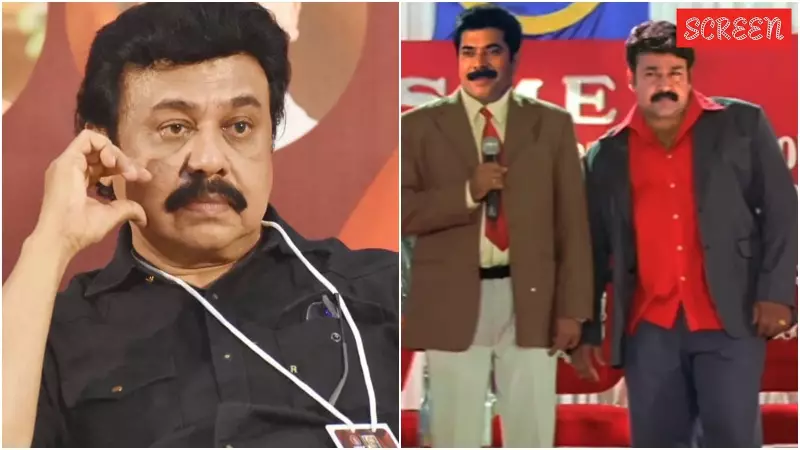
Renowned Malayalam film director Vinayan has made a startling revelation about being effectively banned from the industry for approximately two years during the 2000s. The controversy erupted after he used computer-generated imagery to digitally feature superstars Mohanlal and Mammootty in his 2005 film Boyy Friennd without their direct involvement.
The Controversial CGI Scene That Sparked Industry Backlash
In Boyy Friennd, Vinayan included a scene followed by a song sequence where the two legendary actors were depicted visiting a college as chief guests for an event. The director employed innovative techniques for that era, using body doubles combined with computer-generated imagery (CGI) to create the illusion of Mohanlal and Mammootty's presence on screen.
Interestingly, Vinayan included what appeared to be a safety measure in the same sequence. The scene eventually revealed that college students discovered the two men were actually impersonators, dramatically removing their Mohanlal and Mammootty masks to expose the deception. However, this creative decision didn't prevent the significant backlash that followed from industry quarters.

Industry Fallout and Technological Evolution
During the teaser launch event for his upcoming AI-based film Manikandan: The Last Avatar, Vinayan openly discussed the consequences he faced. I was banned for one or two years, he stated, according to Mathrubhumi reports.
The director also reflected on another challenging VFX project from that period, his 2007 film Athisayan, which featured a concept similar to the Hulk character where a small boy transforms into a large figure. He noted that during that time, Hollywood films with similar effects required several years to complete, while the Malayalam industry worked with significantly smaller budgets and tighter release schedules.
Dramatic Reduction in VFX Costs Over Time
Vinayan provided striking examples of how visual effects technology has evolved and become more accessible over the years. He revealed that a particular morphing shot in his 1999 horror-comedy Akashaganga, where the ghost Mayuri's face transforms into that of a cat, originally cost Rs 12,000 per second to create.
Today, that same effect can be achieved for just Rs 300 to Rs 500 per second, representing approximately 1/24th of the original cost. This dramatic price reduction highlights the technological advancements that have democratized visual effects in filmmaking.
Another challenging sequence he referenced was from Athbhutha Dweepu (2005), where they had to make actor Jagathy Sreekumar appear to dance as a dwarf. Vinayan emphasized the immense difficulties they faced during that production, contrasting it with today's possibilities where similar effects could be achieved simply by providing a photo of the actor and reference material.
The Future of AI in Cinema According to Vinayan
Looking toward the future, Vinayan expressed excitement about the potential of artificial intelligence in filmmaking. He suggested that with current technology, actors like Mammootty and Mohanlal could theoretically appear in 100 films per year simply by providing their photos to technicians.
The director believes AI technology enables the creation of performances that can surpass reality, allowing technicians to craft expressions and action sequences beyond what actors might achieve through traditional acting methods. This is the era of AI, Vinayan declared, adding that the future of cinema and technology belongs to those who can create superior performances at their fingertips.
Throughout his career, Vinayan has been known for his unfiltered opinions and willingness to challenge the established norms of the Malayalam film industry. His revelations about the ban following the CGI controversy add another chapter to his history of industry conflicts, which have included run-ins with various superstars and professional organizations including the Association of Malayalam Movie Artistes (AMMA).