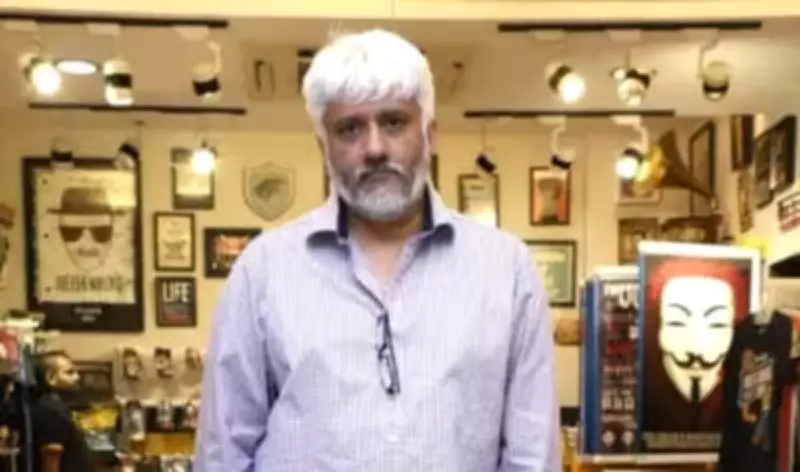
Supreme Court Grants Regular Bail to Bollywood Filmmaker Vikram Bhatt and Wife in Rs 30 Crore Fraud Case
In a significant development, the Supreme Court of India on Thursday granted regular bail to prominent Bollywood filmmaker Vikram Bhatt and his wife Shwetambari Bhatt in connection with an alleged Rs 30 crore fraud case. The couple was originally arrested at their Mumbai residence on December 7, 2025, and subsequently transported to Udaipur, Rajasthan, following a formal complaint lodged against them.
Background of the Case and Arrest
The legal proceedings stem from a complaint filed by Dr. Ajay Murdia, a Udaipur-based doctor and owner of the Indira Group and Indira IVF. Dr. Murdia alleged that he was defrauded of crores of rupees by Vikram Bhatt under the pretext of producing a biopic film based on his wife. According to the complaint, the filmmaker and his associates collected substantial funds for this project.
An FIR was officially registered on November 17 at the Bhupalpura police station in Udaipur against Vikram Bhatt and eight other individuals. The accused include Krishna Bhatt, Dinesh Kataria, Mehboob Ansari, Mudit Buttan, Gangeshwar Lal Srivastava, and Ashok Dubey, alongside the filmmaker and his wife.

Financial Allegations and Project Details
The complainant detailed that he was initially introduced to the film project by Dinesh Kataria and later met Vikram Bhatt at Vrindavan Studio in Mumbai. Bhatt allegedly assured Dr. Murdia that an investment of Rs 7 crore could generate four films with projected returns ranging between Rs 100 to 200 crore.
Following these assurances, multiple financial transfers were made into accounts associated with Bhatt's team, totaling Rs 2,45,61,400. Additionally, Indira Entertainment reportedly paid Rs 42,70,82,232, despite the total agreed production cost being set at Rs 47 crore.
However, the project did not proceed as planned. Only two films were completed and released, while the third film, titled 'Vishwa Virat', is reportedly only 25 percent completed. The fourth film, 'Maharana-Ran', has not yet commenced production. Bhatt is specifically accused of misappropriating Rs 25 crore that was allocated for this fourth film.
Judicial Proceedings and Bail Grant
The Supreme Court's decision to grant regular bail came after a Bench headed by the Chief Justice of India set aside the Rajasthan High Court's order from January 31, which had previously rejected the couple's bail pleas. The Bench, which also included Justices Joymalya Bagchi and Vipul M. Pancholi, observed that the case essentially originated from a commercial transaction between the involved parties.
In its ruling, the apex court expressed hope that both sides would engage in genuine efforts towards reaching an amicable settlement. The court directed the parties to appear before the Supreme Court Mediation Centre to explore the resolution of the payment dispute. The regular bail has been granted with the expectation that the appellants will try and make efforts for the amicable resolution of the dispute, the Supreme Court stated.
Previous Interim Relief and High Court's Stance
Last week, the Supreme Court had granted interim bail to Shwetambari Bhatt, directing her immediate release upon furnishing bail bonds to the satisfaction of the Chief Judicial Magistrate in Udaipur. This interim relief was provided by a Bench led by CJI Kant while issuing notice on the special leave petition challenging the Rajasthan High Court's refusal to grant bail.
Earlier, the Rajasthan High Court had declined bail to Vikram Bhatt, his wife, and another accused, noting that release at that stage would be inappropriate as the investigation was still actively underway. The High Court's decision underscored the ongoing nature of the probe into the alleged fraud.
Implications and Future Steps
The Supreme Court's grant of regular bail marks a pivotal moment in this high-profile case, emphasizing the judiciary's inclination towards mediation in disputes arising from commercial transactions. The court's directive for both parties to pursue settlement through the Mediation Centre highlights a procedural shift towards alternative dispute resolution mechanisms.

As the legal process continues, all eyes will be on the mediation efforts and the subsequent developments in this case involving one of Bollywood's notable filmmakers. The outcome could set a precedent for how similar commercial disputes are handled within the Indian judicial system.