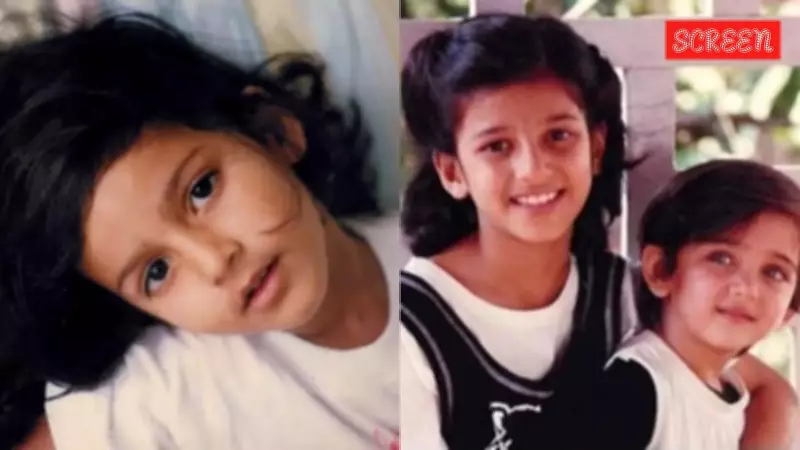
Shruti Haasan Opens Up About Atheist Childhood and Father Kamal Haasan's Views
In a candid revelation, actress Shruti Haasan has shared intimate details about her unconventional upbringing in an atheist household, highlighting her father Kamal Haasan's strong rationalist stance and her own spiritual explorations. The Pan-India star, known for her work in Telugu, Tamil, and Hindi cinema, described her childhood as 'abnormal' due to the unique environment created by her famous parents, both of whom never attended formal school.
Growing Up Without Religion in a Creative Chaos
Shruti Haasan, the daughter of veteran actor Kamal Haasan and actress Sarika, grew up in a home where religion was conspicuously absent. "We grew up in an atheist home, a non-religious home. My dad hates it when I say this. We didn't have God at home, or your Sabbath and that we don't have to eat non-veg food on Tuesday, none of that stuff that other homes have," she revealed during a podcast interview. The family instead embraced the philosophy that 'art is God,' fostering a creative atmosphere that Shruti describes as "a cloud of creativity and chaos."
She elaborated on her parents' unconventional parenting approach, noting that "both my parents were artistically mercurial people. They both also had never been to school, so they didn't really have an idea about how to raise academic kids. I could see them learning to parent us while we were kids." This environment led to what she calls an 'abnormal' childhood filled with movie sets, exotic animals, and encounters with renowned artists.

Language Struggles and Family Legacy
The actress also discussed the linguistic challenges she faced growing up in a multilingual household. Despite being raised in Tamil Nadu, Shruti revealed that "we used to talk in Hindi and English only at home, which a lot of people don't know. My mom was paranoid that these two kids will never learn Hindi because they will only speak in Tamil. So, our Tamil suffered for many years because of it." She attended an English medium school, which further weakened her Tamil proficiency, a situation that persisted even as she built her career across Indian film industries.
Shruti moved to Mumbai in 2010 following her parents' separation, making her Bollywood debut with the 2009 film Luck. She has since established herself as a prominent actress with successful films like Salaar: Part 1 – Ceasefire, Gabbar Singh, Race Gurram, and Srimanthudu.
Kamal Haasan's Rationalist Approach and Shruti's Rebellion
Kamal Haasan, a self-declared rationalist, maintained a pragmatic household that rejected traditional religious practices and superstitions. "If you went and said astrology to my dad, he will be like 'Get out'. He is very creative and practical. On a basic day to day level, he is pragmatic," Shruti explained. Despite his firm views, Kamal showed remarkable tolerance for his daughter's personal expressions, including her experimentation with unconventional appearances.
"I feel that my father is God's child. He has seen me wear demon lenses and pink hair, poor father of mine. He has really seen the rebellion and he let me do it, that's sweet of him. And he doesn't like tattoos, hates them," she shared, highlighting the complex dynamic between her father's rationalism and her own journey of self-discovery.
Embracing Wicca and Pagan Ancestry
In contrast to her atheist upbringing, Shruti Haasan has developed a deep connection with wicca and pagan traditions. She explained her spiritual inclination by referencing her female ancestry, stating "It's the women ancestors before me, which is why I moved towards wicca and the history of pagan and pagan worship." The actress particularly resonates with the saying "we are the granddaughters of the witches that you couldn't burn," feeling a strong connection to her ancestral female lineage.
This spiritual exploration represents a significant departure from her father's rationalist beliefs, yet Shruti maintains respect for both perspectives. Her journey reflects the unique blend of influences from her Tamilian Brahmin and Rajput heritage, combined with the creative, non-religious environment of her childhood home.

Through these revelations, Shruti Haasan offers a rare glimpse into the personal life of one of India's most celebrated film families, showcasing how individual spiritual paths can emerge even from staunchly atheist backgrounds while maintaining family bonds and mutual respect.