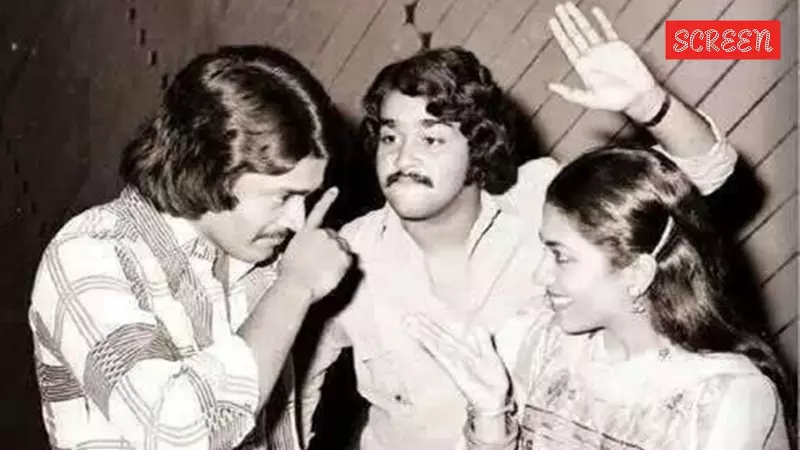
The Malayalam film industry has witnessed countless surprising turns of fate, but few stories are as dramatic as that of Shankar, the chocolate hero who once overshadowed both Mohanlal and Mammootty during the early 1980s. His spectacular rise and equally dramatic fall serve as a compelling chapter in South Indian cinema history.
The Unlikely Beginning
In 1980, when newcomer Mohanlal made his acting debut as the antagonist in Fazil's Manjil Virinja Pookkal, few could have predicted that he would still be reigning over the industry 45 years later. Particularly surprising given that Mohanlal received only 5 and 7 out of 100 marks from two of the four panel members during his audition for the film.
The real star of that landmark movie was Shankar, who played the romantic lead opposite Poornima Bhagyaraj. An alumnus of the South Indian Film Chamber School of Acting, Shankar had previously appeared in a small role in superstar Jayan's Sarapancharam (1979). His career breakthrough came almost simultaneously in both Tamil and Malayalam industries.

The Shankar Era Dominance
Manjil Virinja Pookkal became a blockbuster success, establishing Shankar as an overnight sensation. His charming persona and electrifying chemistry with Poornima captivated audiences, while the film's soundtrack became equally popular. This period marked the beginning of what industry observers now call "The Shankar Era" in Malayalam cinema.
As the industry struggled with the void left by Jayan's tragic death in 1980, and established stars like Sukumaran and Soman focused on intense dramatic roles, Shankar emerged as the perfect chocolate hero that Malayalam cinema desperately needed. His popularity soared to such heights that even in films like Oothikachiya Ponnu, which featured both Mohanlal and Mammootty in early roles, the spotlight remained firmly on Shankar.
During his peak years, Shankar became part of several iconic screen pairings. The Shankar-Poornima duo delivered hits like Velicham Vitharunna Penkutty, while his pairing with Menaka generated even greater excitement through successful films including Ente Mohangal Poovaninju, Engane Nee Marakkum, and Piriyilla Naam. The Shankar-Ambika combination also gained significant popularity through movies like Anuraagakkodathi and Marakkillorikkalum.
The Dramatic Downfall
The turning point in Shankar's career came from his own admission that he appeared in up to 30 films per year during his peak. This relentless work schedule, combined with his reluctance to experiment beyond romantic roles, gradually eroded his market value.
Meanwhile, both Mohanlal and Mammootty strategically avoided typecasting, embracing diverse characters that showcased their acting range. As these two future legends grew into what would become known as the "Big Ms" of Malayalam cinema, Shankar began receiving fewer offers. The decline of pure romance genres and the emergence of younger actors like Rahman further accelerated his career descent.
By 1986, the tables had completely turned. Shankar found himself playing secondary roles to both Mohanlal and Mammootty. Even in films like Sughamo Devi, where Shankar held the hero role and Mohanlal appeared in a supporting capacity, it was Mohanlal who walked away with audience applause and critical appreciation.
The decline became starkly evident when Shankar appeared in only a handful of movies in 1987, followed by just one film each over the next three years. His attempted comeback in 1991 through more diverse roles in films like Abhimanyu and Kizhakkunarum Pakshi failed to reignite his fading stardom.
Though Shankar never completely left cinema, his appearances became increasingly sporadic. He tried his hand at direction with Keralotsavam 2009 and Manal Naharam/Sand City, but both projects received negative reviews. He also made occasional appearances in television serials over the years.
The story of Shankar serves as a powerful reminder of the film industry's unpredictability and the importance of strategic career management in an ever-evolving entertainment landscape.