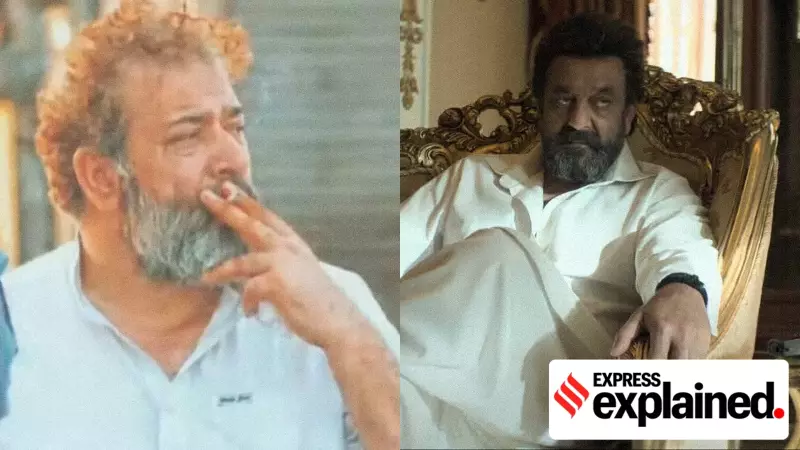
This Friday, December 4, 2025, Bollywood heavyweight Sanjay Dutt steps into the shoes of one of Pakistan's most infamous police officers in the spy thriller Dhurandhar. The film brings to Indian screens the dramatic and violent life of Chaudhary Aslam Khan, a Karachi cop whose career as an encounter specialist became legendary and lethal.
From Mansehra to Karachi: The Making of an Encounter Specialist
Chaudhary Aslam Khan, a Pathan from Mansehra district, began his policing journey in the late 1980s. He first gained significant attention during his posting as the Station House Officer (SHO) of Gulbahar Police Station in Karachi. It was around this time he adopted the title "Chaudhary," a term traditionally linked to Punjabi landowning families.
His rise coincided with a dark period for Karachi in the late 80s and early 90s, marked by a wave of ethnic killings often attributed to the Muttahida Qaumi Movement (MQM). The city was terrorized by bodies found in gunny sacks on its streets. Aslam Khan was placed at the center of a government crackdown, which critics and human rights groups say led to the extrajudicial killing of several MQM workers in staged police encounters.
The Lyari Wars and the Karachi Underworld
Khan's career took a pivotal turn with the operations in Lyari, one of Karachi's oldest and most deprived neighborhoods and a stronghold of the Pakistan People's Party (PPP). As ethnic tensions flared, Khan, who had initially clashed with the MQM, found his position shifting after the party allied with General Pervez Musharraf's government post the 1999 coup.
This political realignment led to a state-backed offensive against Lyari's criminal gangs, aimed at dismantling crime and weakening the PPP's influence. Khan was appointed to lead this charge via the Lyari Task Force, a unit that became synonymous with deadly police encounters. His aggressive tactics even led to his arrest and a 16-month jail term following an encounter involving a member of the Brohi tribe.
Upon his return to the force after a change in government, Khan spearheaded the operation that killed feared Lyari gang leader Rahman Dakait, also known as Rahman Commando. This figure is portrayed by Akshaye Khanna in Dhurandhar.
Targeting Terror and a Deadly End
By the early 2010s, Khan's focus shifted from the underworld to militant groups like the Tehrik-e-Taliban Pakistan (TTP) and Lashkar-e-Jhangvi (LeJ), as Pakistan faced escalating suicide attacks and sectarian violence. His prominent role in counter-terror operations in Karachi made him a prime target for the TTP.
On January 9, 2014, Chaudhary Aslam Khan, then serving as Senior Superintendent of Police (SSP) for Karachi's Anti-Terrorism Unit, was killed when a suicide bomber struck his convoy on the Lyari Expressway. The TTP claimed responsibility for the attack, with subsequent investigations hinting at possible inside support. Over his career, Khan was credited with over 100 encounters and was awarded a head-money reward of Rs 7.5 crore for killing or arresting wanted suspects.
Geopolitical Crosscurrents: The India-Pakistan Espionage Link
While Khan's work was primarily within Pakistan's domestic policing, it intersected with the broader intelligence war between India and Pakistan. He was involved in the arrest of Saulat Mirza, an MQM worker who, before his execution in 2015, alleged that his party received assistance from India's external intelligence agency, RAW—a claim India firmly denies.
Khan also pursued underworld kingpin Uzair Baloch, who was arrested in 2016. Pakistani authorities later accused Baloch of sharing information with foreign intelligence and alleged contacts with networks linked to Indian national Kulbhushan Jadhav, who remains in Pakistani custody. India has consistently rejected these allegations.
The legacy of Chaudhary Aslam Khan remains a subject of intense debate—hailed by some as a fearless crime-fighter and condemned by others for his controversial methods. Through Sanjay Dutt's portrayal in Dhurandhar, his complex story is now set to captivate audiences, offering a cinematic glimpse into the brutal realities of Karachi's law enforcement and its entanglement with politics, crime, and geopolitics.