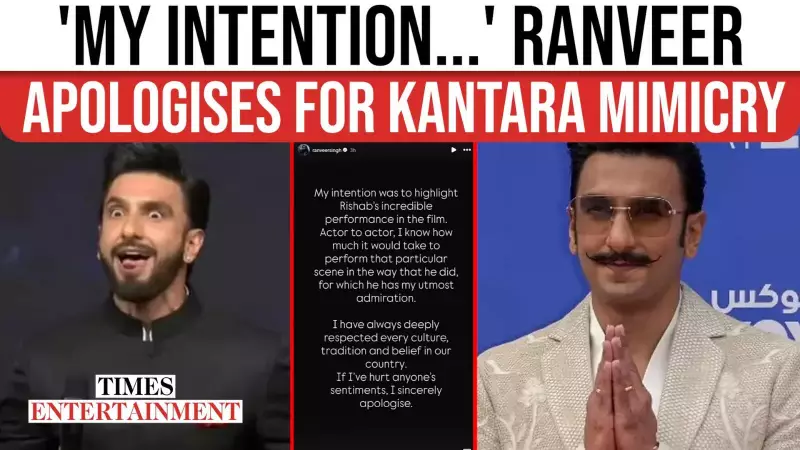
Bollywood star Ranveer Singh has issued a public apology following significant backlash for his recent act of mimicking a sacred scene from the blockbuster film 'Kantara'. The incident occurred at the International Film Festival of India (IFFI) 2025, sparking widespread condemnation from netizens and religious-rights groups who deemed it disrespectful to local folk deities and beliefs.
The Controversial Act and Immediate Fallout
The controversy erupted on December 2, 2025, after videos from the festival circulated online. In his apology, Singh clarified that his intention was never to offend but to honour the film's intense climax and its lead actor-director, Rishab Shetty. He expressed deep regret for any hurt caused by his imitation of the powerful 'Daiva' sequence, a pivotal moment in the film deeply rooted in Karnataka's Bhoota Kola tradition.
Public and Group Reactions Escalate
Despite the actor's explanation, the reaction was swift and severe. Social media platforms were flooded with criticism, with many users and specific religious-rights groups labelling the act as 'disrespectful' and 'insensitive'. They argued that the portrayal of folk deities and rituals, which hold profound spiritual significance for many communities, should not be reduced to casual mimicry for entertainment at a public event.

Adding fuel to the fire, reports emerged suggesting that Rishab Shetty himself had advised Ranveer Singh against performing the imitation. This detail further intensified the debate, highlighting a potential disconnect between the actor's perception of tribute and the cultural guardianship expected by the film's creators and its primary audience.
Broader Debate on Artistic Responsibility
This episode has reignited a crucial conversation within the Indian film industry and beyond about the fine line between artistic expression and cultural sensitivity. It raises persistent questions about the responsibility of artists, especially at prominent platforms like IFFI, when engaging with content that is intrinsically tied to specific regional faiths and ethnic practices.
The 'Kantara' controversy underscores the need for greater awareness and respect for diverse cultural narratives. It serves as a reminder that what might be viewed as cinematic homage in one context can be perceived as appropriation or sacrilege in another, particularly when dealing with deeply revered local traditions.