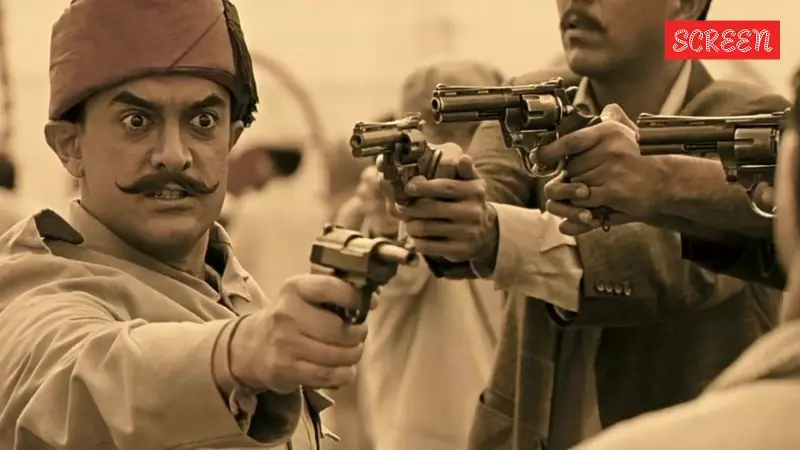
Rang De Basanti at 20: A Timeless Legacy of Cinematic Revolution
As Rang De Basanti marks two decades since its groundbreaking release, director Rakeysh Omprakash Mehra reflects on the film's enduring impact in an exclusive interview with SCREEN. The film, which premiered on January 26, 2006, continues to resonate with audiences, defying the passage of time with its powerful narrative and revolutionary spirit.
The Creative Vision Behind a Generation-Defining Film
Mehra delves into the meticulous creative decisions that shaped Rang De Basanti's unique identity. The opening credits, featuring Sue McKinley's research material intercut with archival footage, were designed to immediately establish the film's tone. "The idea was rooted in Sue's discovery of her grandfather's diary," Mehra explains, highlighting how this narrative device became the foundation for the documentary layer within the film.
The cinematography by Binod Pradhan played a crucial role in visualizing the story. Mehra reveals that Dutch angles were used selectively at seminal moments, such as when Sue imagines the boys as freedom fighters, serving as a transition into her mind. The lens choices evolved throughout the film: wider lenses (24-35mm) in the first third to capture the group as a collective, mid-range lenses (50-70mm) in the middle third, and portrait lenses (75mm and above) in the final third to create claustrophobia and emotional intensity.

Character Arcs and Emotional Depth
Mehra discusses Karan's character, played by Siddharth, as "the most author-backed character in the film." Karan's transformation from a careless rich brat to someone who salutes India Gate symbolizes a personal liberation. "I wanted every youth of the country to feel: to smile, to be happy," Mehra says, emphasizing the character's journey toward substance over superficial aspirations.
The director also touches on the nuanced relationships, revealing that Karan was in love with Sonia, played by Soha Ali Khan, though it was never explicitly underlined. "It's like you can love somebody without defining their relationship," he notes, showcasing the film's subtle approach to emotional storytelling.
Overcoming Production Hurdles and Censorship Battles
Getting Rang De Basanti off the ground was fraught with challenges. Mehra recounts financial struggles, including mortgaging his office and house in Pali Hill to keep pre-production running after original producers failed to deliver. "I kept investing my own funds," he says, highlighting his commitment to the project despite interference from producers pushing for "known faces."
The film faced significant censorship hurdles, particularly from the Defence Ministry, which objected to references like calling a MiG a MiG or depicting a Defence Minister. Mehra stood firm, stating, "All of this is derived from real life. I have facts to support everything." The release was delayed from January 19 to January 26, ultimately securing a Republic Day release that amplified its impact.
Aamir Khan's Emotional Preparation and Last-Minute Changes
Mehra shares an anecdote about Aamir Khan's preparation for a pivotal emotional scene where his character DJ breaks down. Initially scheduled for a Monday shoot, Mehra postponed it because he felt Aamir was "over-prepared" with red eyes from rehearsing. "I didn't want him to come into the scene with so many tears already in his eyes," Mehra explains. The scene was shot later in the week in a single take, capturing the raw emotion Mehra envisioned.
The Ending and Its Lasting Resonance
Mehra always knew how the film should end, but felt something was missing just before release. He realized "these boys had lit the fire, but it hadn't spread." In a frantic two-and-a-half-day shoot across 7-8 cities with NDTV's crew, he added footage of nationwide reactions, completing the film's powerful conclusion. "Aamir was getting married in Panchgani at the same time, and he told me, 'Don't come for my wedding, finish your film,'" Mehra recalls.

Relevance in Today's Times: A 'Stupid' Question
Addressing whether Rang De Basanti could be made today, Mehra dismisses the query as "stupid." "If you want to do something, do it. It's a choice," he asserts. He believes the film's themes of justice, activism, and youth empowerment remain timeless, relevant "200 years later." Reflecting on censorship concerns, he emphasizes that challenges existed even two decades ago, but perseverance led to the film's release and legacy.
As Rang De Basanti celebrates 20 years, Mehra's reflections underscore its status as a cinematic milestone that continues to inspire and provoke thought, proving that stories with pure intentions and courageous storytelling can transcend eras.