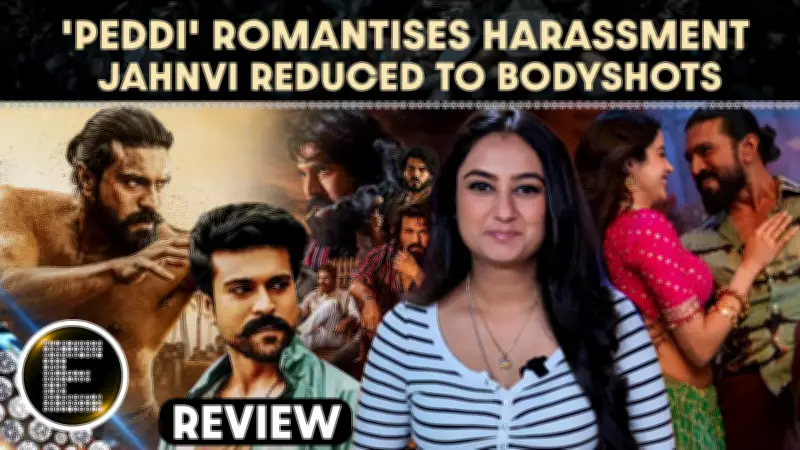
Ram Charan delivers a commendable performance, but the film collapses under its deeply problematic portrayal of women. From objectifying camera angles to glorifying non-consensual behaviour as romance, the Janhvi Kapoor starrer mistakes misogyny for 'mass entertainment'. The film repeatedly reduces its female lead to body shots while justifying toxic masculinity through hero worship. In 2026, cinema still packaging harassment as love is not just outdated, it's disturbing. Here is my brutally honest review of the film everyone is debating online.
A Flawed Narrative
The movie attempts to weave a love story but fails to respect the fundamental principles of consent and mutual respect. The male lead's actions, portrayed as passionate, often cross into harassment territory, while the female lead is presented as a mere object of desire rather than a character with agency. This approach not only undermines the narrative but also sends a harmful message to audiences.
Technical Aspects
While the cinematography captures stunning visuals, it often lingers unnecessarily on the female form, reducing the actress to a spectacle. The music, though catchy, is used to romanticize situations that would be alarming in real life. Ram Charan's acting prowess is evident, but even his talent cannot salvage a script that relies on outdated tropes.

Social Commentary
In an era where conversations about gender equality and respect are at the forefront, this film feels like a step backward. It reinforces stereotypes and normalizes toxic behaviour under the guise of entertainment. The director's vision seems stuck in a bygone era, failing to evolve with changing societal norms.
Conclusion
Ultimately, this film is a missed opportunity. It could have been a progressive love story but instead chooses to objectify women and glorify harassment. For those seeking meaningful cinema, this is best avoided. For critics, it serves as a reminder of how far the industry still needs to go.