From Regional Director to National Phenomenon
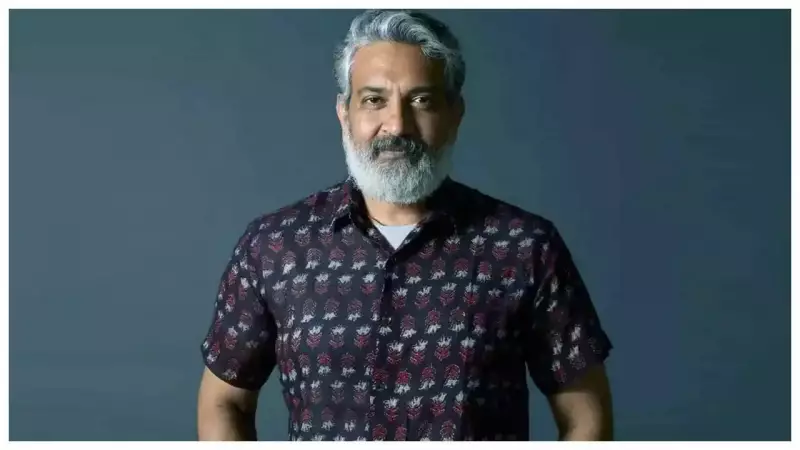
Today, SS Rajamouli stands as the undisputed giant of Indian filmmaking, a creative force whose very name guarantees nationwide excitement and whose cinematic creations consistently redefine box office expectations. With groundbreaking achievements like the Baahubali series and the global sensation RRR, followed by his highly anticipated project featuring Mahesh Babu, Priyanka Chopra, and Prithviraj, Rajamouli operates on a scale that remains unparalleled in the history of Indian cinema.
The Early Struggle: Breaking Geographical Barriers
However, the path to becoming a pan-India superstar was neither immediate nor straightforward. During a revealing discussion on the Awards Chatter podcast, the visionary director shared that long before "Pan-India" became a popular marketing term, he was already determined to expand his films beyond the Telugu-speaking territories of Andhra Pradesh and Telangana.
The crucial turning point arrived with Magadheera in 2009, the massive blockbuster starring Ram Charan and Kajal Aggarwal that shattered records in Telugu cinema. Convinced that the film's epic narrative, grand scale, and universal emotional themes could resonate with viewers across South India, Rajamouli passionately advocated for a dubbed Tamil release in Tamil Nadu.

"I persistently pressured my producer, I practically begged him, I tried every possible approach just to get the film dubbed and released in Tamil," he remembered. "I had absolute faith in our creation. But he declined—for reasons of his own, he refused, and we couldn't make it happen."
Despite achieving tremendous success in its original language, the film's influence remained confined to specific regions. This disappointing experience made a permanent impact on the director's mindset.
The Strategic Shift: Finding Like-Minded Partners
Rajamouli realized that for his films to truly travel across linguistic boundaries, he needed production partners who shared his ambitious vision of reaching diverse markets. "Therefore, starting with my next project, I made a firm decision to work exclusively with producers who believed my stories could cross regional borders," he declared.
This strategic transformation began with Eega in 2012, the innovative fantasy revenge drama featuring a man reincarnated as a fly. For this project, Rajamouli finally discovered a producer who recognized the film's cross-cultural potential. Eega was simultaneously dubbed into Tamil as Naan Ee and Malayalam, while also receiving proper distribution in Karnataka, marking Rajamouli's first significant stride toward multi-language filmmaking.
Even for Hindi audiences, the film gained support from Bollywood star Ajay Devgn, though distribution challenges somewhat restricted its reach. Nevertheless, Eega successfully demonstrated that audiences outside traditional Telugu markets were completely receptive to Rajamouli's distinctive storytelling approach.
The Game-Changer: Baahubali and Global Recognition
But it was Baahubali: The Beginning in 2015 that truly revolutionized Indian cinema. By collaborating with Karan Johar and Anil Thadani for the Hindi version, the film secured a comprehensive nationwide launch. What followed became cinematic history, as Rajamouli instantly transformed from a celebrated regional filmmaker into a genuine national icon.
With his subsequent masterpiece RRR, featuring Ram Charan and Jr NTR, he conclusively proved that Baahubali's success wasn't accidental. Now, with his upcoming film tentatively titled Varanasi, discussions are underway about potential collaboration with international studios for worldwide distribution.
The extraordinary performance of RRR in North American markets, coupled with the Oscar victory for Naatu Naatu and glowing endorsements from legendary filmmakers James Cameron and Steven Spielberg, has genuinely captured Hollywood's attention, positioning Rajamouli as India's most prominent cinematic ambassador on the global stage.