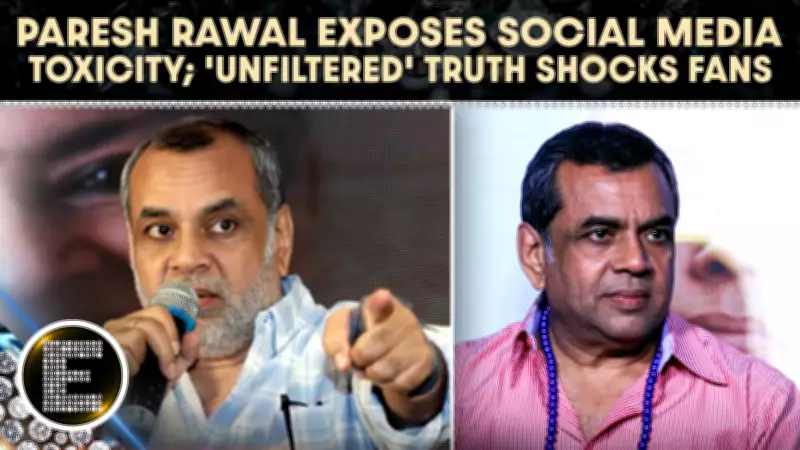
Paresh Rawal's Blunt 'Puking Pot' Analogy for Social Media Sparks Viral Debate
Veteran Bollywood actor Paresh Rawal has ignited a fresh and intense conversation about the pervasive toxicity on digital platforms with his strikingly blunt characterization of social media. In a statement that has rapidly gone viral across various online networks, Rawal described social media as a "puking pot," expressing deep concern over the escalating negativity and vitriol that dominates these spaces.
Actor Urges Mindfulness and Personal Improvement
Rawal did not merely criticize; he also issued a heartfelt plea for greater mindfulness among users regarding what they choose to post and share. Emphasizing that he, too, is actively working on improving his own conduct and perspective, the actor's remarks have resonated with many who are weary of the constant barrage of hostile interactions online. His call for introspection and responsibility has positioned him as a voice advocating for a more civil digital environment.
Mixed Reactions and Broader Context
The actor's "puking pot" remark has triggered a wave of mixed reactions from netizens and public figures alike. While some have applauded his honesty and the timely nature of his critique, others have questioned the validity of his perspective or pointed to the complexities of online discourse. This viral moment occurs against the backdrop of the ongoing Dhurandhar debate in Bollywood, where discussions about film narratives, generational shifts, and industry dynamics are already fueling heated exchanges on social media platforms.

Is Paresh Rawal right about the current state of social media? This question lies at the heart of the controversy. Supporters argue that his analogy accurately captures the overwhelming negativity, including trolling, misinformation, and personal attacks that often drown out constructive dialogue. Critics, however, contend that social media also serves as a vital tool for connection, activism, and creative expression, and that blanket condemnations may overlook its positive aspects.
Why This Viral Statement Matters
Rawal's comments matter because they highlight a growing societal concern: the impact of online toxicity on mental health, public discourse, and cultural conversations. As a respected figure in the entertainment industry, his words carry weight and can influence public opinion. The timing, amid debates like Dhurandhar, underscores how social media amplifies and often distorts discussions around popular culture and politics.
The viral spread of his "puking pot" remark serves as a mirror, reflecting broader anxieties about digital communication. It prompts users to reconsider their online behavior and the collective responsibility to foster healthier interactions. Whether one agrees with Rawal or not, his statement has undeniably sparked a necessary dialogue about the role and regulation of social media in modern life.