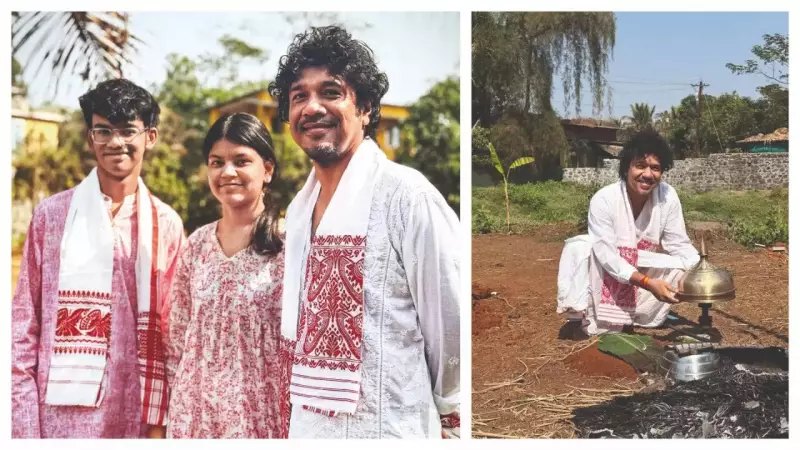
Singer Papon recently marked Magh Bihu, also known as Bhogali Bihu, with his wife and children at their farmhouse in Karjat. The harvest festival became a deeply personal and emotional occasion for the musician.
Staying Connected to Roots
In an exclusive conversation with Mumbai Mirror, Papon reflected on maintaining his connection to Assam despite living away for work. "This celebration was truly special to me," he said. "Spending Magh Bihu with family felt deeply meaningful. I may be away from Assam for professional reasons, but my heart remains tied to the festivals of my home state."
Following Traditional Rituals
Papon emphasized his commitment to traditional practices. "We observe every ritual that touches my soul," he explained. "This includes the Uruka feast with friends and family on the eve of Magh Bihu. We build and light the Meji the next morning. We offer traditional mash-proxaad along with homemade Pithas."

Watching Through Children's Eyes
The most touching moment came from observing his children during the festivities. "Seeing my kids sit around the fire, full of curiosity and joy, created an emotional memory I will always treasure," Papon recalled. "In their faces, I saw echoes of my own Uruka nights. Those memories overflow with laughter, warmth, and the quiet comfort of sitting beside my father by the fire."
A Taste of Childhood
The celebration featured a traditional Assamese feast that evoked childhood memories for Papon. "We gathered around a traditional spread of fish and homemade sweets," he shared. "These sweets used rice flour, jaggery, sesame, and coconut. Those flavors instantly transported me back to my younger years."
Traditions That Endure
Papon reflected on how traditions persist beyond geographical boundaries. "These moments showed me that traditions do not fade with distance or time," he noted. "They survive through love, memory, and how we pass them to the next generation. For me, Magh Bihu is more than a festival. It represents a feeling, a connection, and a promise that our roots will always endure."