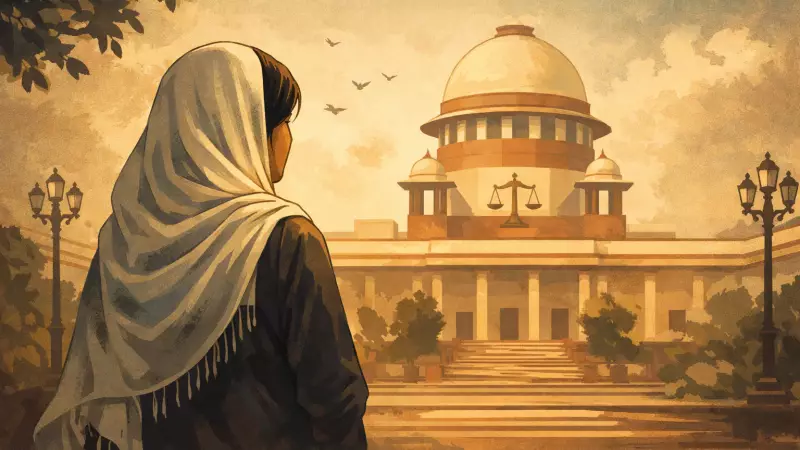
The release of a new Hindi film has thrust a decades-old legal and social battle back into the spotlight, serving as a poignant and uncomfortable mirror to contemporary realities. Titled Haq, the film draws direct inspiration from the historic Shah Bano case, a landmark moment in India's struggle for gender justice within Muslim personal law.
Cinema Echoes a Historic Legal Battle
Premiering in January 2026, Haq has been widely praised for its sensitive and powerful portrayal of a Muslim woman's fight for dignity and financial security. The narrative follows a woman who, much like Shah Bano in the 1980s, is abandoned by her polygamous husband. Her quest for basic maintenance becomes a grueling legal and societal battle, echoing the real-life drama that once gripped the nation.
The original case involved Shah Bano, a 62-year-old Muslim woman from Indore, who was divorced by her husband in 1978. She petitioned the courts for maintenance under Section 125 of the Code of Criminal Procedure. In a historic 1985 judgment, the Supreme Court ruled in her favor, granting her the right to alimony. This verdict, however, triggered massive political and religious controversy, leading to the government passing the Muslim Women (Protection of Rights on Divorce) Act in 1986, which many argued diluted the Supreme Court's judgment.

An Uncomfortable Reflection of Persistent Mindsets
Critics and audiences have noted that Haq is more than a period drama; it is a stark commentary on the present. The film acts as a powerful reminder that the deep-seated, conservative male mindset that fueled the controversy in the 1980s remains largely unchallenged in many quarters. Despite legislative changes like the 2019 law against instant triple talaq, the core issues of polygamy, fair maintenance, and gender equality within personal laws continue to be points of intense debate and struggle.
The film's narrative underscores how societal pressure, political maneuvering, and patriarchal interpretations of religion continue to impede the path to justice for countless women. It questions the pace of social reform and highlights the gap between legal provisions and ground-level realities for Muslim women seeking their rights.
The Legacy and the Unfinished Journey
The Shah Bano case remains a defining chapter in India's socio-legal history. It ignited a national conversation on the conflict between religious personal laws and the constitutional guarantee of gender equality. The release of Haq in 2026 proves that the case is not a closed historical footnote but a living reference point for ongoing struggles.
By revisiting this story through cinema, Haq performs a crucial function: it educates a new generation about a pivotal moment and holds up a mirror to society, asking how much has truly changed. The film suggests that while laws may evolve, transforming entrenched social attitudes is a far slower and more complex process. The fight for Haq—the right to justice and dignity—portrayed in the film continues to resonate, making it a significant cultural artifact for contemporary India.