Lilliput Offers Frank Assessment of Shah Rukh Khan's Career Choices
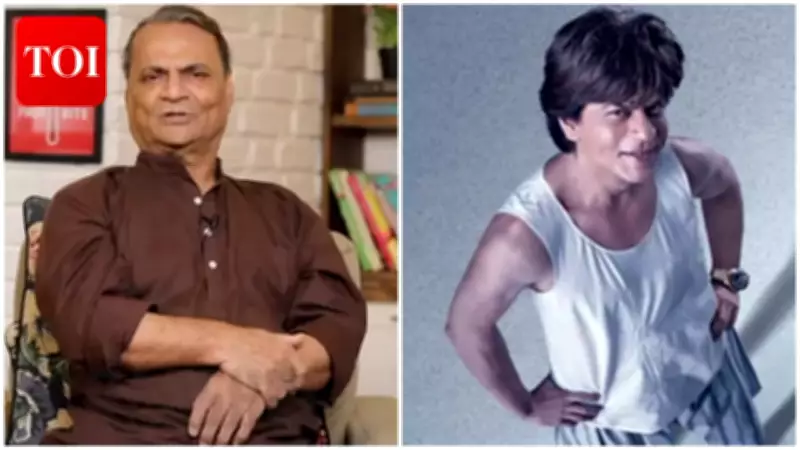
Veteran actor-writer M M Faruqui, popularly known by his stage name Lilliput, has recently provided a candid and insightful perspective on the career of Bollywood superstar Shah Rukh Khan. In a detailed new interview, Lilliput reflected on SRK's performance in the 2018 film Zero, openly questioned the actor's script selection abilities, and elaborated on his personal aversion to action-heavy blockbusters like Jawan.
Praising Sincerity While Critiquing Effectiveness in Zero
Discussing Shah Rukh Khan's portrayal of Bauua Singh in Zero, Lilliput acknowledged the actor's immense dedication and hard work, even as he expressed reservations about the film's overall impact. "He tried his best. Shah Rukh didn't leave any stone unturned. He worked with complete honesty and dedication," Lilliput stated during his conversation with interviewer Siddharth Kannan.
However, he added a nuanced comparison to illustrate his point: "But if something is not effective, what can the poor man do? It's like saying someone is very handsome, but they don't look good on screen." Directed by Aanand L. Rai, Zero featured Shah Rukh Khan as a vertically challenged character and represented one of the most ambitious projects in his illustrious career, yet it underperformed significantly at the box office.

Clarifying Predictions and Emphasizing Audience Role
When questioned about whether he had foreseen the commercial failure of Zero, Lilliput clarified that he never made such a definitive prediction. "I didn't have that kind of courage, brother. What I had said was that a lot of money had been spent on the film. Now it is for the audience to decide what the film really is," he explained humbly.
He further distanced himself from the role of a critic, noting: "I'm not a critic. I'm not that educated either that I can analyze something deeply and give a judgment." This statement underscores his perspective as an industry insider rather than a formal analyst.
Questioning Script Sense and Highlighting Human Flaws
Lilliput delved deeper into what he perceives as a potential gap in Shah Rukh Khan's ability to choose strong scripts, even while reaffirming the superstar's sincerity. "Yes, absolutely. I did say that," he confirmed when asked if he had previously remarked on SRK's occasional selection of weaker narratives.
He elaborated by drawing a comparison: "Because after watching Shah Rukh's films, it feels like he doesn't have the same sense of scripts that Aamir Khan has." Lilliput emphasized that all individuals, regardless of their success, possess imperfections. "When you become successful, it doesn't mean you have become God. You are still a human being. No matter how great a person is, they will have flaws," he asserted, citing historical figures like Mahatma Gandhi, Rabindranath Tagore, and Maulana Abul Kalam Azad as examples.
He urged for constructive criticism, stating: "You may work with complete honesty, and Shah Rukh certainly works with honesty. There is no doubt about that. But many people don't have a sense of scripts. He may not have it either. And that's not something shameful or bad."
Analyzing Superstardom and Production Dynamics
Addressing how Shah Rukh Khan ascended to superstardom despite such critiques, Lilliput pointed to the influential banners and filmmakers he has collaborated with throughout his career. "If you look at his films, most of them are films made by outside banners, like Yash Raj Films and others," he observed.
He clarified: "By 'outside', I mean films that are not his own home production where he himself is the producer. When he works as a producer, the writer and director sometimes compromise. They might say yes to things easily." Lilliput reiterated that no one excels in every aspect and that such feedback should be viewed positively rather than negatively.

Expressing Dislike for Violent Films Like Jawan
Lilliput also shared his personal disapproval of violent cinema while discussing Shah Rukh Khan's recent blockbuster Jawan. "I didn't like it. Personally, I don't like violent films at all," he admitted frankly.
He explained his stance by highlighting societal influences: "These action-heavy films, in my opinion, are very harmful to society. Because I believe society functions through imitation. Since the beginning of civilization, human beings copy what they see."
Elaborating on this perspective, he noted that social behaviors often propagate through emulation—whether it involves purchasing luxury items, following trends, or engaging in relationships. "Society runs on copying. Someone buys a car, and I feel I should also have a car. Someone has a love marriage, and suddenly I also feel like I'm in love. This is the truth. And anyone who denies this reality is a complete fool," Lilliput concluded, reinforcing his critique of action films' potential impact on audiences.