Kolkata-based filmmaker Ashish Avikunthak has achieved another international milestone. His latest work, 'Meghnad Badh Kavya' or 'The Killing of Meghnad', will have its world premiere at the prestigious International Film Festival Rotterdam. The film will screen in the festival's Harbour section, marking a significant moment for Indian cinema on the global stage.
A Continuing Festival Presence
This selection continues Avikunthak's strong relationship with IFFR. His earlier film, 'Devastated', premiered at the festival in 2024. That work offered a critical re-examination of the 'Bhagavad Gita'. 'The Killing of Meghnad' now becomes his sixth film to be featured at the Rotterdam festival, solidifying his reputation as a filmmaker of international caliber.
Interrogating Ancient Narratives
The new film takes on the epic 'Ramayana' through a specific lens. It adapts the 1861 poem by Michael Madhusudan Dutt. Avikunthak began shooting both 'Devastated' and 'Meghnad Badh Kavya' back in 2017. He describes his primary idea as using cinema to question what traditional narratives have long held as unquestionable.

The director shared his philosophical approach. "This film emerges from my desire to interrogate the moral certainties embedded in our civilizational narratives," Avikunthak said. He pointed to those ancient stories societies tell themselves to justify power and legitimize subjugation. Michael Madhusudan Dutt's epic poem offered him a powerful counter-narrative to the Ramayana.
A Layered Cinematic Commentary
Avikunthak explained the film's deep intertextuality. "My film is a 21st-century cinematic commentary on Michael Madhusudan Dutt's reinterpretation of Krittibas's 'Ramayana'," he noted. That version itself comments on Tulsidas's work, which in turn reflects Valmiki's original text. Valmiki's epic was already engaging with multiple Ramayana traditions circulating over 2,000 years ago.
"My re-reading is deeply conscious of these layered dialogues," the director added. His academic background informs this perspective. By training, he is both an archaeologist and an anthropologist. This dual lens allows him to excavate and analyze these narrative layers with unique insight.
Two Significant Artistic Departures
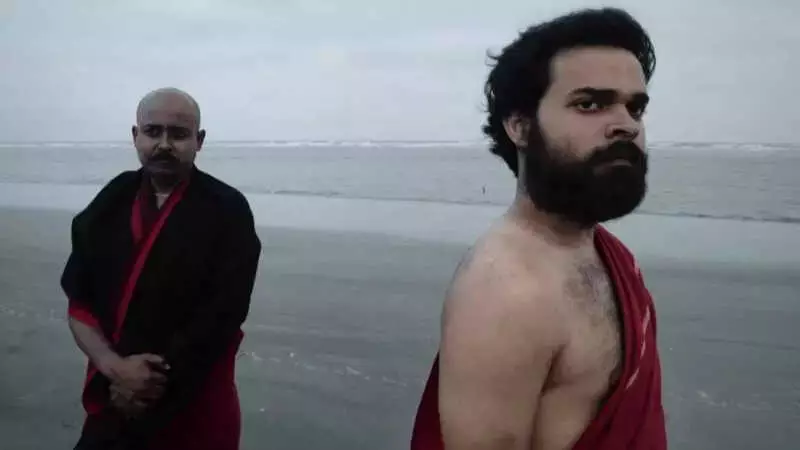
The film makes two major breaks from conventional mythological cinema. First, it employs a distinct visual and locational strategy. Avikunthak chose austere natural landscapes far removed from the opulent artifice typical of the genre.
The filming locations themselves become characters. The crew shot in the high altitudes of Ladakh, the rugged mountains of Spiti, the white desert of the Rann of Kutch, and the dense forests of Jim Corbett National Park. The director described these as silent, elemental, and unyielding terrains. They transform into metaphysical spaces where the epic unfolds.
Introducing 'Infra-Realism'
The second departure involves the film's tone and style. It completely erases the melodramatic register often associated with epic narratives. Yet, Avikunthak insists the film remains faithful to the source material. He characterizes its staging with a term he coined: infra-realism. This approach seeks a grounded, textured realism that operates beneath the surface of spectacle.
The film features a large ensemble cast including Sagnik Mukherjee, Prasenjit Bardhan, Debleena Sen, and Deepak Halder. Other notable performers are Sukanta Chatterjee, Sudip Chakraborty, Anujoy Chattopadhyay, Banhisekha Sarkar, and Shreelagna Bandyopadhyay. The cast also includes Riddhibesh Bhattacharya, Moumita Debnath, Arkoja Acharya Dibyashri Hazra, and Adrita De.
Reflecting on 'Devastated' and Looking Forward
Avikunthak's previous film, 'Devastated', served as a philosophical reflection on contemporary India. He described it as a meditation on violence, memory, and the erasure of dissent. 'The Killing of Meghnad' continues this intellectual journey. It dismantles the heroic ideal and lays bare the ambiguities of righteousness found within ancient tales.

The world premiere at IFFR represents not just a personal achievement for the Kolkata filmmaker. It signals the vibrant and critical state of Indian independent cinema. Filmmakers are actively re-engaging with cultural heritage, questioning long-held assumptions, and presenting their work to discerning international audiences.