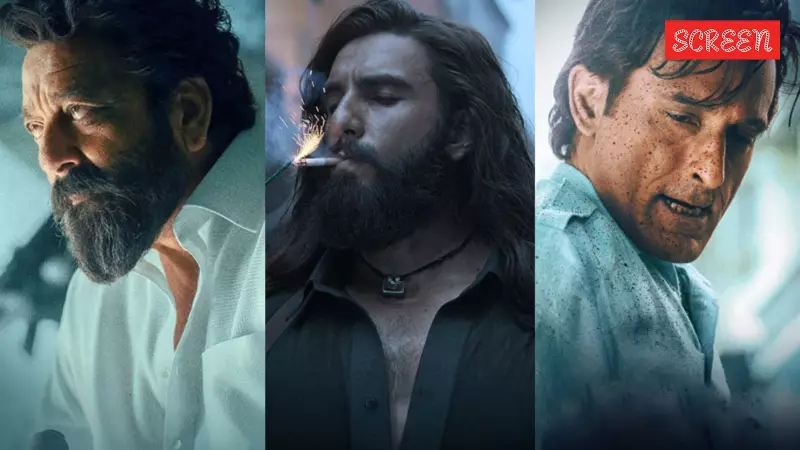
In the high-stakes world of Bollywood marketing, the trailer is often the make-or-break moment. It's the first and sometimes only conversation a film has with its audience. As box office returns become increasingly unpredictable, the pressure on those crafting these previews has intensified dramatically. The recent blockbuster success of Dhurandhar, which opened to a massive Rs 28 crore, has been largely attributed to its unconventional and striking four-minute-eight-second trailer—a promotional piece that broke several established rules of the trade.
The Art and Science of Trailer Editing
Rajeev Chudasama, founder of content marketing agency MA+TH Entertainment, which worked on the Dhurandhar trailer, underscores the immense responsibility. "The first-day number is mostly determined from the trailer alone," he states. This reality places significant weight on editors and marketing creatives, with directors and producers constantly reminding them that the trailer must "cut through everything else" in a crowded media landscape.
The process is a delicate balance of creativity and data-driven science. Mohit Sajnani, a long-time editor at Yash Raj Films, explains that a trailer's shape is a direct response to genre, tone, and directorial intent. For a franchise film like Dhoom 3, the focus was on showcasing Aamir Khan's entry while holding back enough for the theatrical experience. Conversely, for Shah Rukh Khan's comeback vehicle Pathaan, the goal was to build his powerful presence while establishing the scale of the spy universe.
How Dhurandhar's Trailer Defied Convention
When the Dhurandhar trailer dropped last month, it quickly became the center of online conversation. Its success is notable because its four-minute length typically works against a trailer, often testing audience patience. Sahil Kajale, head of visual promotions at Warriors Touch, another leading agency, clarifies the misconception. "There is no fixed length for a trailer. What matters is whether it holds attention. A one-minute trailer can feel exhausting, while a four-minute trailer can carry you through if the material allows it. That’s what Dhurandhar shows."
The trailer's impact stemmed from its deliberate resistance to convention. Kajale points out that it doesn't follow the standard three-act structure. It provides no clear story premise beyond the setting and period. Characters are introduced sequentially without clarifying their relationships, and they never share a screen moment. The most decisive break from tradition comes at the very end: Ranveer Singh appears only in the final minute. This defies standard logic and data-driven practices that demand the lead actor be revealed early to anchor viewer attention.
The Defining Power of Sound Design
Beyond visuals, sound is often the unsung hero that determines a trailer's fate. "The audio you cut to can change the response to the same visuals," Kajale emphasizes. He cites the use of the track 'Jogi' in Dhurandhar's first look and the brief scratch of qawwali at the trailer's end as choices that made people stop and pay attention.
At times, sound becomes so central that it is created specifically for the trailer. For the upcoming War 2, the trailer was structured around original voiceovers by Hrithik Roshan and Jr NTR. Nilesh Kataria, creative director at MA+TH Entertainment, shared an instance from his work on Cocktail, where suggesting Honey Singh's "Angrezi Beat" changed the trailer's entire tone and led to the song being incorporated into the film itself.
Mohit Sajnani recalls editing the trailer for Yash Chopra's Jab Tak Hai Jaan entirely around a poem penned by Aditya Chopra and narrated by Shah Rukh Khan. "When that poem came in, the direction was set, and it worked big time for us," he said.
World-Building vs. Star Presentation
The core strategy of a trailer often hinges on a key choice: whether to build the film's world or spotlight its star. Kajale illustrates this with two contrasting examples. For Raman Raghav 2.0, the decision was to open with Nawazuddin Siddiqui's gripping monologue, instantly drawing the audience into the character's psyche. For a visually rich film like Goliyon Ki Raasleela Ram-Leela, the trailer leaned into the opulent setting before presenting Ranveer Singh and Deepika Padukone.
This year's surprise hit Saiyaara followed a world-building approach. Its teaser and trailer focused on establishing the setting, introducing new faces, and hinting at the music, while deliberately withholding the central conflict. Sajnani contrasts this with the trailer for Fan, which laid out the core premise and the different avatars of Shah Rukh Khan, relying on the strength of its central idea.
Ultimately, as Rajeev Chudasama concludes, trailer cutting remains one of the hardest parts of film marketing. "There’s no fixed rule. Many voices come into the room... In the end, it comes down to the instinct of either the director or the producer." The runaway success of Dhurandhar's trailer proves that sometimes, breaking the rules with calculated creativity is the most effective strategy of all.