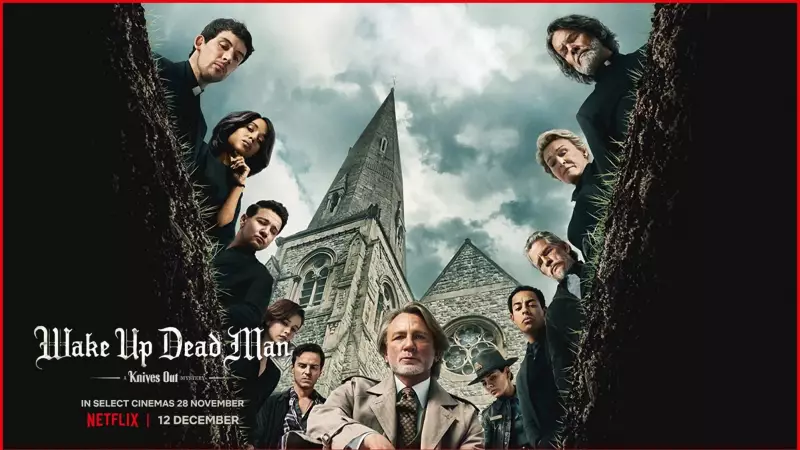
Nearly a century after its creation, a single chapter from a classic detective novel continues to cast a long shadow over the world of crime fiction and cinema. The legacy of John Dickson Carr's famed "locked room lecture" is powerfully evident in the latest installment of the popular Knives Out film series, proving that some literary blueprints are truly timeless.
The Enduring Blueprint of the Impossible Crime
In the upcoming film Wake Up Dead Man: A Knives Out Mystery, starring Daniel Craig as detective Benoit Blanc, the connection to this classic tradition is made explicit. A scene set in a secluded church shows Blanc laying out influential mystery novels, including John Dickson Carr's 1935 novel The Hollow Man—published in the US as The Three Coffins. This book is a direct inspiration for the film's plot centered on an "impossible crime."
Within Carr's novel lies what many consider the most famous single chapter in detective fiction history. It features a "locked room lecture" where the detective Gideon Fell meticulously outlines seven possible methods for committing a murder inside a completely sealed space with no apparent way in or out. This taxonomy of the impossible has served as a foundational text for crime writers for generations.

From Page to Screen: A Legacy Revived
Carr's influence did not stop with his contemporaries like Agatha Christie, who employed similar locked-room scenarios in works such as And Then There Were None. His ideas have found a vibrant and visible revival in modern film and television. Director Rian Johnson's Knives Out series is deeply saturated with Carr's spirit, treating the detective story as both a loving homage and a clever critique of the genre.
In Wake Up Dead Man, the killer's scheme is directly modeled on Carr's playbook, effectively turning The Hollow Man into a narrative cheat code. The film uses the constraints of the locked room to force ingenuity, demonstrating how such classic puzzles can reveal timeless human truths like greed, fear, and the desire for order.
Why the Locked Room Mystery Still Captivates
In an age dominated by forensic science and psychological thrillers, the enduring appeal of the locked room mystery is significant. It represents the puzzle in its purest, most crystalline form. There is no waiting for DNA results or tracing digital footprints. The solution relies solely on reason, observation, and logic.
The locked room is more than a plot device; for Carr, it was a philosophical stance. He argued that the best mysteries are celebrations of artifice and imagination—games where the reader is both player and spectator. This commitment to "the illusion of the impossible" ensures the genre's longevity. It offers a return to wonder in a world that often feels overly explained, providing the deep satisfaction of a solution that clicks perfectly into place.
John Dickson Carr passed away in 1977, but his seminal lecture lives on. It fuels blogs, podcasts, screenplays, and late-night discussions among mystery lovers. As Wake Up Dead Man prepares to bring this classic structure to a new global audience, it confirms that the doors to these perfectly constructed, impossible rooms are meant to be locked—if only for the immense pleasure of watching a brilliant detective find the key.