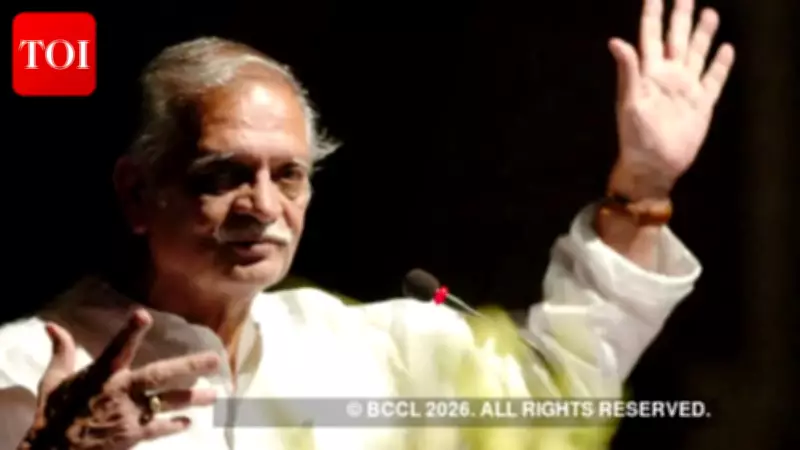
Gulzar Celebrates 44 Years of 'Namkeen' with Heartfelt Reflections
As the beloved film Namkeen marks its 44th anniversary, legendary filmmaker and poet Gulzar has opened up in an exclusive interview, revisiting one of his most heartfelt cinematic creations. He delves into the film's origins, its memorable characters, the iconic music, and its enduring impact on audiences and his own career.
The Emotional Core and Literary Inspiration
Gulzar expressed a deep personal connection to Namkeen, describing it as "that child of yours that got left behind in the race." The film is based on a story by Bengali author Samresh Basu, whom Gulzar admires greatly. "I read all his works in the original Bengali, so I was familiar with the nuances that often get lost in translation," he revealed, emphasizing how this familiarity helped preserve the story's essence in the adaptation.
A Powerful Gallery of Women Characters
One of the film's standout features is its portrayal of four women from different stages of life. Gulzar highlighted this as the most interesting aspect, noting:

- One woman past the age of marriage
- One at a marriageable age
- Another approaching marriageable age
- Their mother, constantly worried about them
He explained how these women cling to a male tenant who becomes their support system, sharing unique relationships with each. "I underlined her fears in the film," Gulzar said, referring to the mother's anxieties.
Iconic Cast and Collaborations
The film boasted an incredible ensemble cast including Waheeda Rehman, Sharmila Tagore, Shabana Azmi, and Kiran Vairale. Gulzar dismissed any notion of difficulty in bringing them together, stating, "If you offer actors good roles, why would they say no?" He praised their performances, noting that Kiran Vairale reminded him of Jaya Bhaduri.
For the male lead, Sanjeev Kumar was always his first choice. "In my cinema, there were two constants — him and R. D. Burman," Gulzar shared, expressing gratitude for working closely with both legends.
The Magic of Music with R.D. Burman
Gulzar's collaboration with composer R.D. Burman (Pancham) produced classics like 'Parichay', 'Khubsoorat', 'Aandhi', 'Kitaab', and 'Namkeen'. He described Pancham as "a very special and versatile composer," whose work with him differed from other projects. Gulzar never gave reference points, instead focusing on the film's emotional needs.
A memorable moment arose during the creation of "Phir Se Aaiyo Badra Bidesi," sung by Asha Bhosle and performed by Shabana Azmi. "Pancham felt a line was needed, and that's when we added, 'Tujhe meri kaali kamli wali ki sau...'" Gulzar recalled, highlighting their creative synergy.
Acquiring Rights and Crafting the Title
Gulzar personally met Samresh Basu to acquire the story rights, recalling his "beautiful smile and very warm personality." He rewrote the story for the screenplay but ensured it wasn't distorted, viewing the story as raw material for the film.
The title Namkeen is unusual, much like Gulzar's other films. He believes a title should completely define a film. Interestingly, he initially offered the title to Hrishikesh Mukherjee, who didn't like it. "So I told him, 'Main aapko Khubsoorat title de raha hoon,' and I took Namkeen back," Gulzar recounted. He dismissed overanalysis of the title, comparing it to Alfred Hitchcock's cameos—seemingly arbitrary at first but meaningful over time.
Gulzar's reflections offer a rare glimpse into the making of a cinematic gem that continues to resonate with audiences, celebrating its legacy of strong storytelling, memorable characters, and timeless music.